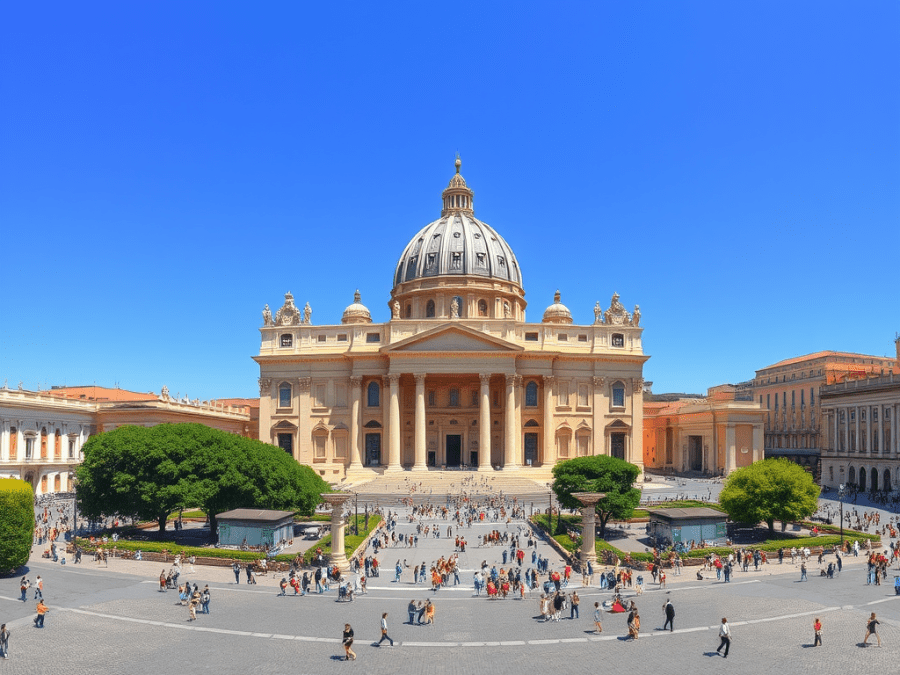
Two years ago, we stood for the first time before the imposing façade of St. Peter’s Basilica in the Vatican. The emotion, the awe, and the sore neck from looking up so much were unforgettable. This year, back in Rome, we knew we couldn’t miss the chance to see it again. Not because we’d forgotten anything, but because some places deserve to be experienced more than once.
St. Peter’s Square – where time seems to stand still
Naturally, our visit began in St. Peter’s Square, which is not just a grand entrance to the Vatican, but a stage. The Egyptian obelisk at its center seems to have watched over the footsteps of countless visitors for centuries, while Bernini’s colonnades, arranged like open arms, offer a symbolic embrace of humanity. Here, believers, tourists, and pilgrims gather in an atmosphere that blends solemnity with wonder.
In this vast and orderly space, people from all walks of life come together. Some arrive for the papal blessing, others for the perfect photo, but all leave touched by the quiet majesty that floats in the air—even in the midst of the crowds. It’s a place where you feel part of something greater than yourself, even for a few moments.
St. Peter’s Basilica – an architectural and spiritual masterpiece
The interior of the Basilica greeted us with the same grandeur as the first time: marble, gold, and light gently filtered through the dome. We climbed to the top once again – the same stairs, the same sighs, but also the same breathtaking view (and not just because of the physical effort).
Inside, we were once again moved by Michelangelo’s “Pietà”, the sculpture that seems to breathe. Michelangelo created it at just 24 years old, from a single block of marble that others had deemed unusable. But he saw in it a mother and a son, a silent sorrow, and a beauty that speaks for itself.
The Virgin Mary is young, serene, almost resigned. Jesus, resting in her arms, appears lighter than the emotional weight of the scene. Every detail is so delicately carved that the marble seems alive. It is the only work Michelangelo ever signed—discreetly, on the ribbon across Mary’s chest—after overhearing someone attribute the sculpture to another artist. A rare moment of pride in an otherwise modest life.
Also, within the Basilica stands Bernini’s Baldachin, a monumental bronze structure rising 29 meters above the papal altar. With its twisted columns and baroque details, it feels as though it was designed specifically to make you stop and say, “Wow.”
The Dome of the Cathedral
If you’ve ever climbed the dome of St. Peter’s Basilica, you know it’s not just a spiritual experience—it’s a physical one too. The stairs seem endless, the walls close in around you, and your knees start to protest. But when you reach the top… everything stops. Rome stretches out at your feet, and you understand why Michelangelo wanted this dome to be not only tall but perfectly proportioned.
At the age of 71—at a time in life when most Renaissance artists were retiring or ending their careers—Michelangelo was called to take over the construction of the cathedral’s dome, a monumental project started decades earlier and left unfinished after the death of architect Antonio da Sangallo the Younger.
Though initially reluctant, Michelangelo accepted the challenge—not out of ambition, but from a deep sense of duty and faith. He refused payment for his work and demanded full authority over the project so he could work without interference. He completely revised the existing plans, simplifying the structure and bringing a unifying vision inspired by the Roman Pantheon, but with a grandeur of its own.
The result was a dome that not only dominates the skyline of Rome but also symbolizes the triumph of the human spirit and faith. Although Michelangelo did not live to see it completed, the construction was carried out according to his plans, and today it remains one of the largest and most impressive domes in the world—a masterpiece of Renaissance architecture and a testament to his mature genius.
🌿 Vatican Gardens – an oasis of tranquility in the heart of Rome
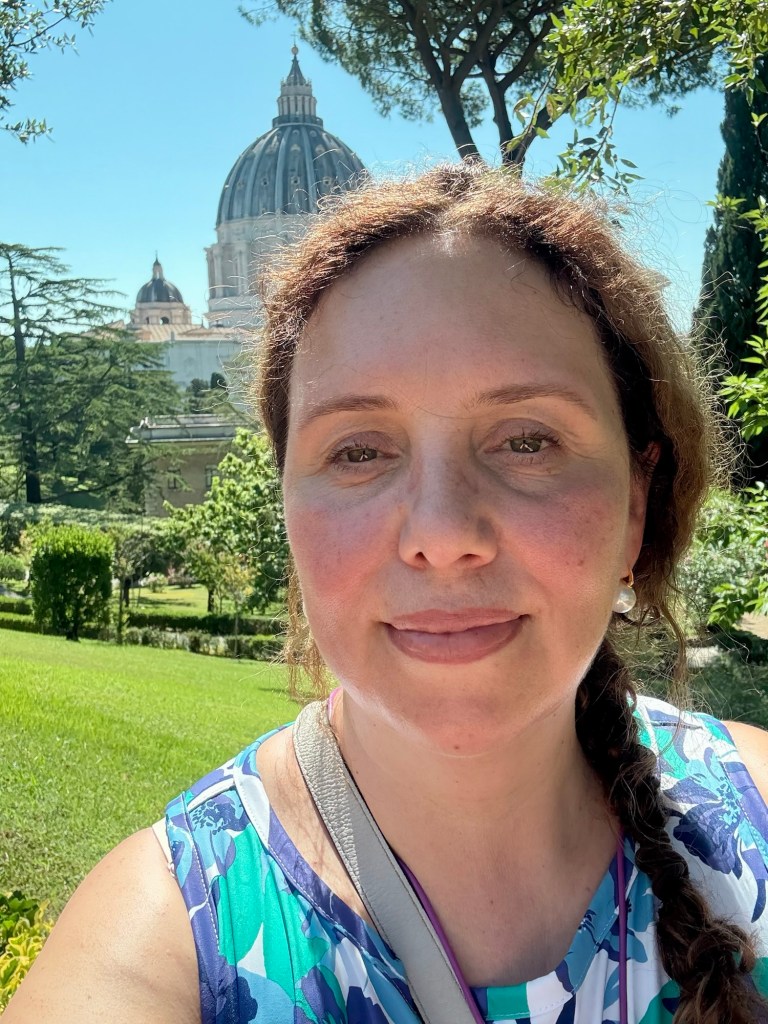
Framed by the walls of the Vatican, the gardens are a green corner of peace, where over the centuries popes came to find calm and reflect.
We wandered among fountains, statues, and alleys shaded by cypresses and lemon trees. The gardens combine different styles – Italian, French, and English – each with its own charm. Every corner tells a story.


The Vatican Museums – Art, History, and Lots of Steps
After the cathedral, I revisited the Vatican Museums—a labyrinth of art, history, and… lots of steps. So many. If you think you’re physically prepared, wait until you try weaving through groups of tourists with synchronized audio guides while trying to admire a fresco as the human tide gently pushes you toward the exit.

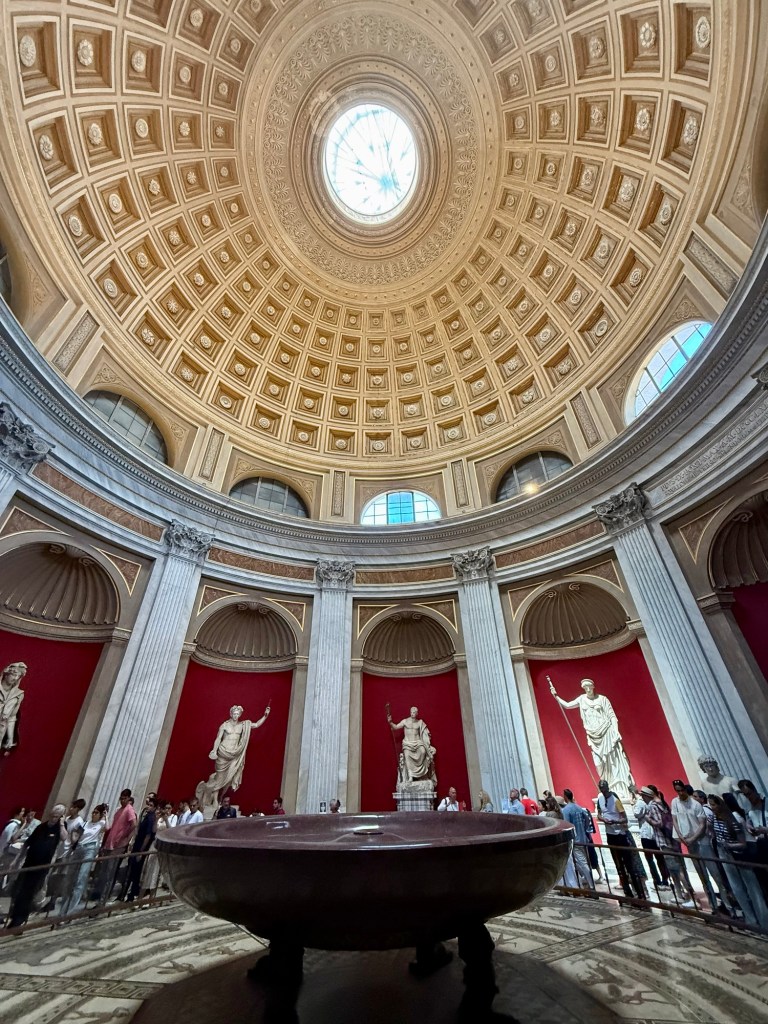
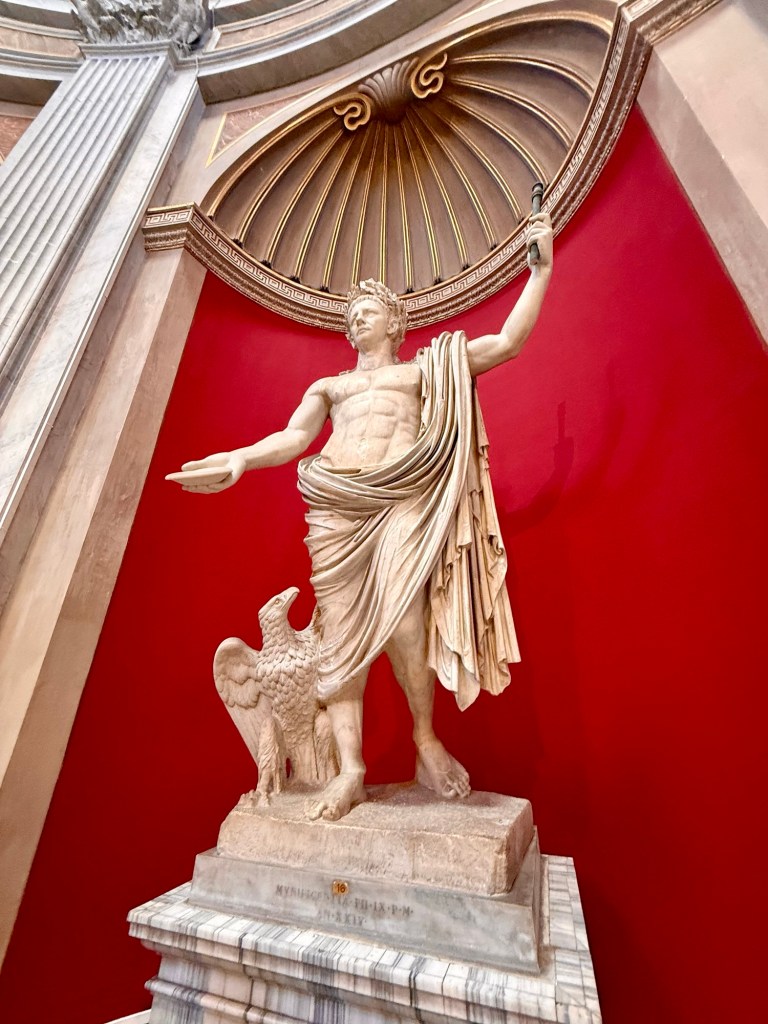
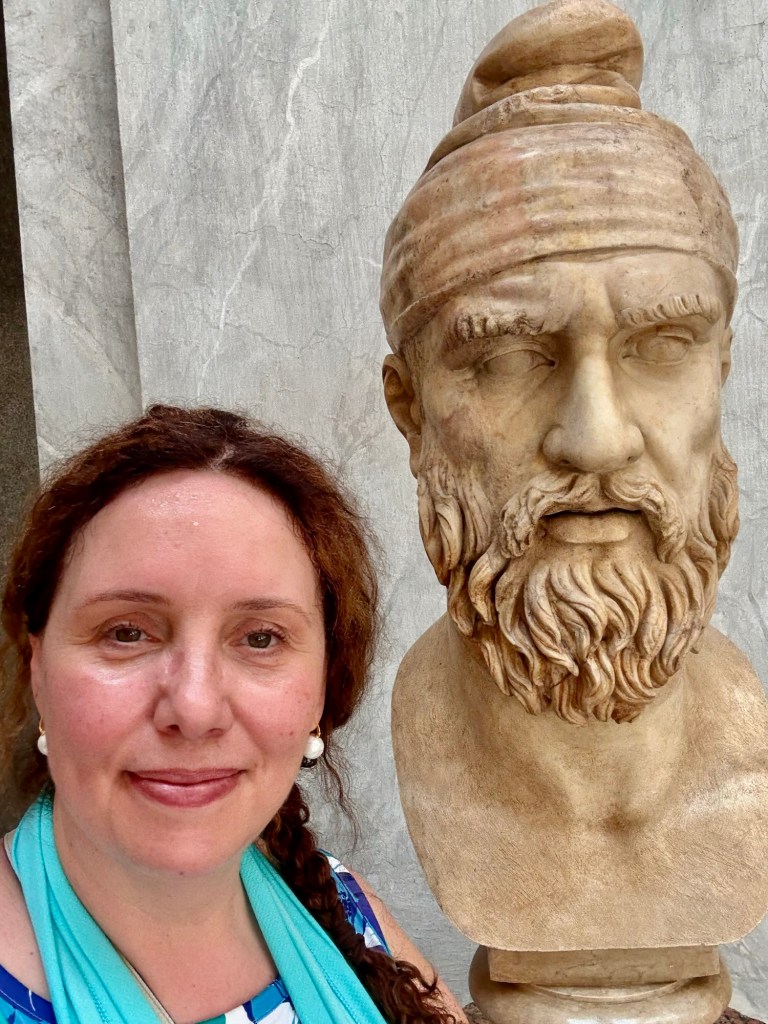
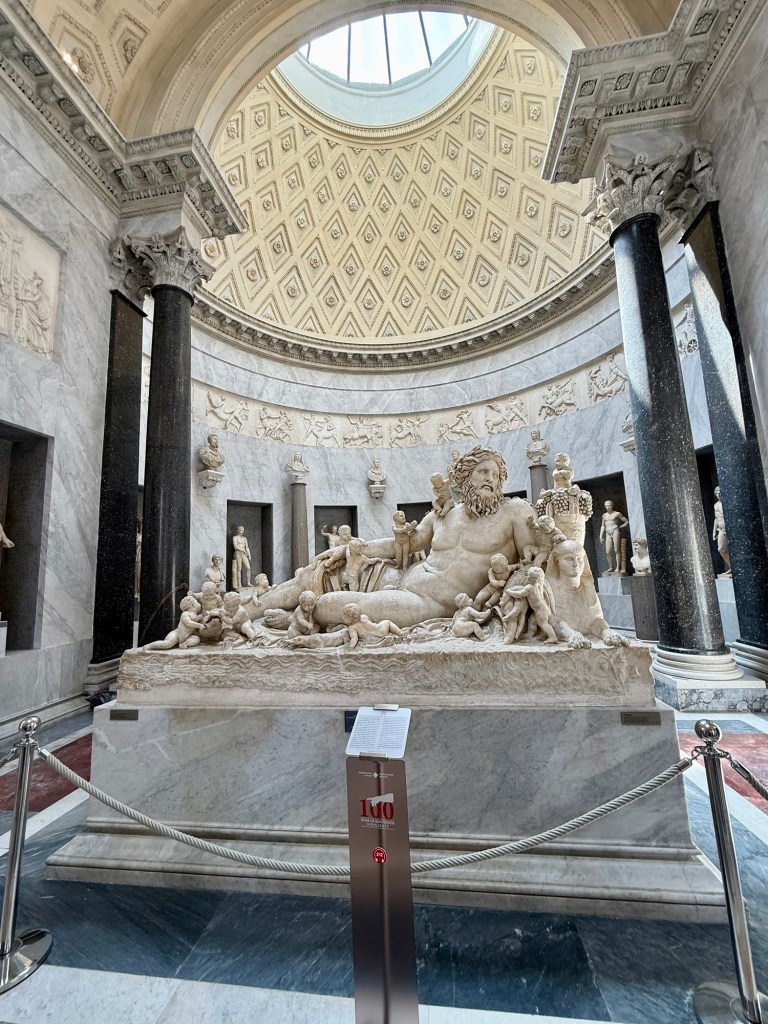
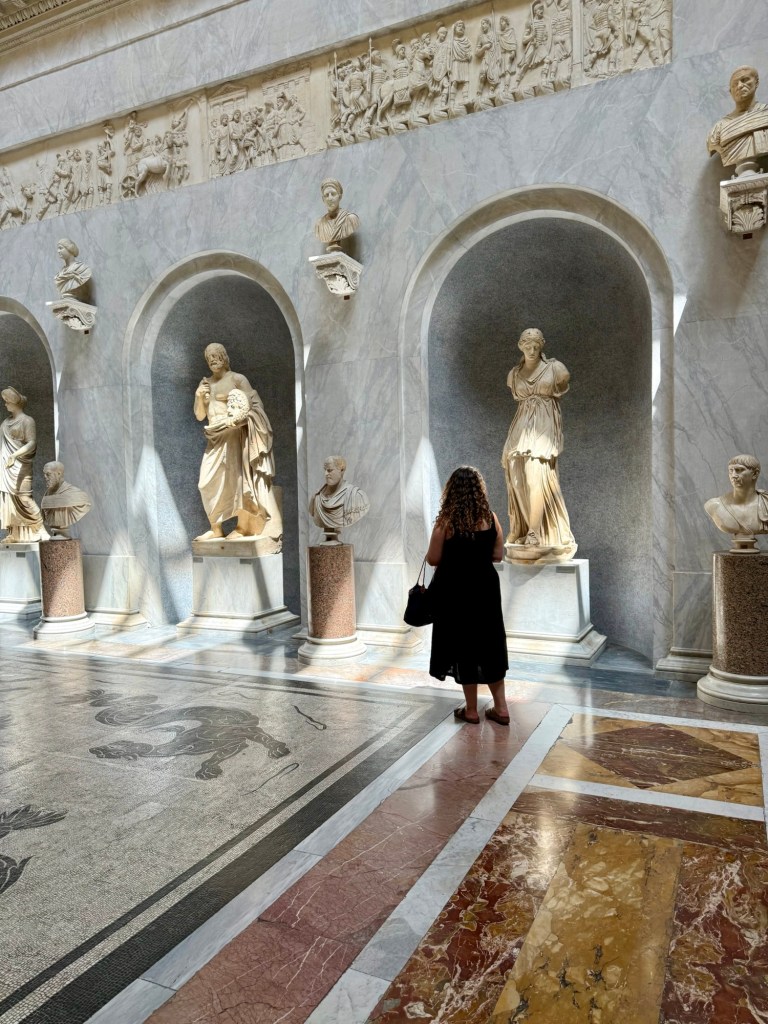
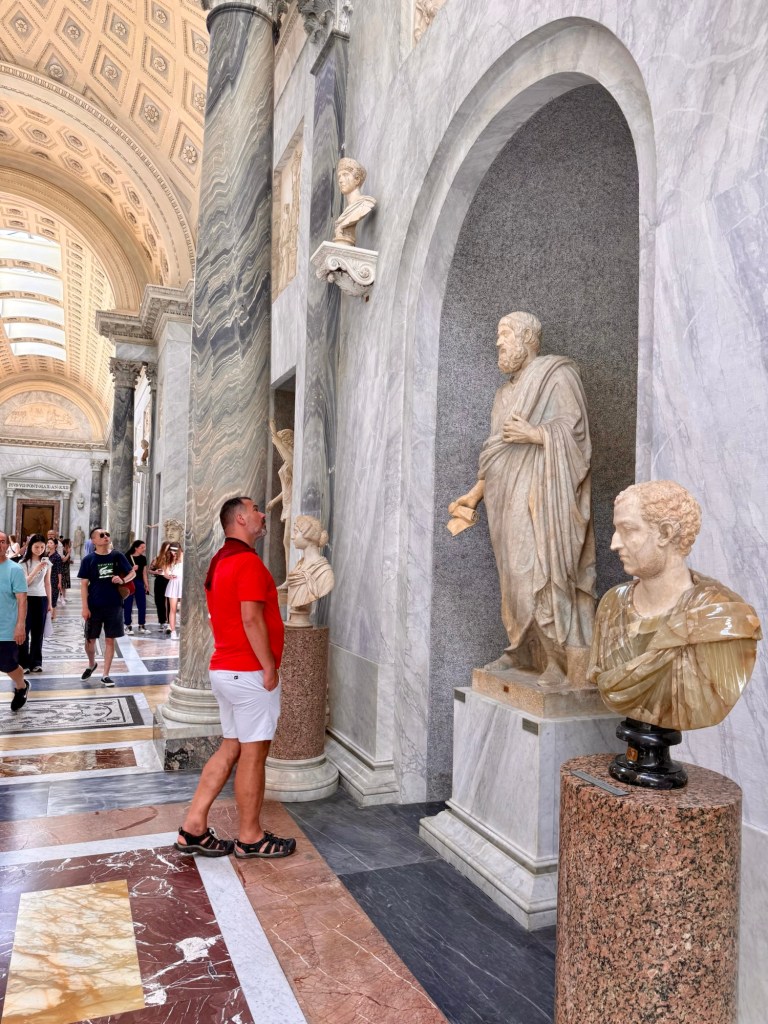
Some of the most impressive stops:
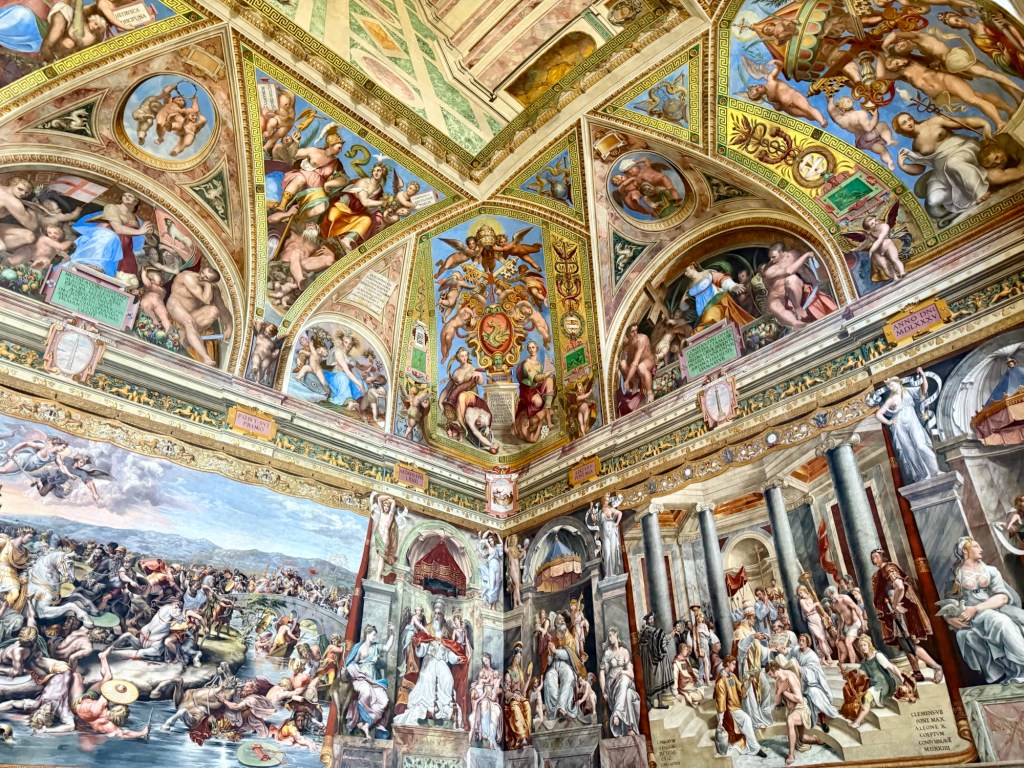
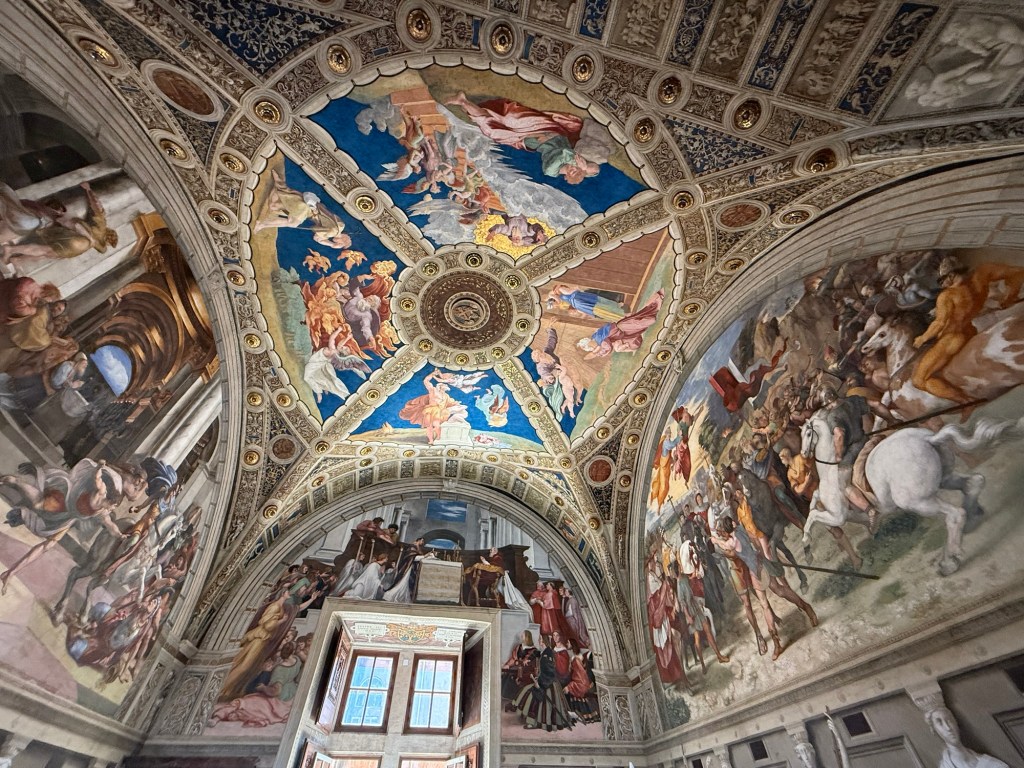
The Raphael Rooms – Four rooms decorated by Raphael and his students, where every wall is a lesson in history and theology in vivid colors. If you manage to admire them without being nudged by a flag-waving tour group, consider it a cultural lottery win.
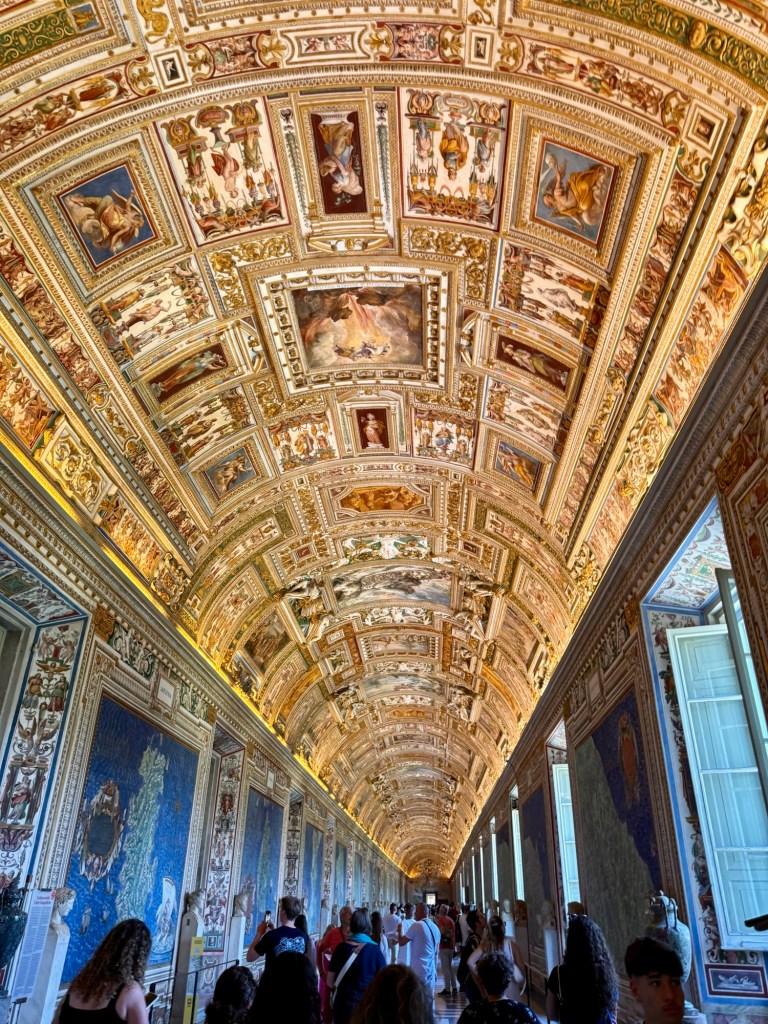
The Gallery of Maps – A 120-meter-long corridor with painted maps of 16th-century Italy. Here, you get a cardio workout without trying: walk, stop, dodge a selfie stick, then walk again. If you don’t get lost in the maps, you’ll definitely get lost in the crowd.
Cortile della Pigna (Pinecone Courtyard) – An open space where you can finally breathe. Here, you can admire the famous bronze sculpture Sfera con Sfera by Arnaldo Pomodoro and catch your breath after the artistic marathon inside.

The Sistine Chapel – Michelangelo Again
The highlight of the visit: the Sistine Chapel. It’s where everyone enters in silence, looks up, and… discreetly strains their neck trying to admire The Last Judgment. Taking photos is forbidden, but there’s always someone who tries, followed by a soft yet firm “No photo, please!” from a guard who sounds like he’s said it 3,000 times that day.
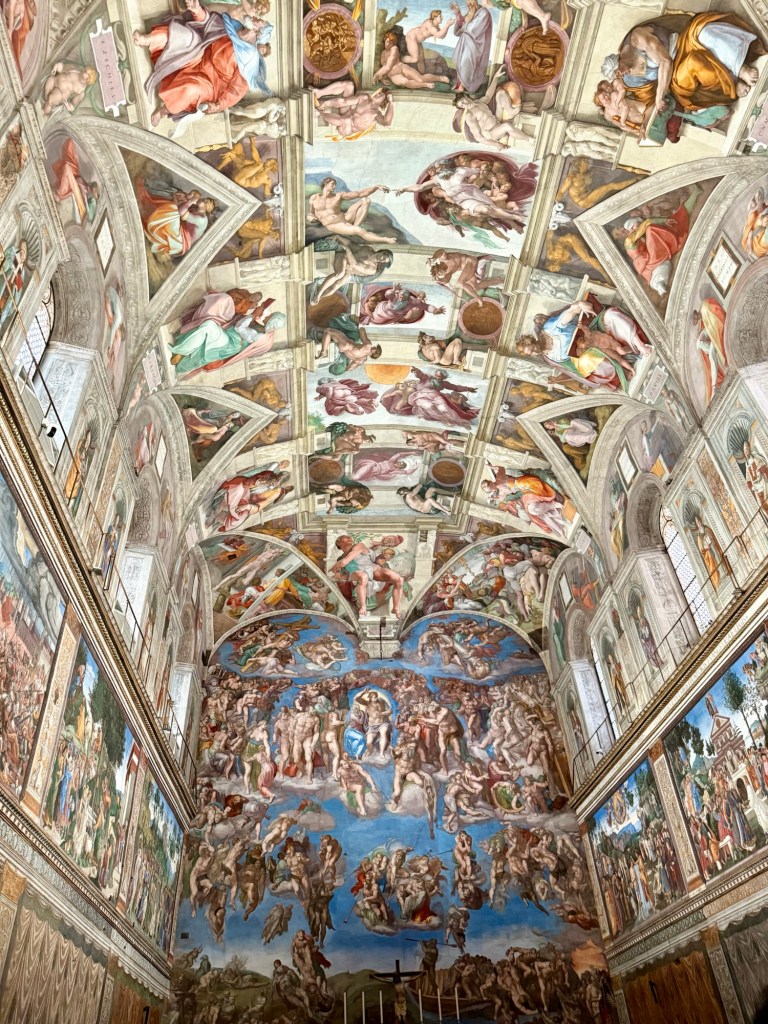
Between 1508 and 1512, Michelangelo was persuaded (more like gently forced by Pope Julius II) to paint the ceiling of the Sistine Chapel. Although he considered himself primarily a sculptor, he accepted the challenge. He worked alone, on scaffolding, in positions that would make any physical therapist weep. Four years later, the result was a 500-square-meter ceiling with over 300 figures—a visual symphony culminating in the famous Creation of Adam, the scene where God’s and man’s fingers nearly touch.
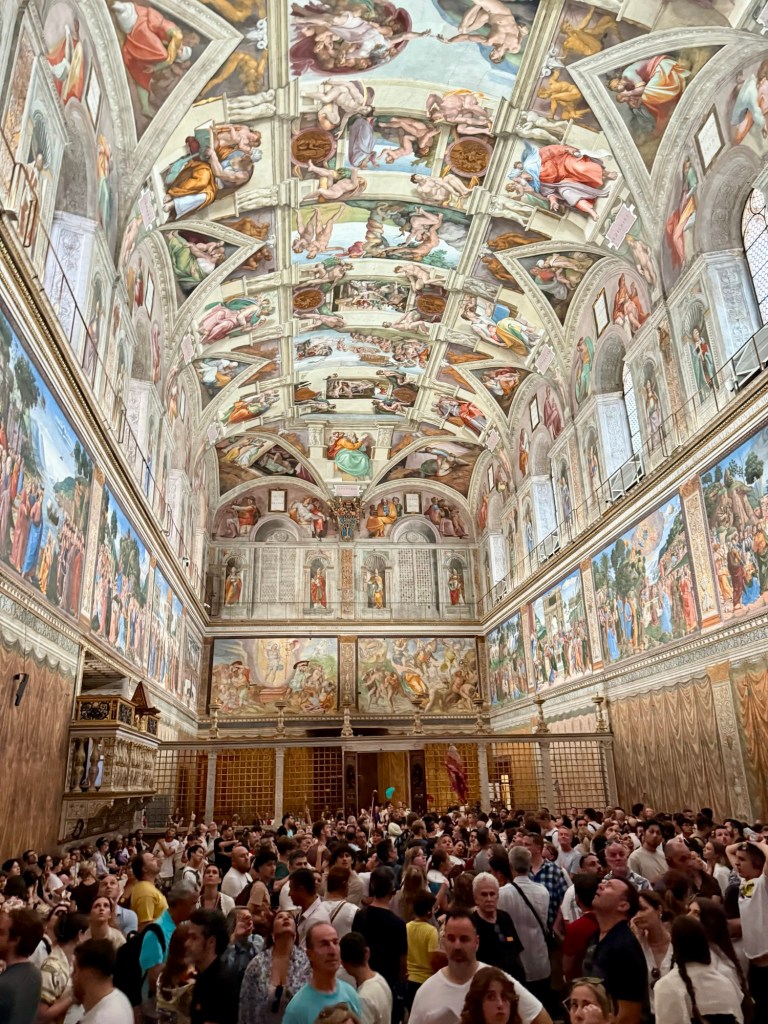
But Michelangelo didn’t stop there. Between 1536 and 1541, he returned to paint The Last Judgment on the altar wall. A dramatic, intense composition full of movement and expression, it stirred controversy at the time due to the nudity (some of which was later “clothed” by other artists at the Church’s request). Yet the emotional power of the work remains intact to this day—and yes, it still strains your neck when you look at it.
Michelangelo – The Man Who Made the Vatican a Masterpiece
If the Vatican were an Oscar-winning production, Michelangelo would be not only the lead actor but also the director, set designer, and probably the guy who built the sets with his bare hands. Born in 1475 in the Florentine Republic, Michelangelo Buonarroti was a sculptor, painter, architect, and poet—a complete artist with ambition to match his talent.
🎨 Fun Facts About Michelangelo
- He didn’t want to paint the Sistine Chapel. Michelangelo saw himself as a sculptor, not a painter. When Pope Julius II asked him to paint the ceiling, he reluctantly agreed. Lucky for us, he said yes.
- The Pietà was sculpted from a block of marble others had rejected. Where others saw a flawed stone, Michelangelo saw a mother and son—and created a masterpiece.
- He was a fierce perfectionist. If he didn’t like a work, he destroyed it. Better nothing than “almost good.”
- He lived to be 88. A remarkable age for the 16th century. And he never stopped working—he kept going almost until his last day.
- He was also a poet. He wrote over 300 sonnets and madrigals, many dedicated to close friends. A complete artist in every sense.
- He didn’t sign his works. With one exception: the Pietà. He did it after hearing a visitor attribute the sculpture to someone else. It was the first and last time he signed a piece.
- He lived simply, almost austerely. He often slept with his boots on and wore the same clothes until they fell apart. He didn’t care for luxury—only for marble and inspiration.
Conclusion
The Vatican isn’t just a point on the map—it’s a place you experience with all your senses. It’s a history lesson, an open-air museum, a marathon of art and emotion. It doesn’t matter if it’s your first visit or your fifth—each time, you see something new, feel something different, understand more.
With your eyes lifted to the frescoes and domes, your steps slowed by awe, and your heart open to the beauty around you, the Vatican stops being just a destination—it becomes a living memory that stays with you long after you’ve left. And yes, a photo of St. Peter’s Basilica looks great in any vacation album. But the real memory is the one you carry with you, beyond the camera lens.
Discover more from "The world is your oyster".
Subscribe to get the latest posts sent to your email.
