We’ve been in Rome for a few days now, and we’re already feeling what an Italian summer really means. The sun is everywhere, and the city reveals itself in all its splendor—and heat. 🥵
We walk a lot—on average about 10 km a day, sometimes even up to 15 km, especially when we wander off into less touristy neighborhoods.
We stop often for water or lemonade, but staying hydrated feels like an ongoing mission between fountains. Speaking of which, Rome is basically a world record holder: there are over 2,000 drinking fountains scattered throughout the city, and they literally save you every time your water bottle runs dry.

Anna, a true Canadian, loves the cold and despises anything above 15°C.
As for me, I’ve discovered the secret weapon against this Roman heat: a thermal towel, straight from the nearest fountain. I wrap it around my neck, over my head, even deep in my soul if needed—and voilà: instant magic. Cool brain, high morale, and the walk goes on!
The traffic is chaotic, even around lunchtime. Constant noise, honking horns, scooters zipping across the streets—everything seasoned with that unmistakable scent of exhaust fumes.
The only upside, if we can call it that? Guaranteed weight loss, directly proportional to the temperature and the number of steps. 👌🏻

We hadn’t planned on going back. But sometimes, places choose you.
One morning during our stay in Rome, we felt the impulse to revisit the Borghese Gallery and Villa Farnesina. Not out of nostalgia, but rather from a sense of curiosity—like when you reread a book you loved and discover passages you hadn’t noticed the first time.
Our first visit enchanted us. The second moved us in a different way. Deeper. More personal.
Borghese Gallery – Returning to Bernini and Caravaggio, Masters of the Baroque
Our second visit to the Borghese Gallery was about calm, not discovery—about seeing with the soul, not with the impatience of the new. This time, we weren’t wandering in awe—we were heading toward something familiar, or so it seemed. And yet, the beauty took us by surprise once again—maybe even more deeply than the first time.
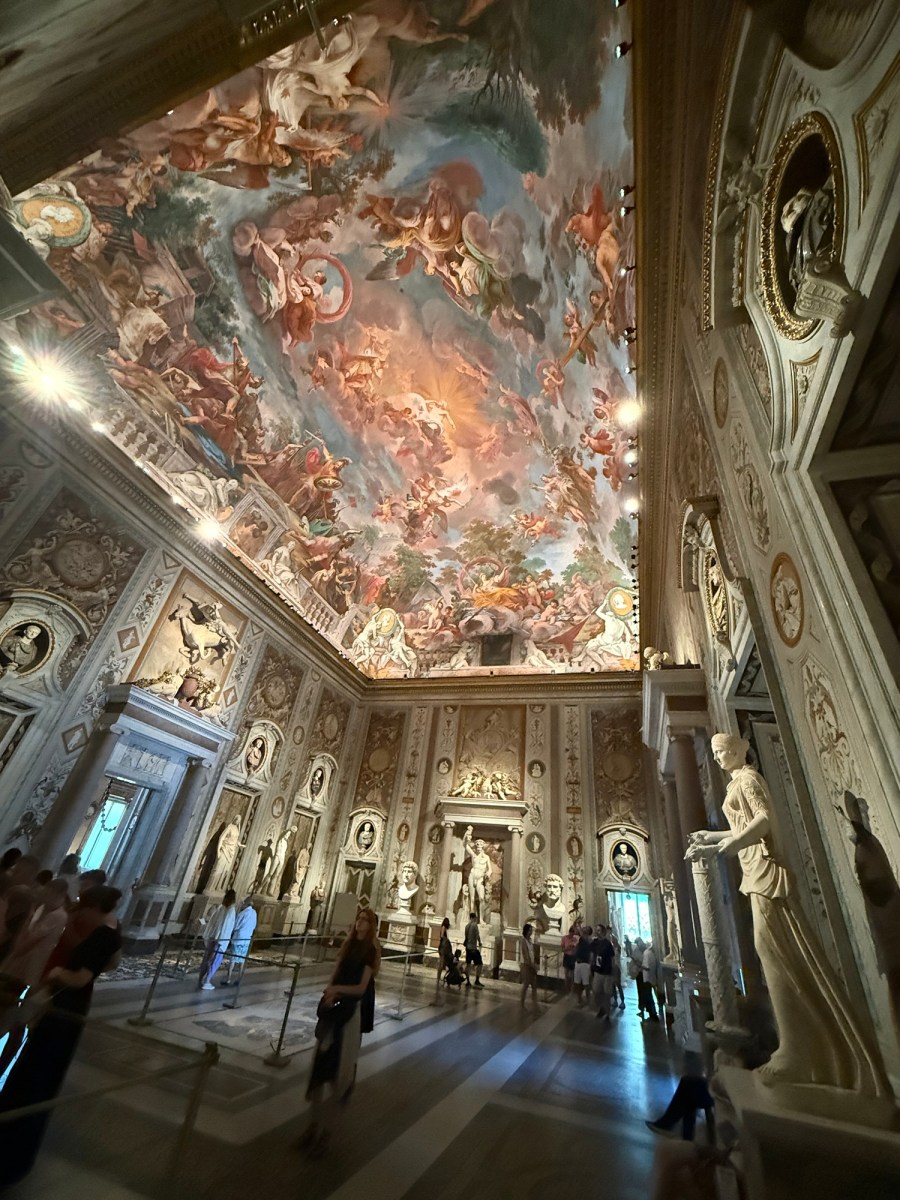
The halls of the Borghese Gallery aren’t just spaces to pass through; they’re part of the experience itself. Every step on the shining marble brings you closer to another world—one where beauty isn’t just displayed, but lived.
The painted ceilings, with their mythological scenes and golden details, draw your gaze without you even realizing. The frescoed and decorated walls invite you to slow your steps. Every corner feels like an invitation to pause and contemplate.
Natural light filters through the tall windows, gliding over frames, sculptures, and floors like a gentle caress. It’s a light that doesn’t impose—it reveals.
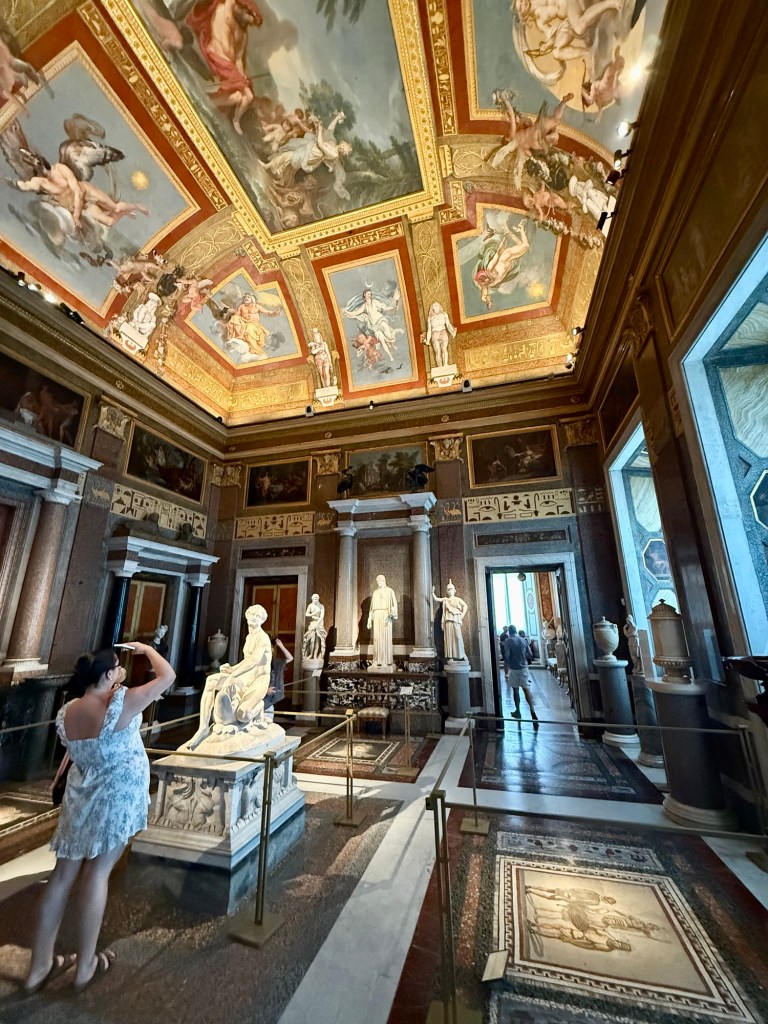
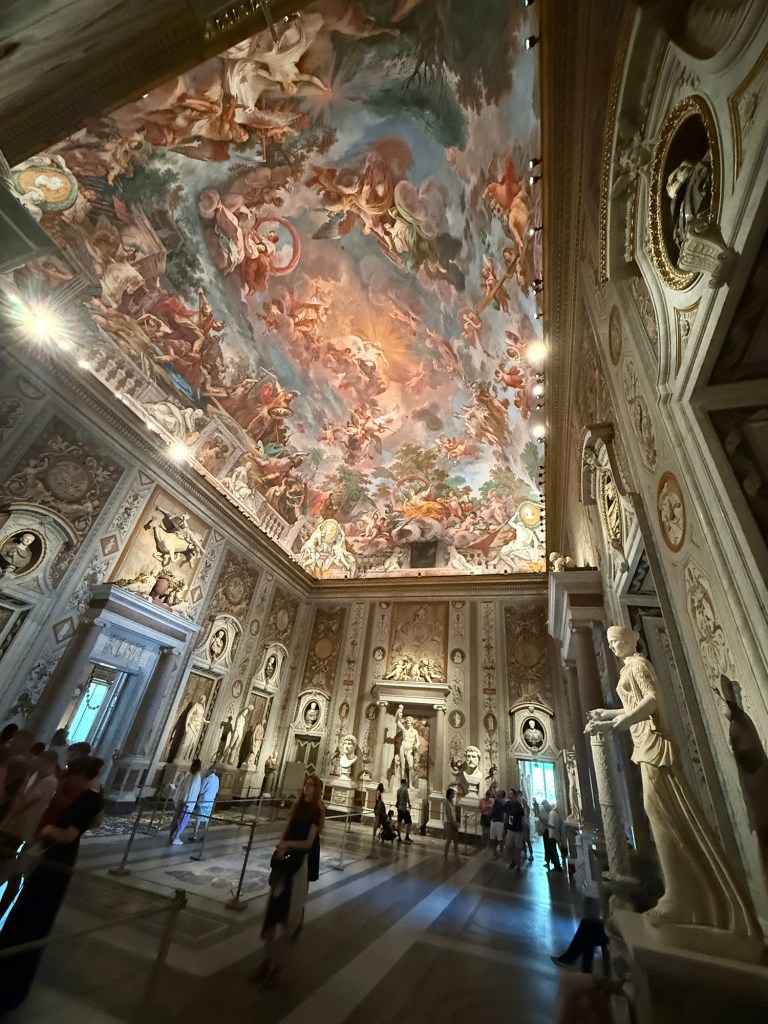
In these halls, silence has weight. It’s not an empty silence, but one full of presence—the presence of those who created, those who observed, and those who, like us, paused for a moment longer to admire the beauty surrounding them.
Here, between one room and the next, between one masterpiece and another, you have time to breathe. To feel. To let yourself be touched by a beauty that needs no words.
On our first visit, we were simply awestruck by the beauty of Gian Lorenzo Bernini’s sculptures—they left us speechless. The second time, however, we looked more closely, with more patience and we were beginning to understand their story. The Rape of Proserpina was no longer just a display of technical mastery—it became a living scene, charged with emotion. We felt the tension between power and fragility, between desire and fear. The marble no longer seemed cold—it seemed to breathe.

At Apollo and Daphne, time seemed to stand still again. This time, we looked more closely—not just at the form, but at the story behind the marble. We saw the astonishment in Apollo’s eyes, the fear and resignation in Daphne’s gesture, and that suspended moment when she begins to transform into a tree. The leaves growing from her hands, her hair turning into branches—it all seemed to unfold before our eyes, slowly and inevitably.
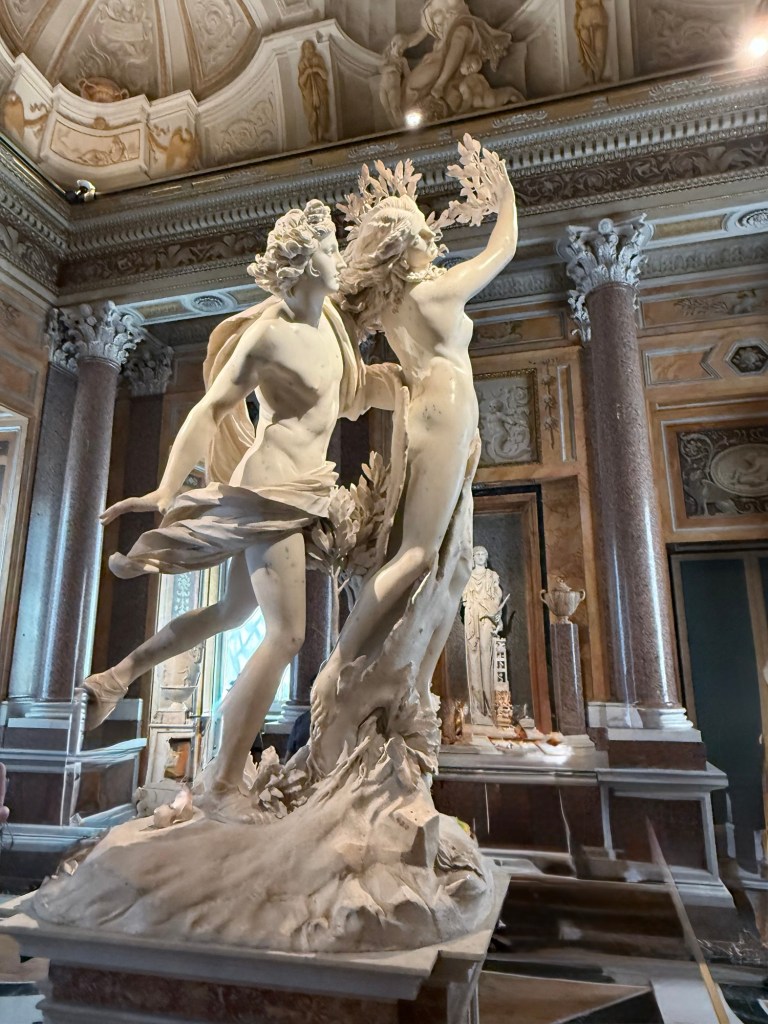
Bernini was only 23 when he sculpted this scene. And yet, he managed to capture the ephemeral—that fragile moment between desire and surrender—with a depth that leaves you speechless.
When you look at Caravaggio’s paintings, you instinctively fall silent. Not because you have nothing to say, but because you feel that any word would disturb the delicate balance between light and shadow.
On our first visit, we were struck by the drama of the scenes. The second time, we began to see beyond the stark contrast—we felt the tension, the humanity, the vulnerability of the characters. Boy with a Basket of Fruit was no longer just a study in light—it became a portrait of the fragility of youth, of fleeting beauty.
In Madonna and the Serpent, we felt Caravaggio’s boldness in bringing the sacred into the real world. The Virgin no longer floats above the world—she is there, present, human, almost tangible.
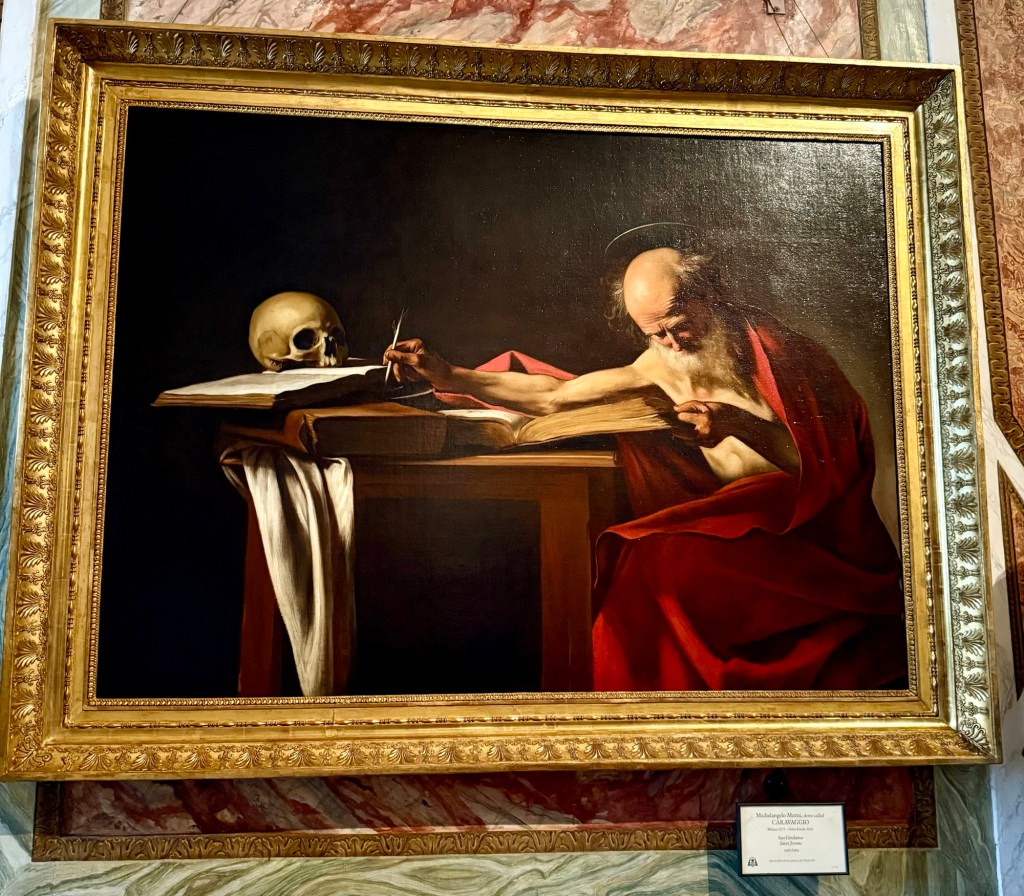
Caravaggio doesn’t beautify reality—he reveals it. He directs the light exactly where it hurts, where the raw, unfiltered truth hides. That’s why his paintings aren’t just seen—they are lived.
🎟️ Borghese Gallery – Visitor information
- 🕘 Opening hours: Tuesday–Sunday, 9:00 a.m.–7:00 p.m. (last admission at 5:45 p.m.). Closed on Mondays.
- 🎟️ Tickets: €15 + €2 booking fee. Free for visitors under 18 (with reservation).
- 📌 Reservation required. Visit limited to 2 hours.
- ⭐ Must-see: Bernini (Apollo and Daphne, The Rape of Proserpina), Caravaggio, Canova.
- 🌳 Recommendation: Combine your visit with a stroll through the Borghese Gardens.
Villa Farnesina – Where Painting Becomes Poetry
Villa Farnesina doesn’t impress through grandeur, but through delicacy. It’s a place that doesn’t impose—it invites. A discreet villa, hidden in the heart of Trastevere, where art doesn’t just decorate the walls—it transforms them into visual poetry.
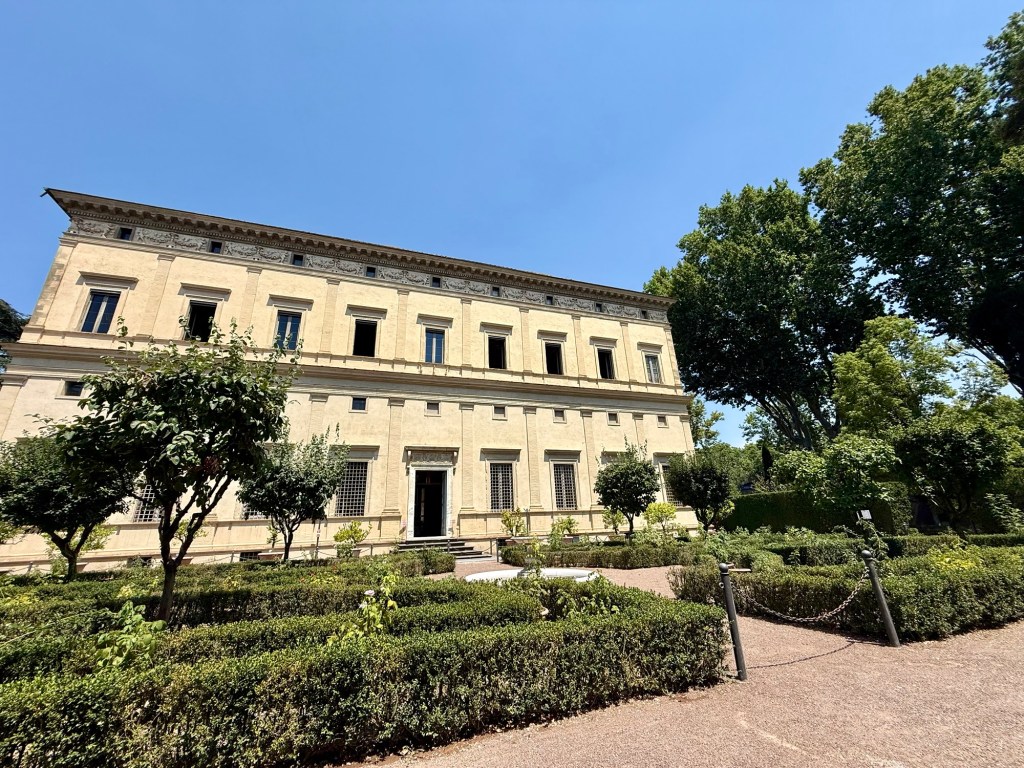
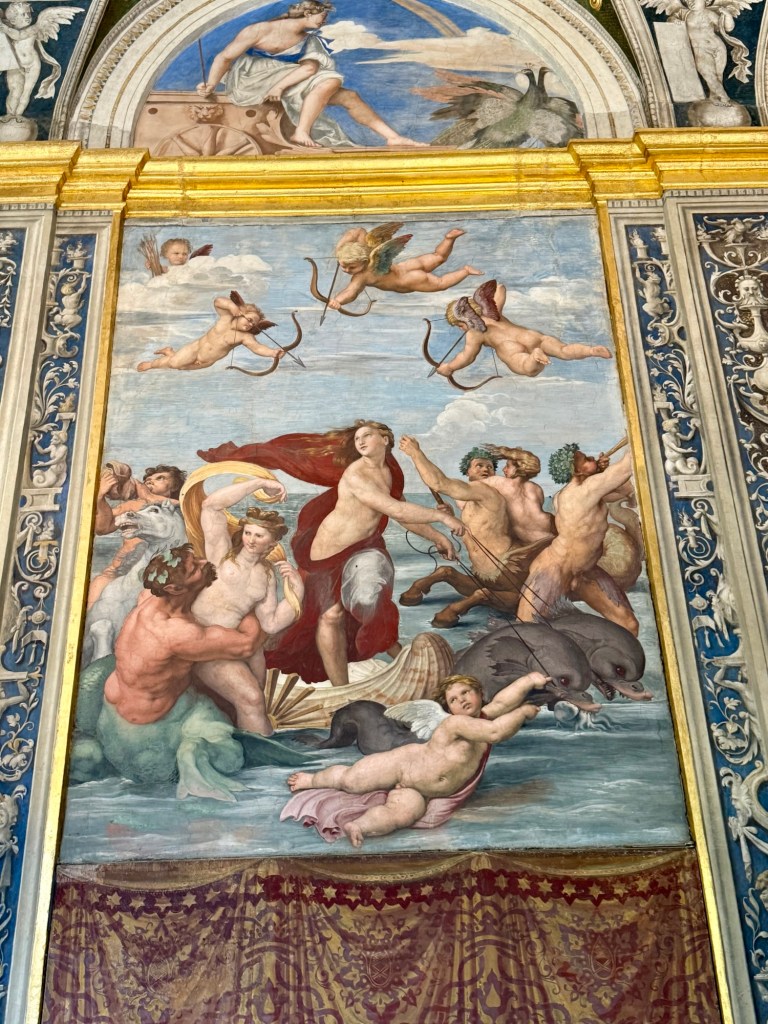
Here, Raphael doesn’t merely paint mythological scenes—he paints emotions. In The Triumph of Galatea, the waves aren’t just a backdrop—they’re part of the movement. Galatea, floating on her shell, seems caught in a silent dance, smiling with a grace that needs no explanation. Everything flows—from glances to gestures, from colors to composition—in a harmony that is felt more than understood. Everything is fluid, alive.
In the Loggia of Cupid and Psyche, the love story between a mortal and a god unfolds with elegant simplicity. The scenes are painted in warm tones, and the gestures of the characters have a naturalness that makes them easy to follow—almost familiar. It’s not a fresco that seeks to impress through drama, but one that simply asks you to stop and look. Every detail seems carefully considered, like a phrase spoken softly in a gently told story.

Natural light pours through the large windows and glides over the paintings with a tenderness that feels orchestrated. Nothing feels forced. Everything is well-balanced—from the proportions of the rooms to the colors of the frescoes and the quiet that surrounds them.
Villa Farnesina isn’t a museum in the traditional sense. It’s more of an intimate space, where art feels closer to you. It doesn’t seek to impress—it seeks to remain. It’s the kind of place where beauty doesn’t assert itself, but reveals itself, little by little—like a poem that gains new meaning each time you reread it.
We also learned more about Agostino Chigi, the banker who built this remarkable villa. Born in Siena in 1466, Chigi was not just a wealthy man, but one of the most influential bankers in Europe at the time. He made his fortune through the trade of alum (a mineral essential to the textile industry), owned his own commercial fleet, and served as the personal banker to several popes, including Julius II and Leo X.
But beyond business, Chigi understood that art could be a form of power, refinement, and legacy. Wanting his villa on the banks of the Tiber to be more than just a residence, he collaborated with architect Baldassarre Peruzzi, also from Siena, and surrounded himself with a circle of exceptional artists: Raphael, Sebastiano del Piombo, Sodoma, and Raphael’s students and collaborators, such as Giulio Romano and Giovanni da Udine.
Villa Farnesina was conceived not just as a luxurious residence, but as a space of refinement and representation. Agostino Chigi, known for his sophisticated taste and political influence, transformed the villa into a gathering place for the elite of his time. Here, he hosted spectacular banquets, welcomed popes, diplomats, and artists, in a setting that reflected not only his wealth but also his ambition to be recognized as a true patron of the Renaissance.
His personal story also unfolded in this villa: alongside Francesca Ordeaschi, the woman he loved and married in 1519, in a ceremony officiated by the pope himself.
Everything in Villa Farnesina—from its balanced architecture to its mythological frescoes—speaks of a vision in which art was not merely decoration, but an expression of a life lived with taste, intelligence, and an awareness of its fleeting nature.
🎟️ Villa Farnesina – Visitor information
- 🕘 Opening hours: Monday–Saturday, 9:00 a.m.–2:00 p.m. Closed on Sundays (occasionally open on the second Sunday of the month).
- 🎟️ Tickets: €10 (discounts available).
- 📌 Reservations recommended, but not required for individual visitors.
- ⭐ Must-sees: Raffaello (The Triumph of Galatea, The Loggia of Cupid and Psyche), Peruzzi, Sodoma.
- 🏛️ Tip: Go early in the morning for good light and a quiet visit.
Discover more from "The world is your oyster".
Subscribe to get the latest posts sent to your email.
