Our vacations are like an Italian espresso drunk at the bar, standing up: short, intense, and with a healthy dose of morning bitterness.
Every morning, while the city is already buzzing with people and cars in every direction, our waking nightmare begins: Anna, our teenage daughter with the soul of an owl and the voice of a professional protester, is the head grumbler. Getting her out of bed before 10 a.m. is like trying to persuade a cat to meditate in the lotus position. “It’s vacation, not an Everest expedition!” she declares, rolling theatrically out of bed like a telenovela heroine who’s just discovered she must climb 200 steps up to the Duomo.
…Without a single drop of daily drama, no vacation day is complete. 😩
Georges, despite muttering something about “impossible hours” and “we’re not that young anymore,” is a true adventurer. Especially since he booked tickets to all the tourist attractions a month in advance—with fixed times, QR codes, and the whole shebang. If we don’t get there on time, we’ll miss the entrance. And the money. And our peace of mind.
The alarm clock wins, Anna grumbles, and we stumble out into the world—barely awake, but already chasing stories. And we are hopeful that the next stop will have a coffee shop nearby. It usually does. And there, as we sip our first cappuccino of the day, we remember why we are doing all this: for the stories we will tell with laughter when we return home.
Castello Sforzesco – the fortress with secret tunnels and Leonardo’s frescoes
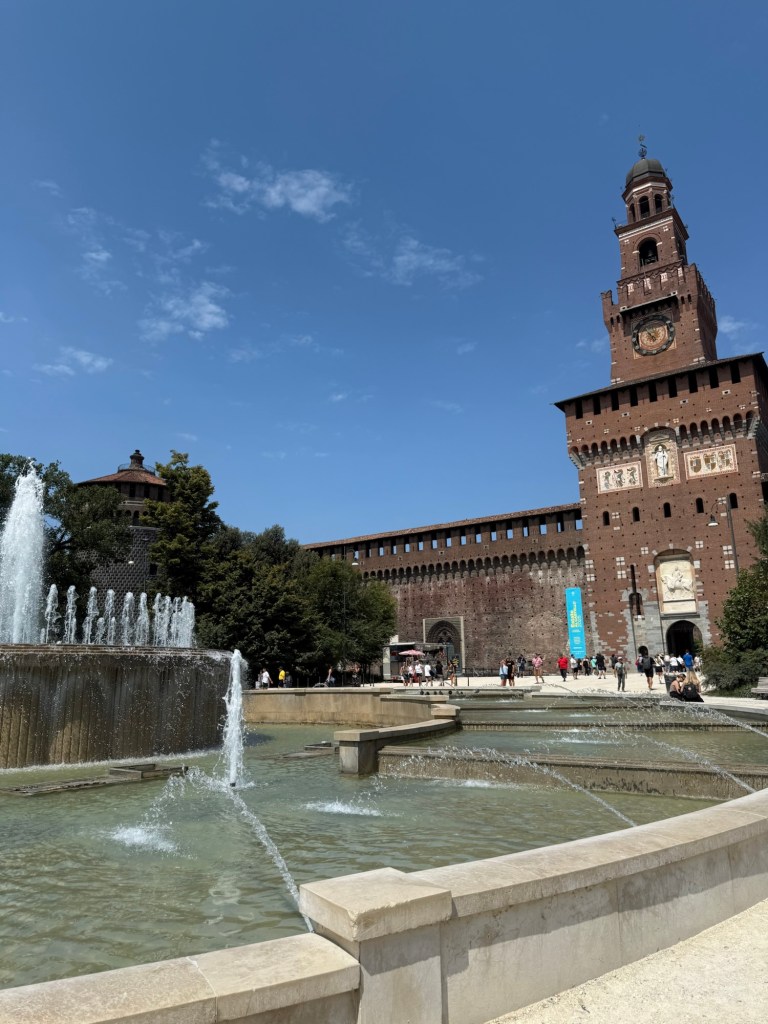
Our first stop: Castello Sforzesco. Built on the ruins of a Roman fortification, the castle was rebuilt by Francesco Sforza in 1450 after he defeated the Milanese republicans. What many people don’t know is that Leonardo da Vinci adorned the ceiling of the Sala delle Asse with an enormous, intricate tree canopy, turning stone into forest, and in 2025, sketches of underground tunnels drawn by him were discovered, which could be real.
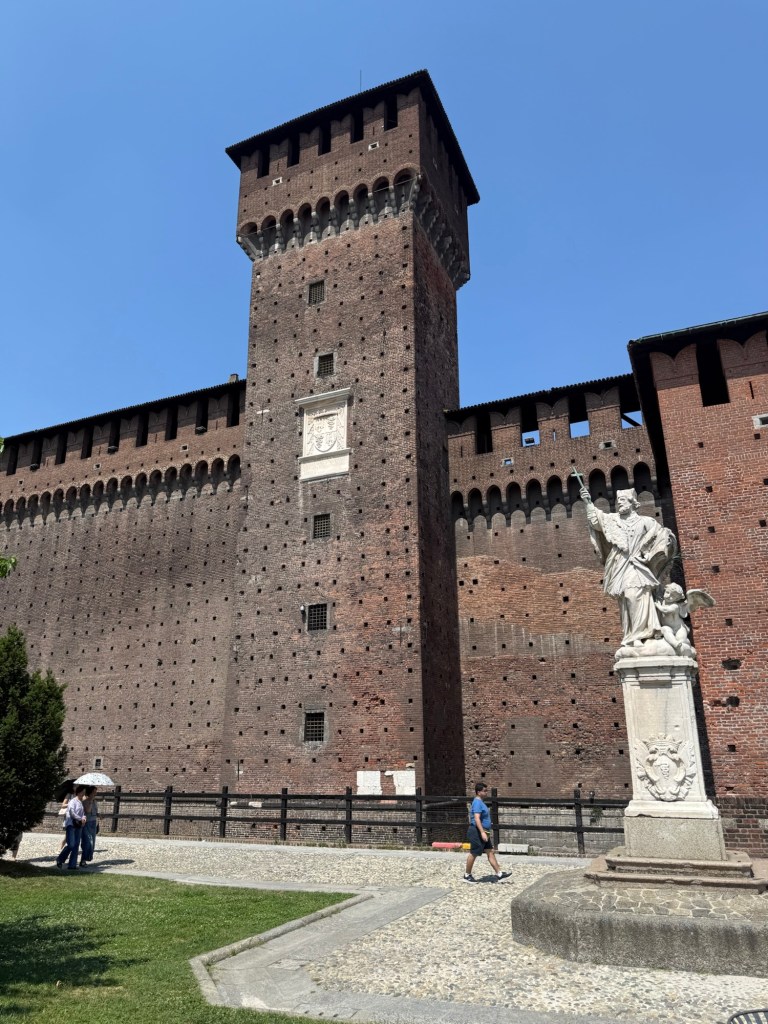
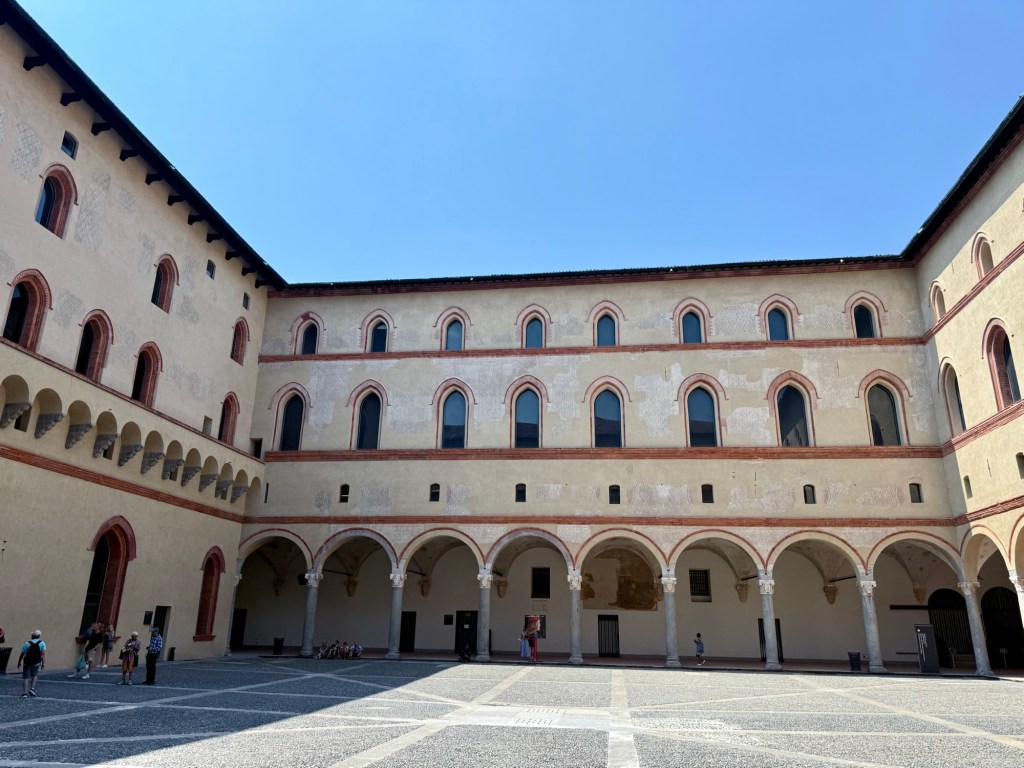
The castle was turned into a fortress under Spanish rule, with star-shaped bastions and walls 7 meters thick. At one time, it housed 3,000 soldiers and had its very own arsenal.
Parco Sempione – Leonardo’s secret garden and venue for the 1906 Expo
And after all that history, we took refuge in Parco Sempione.
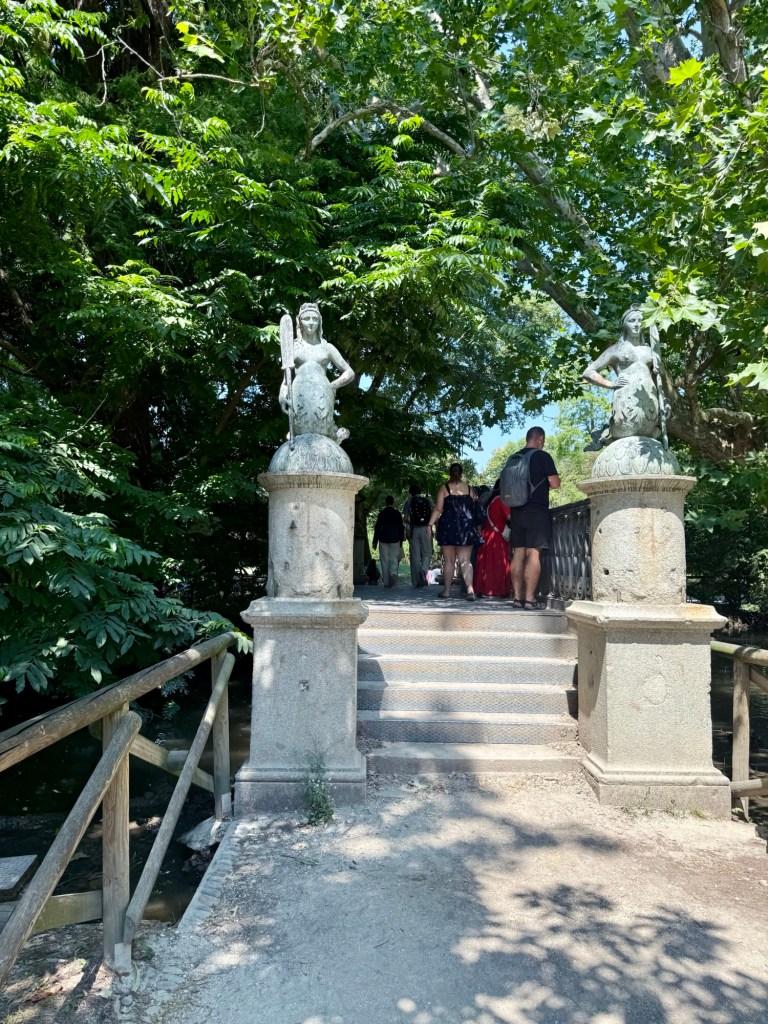
Few people know that the park was built in 1888 on the site of a former military parade ground and that the architect Emilio Alemagna designed it as a work of landscape art, with artificial hills, lakes, and carriageways. In the 15th century, Leonardo da Vinci organized lavish parties here for Ludovico il Moro. In 1906, the park hosted the first International Exhibition in Milan, which marked the city’s entry into the modern era.
We found a bench to sit on, and, for a few minutes, we enjoyed the peace and quiet. Until Anna asked if we could do the “reverse tour, starting with gelato and ending with a history lesson.”
Arco della Pace – a triumphal arch for Napoleon, confiscated by history
After a stroll through Parco Sempione, we arrived at the Arco della Pace – a monument that seems to say, “History has a sense of humor.”
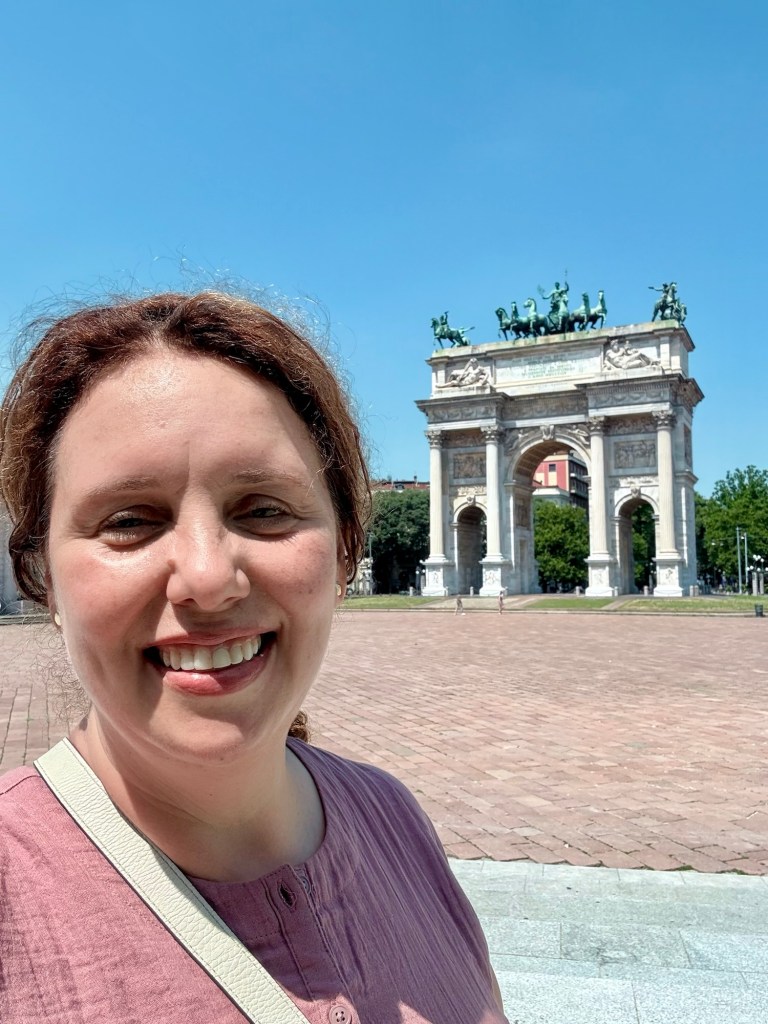
Originally built in honor of Napoleon Bonaparte, the Arch of Peace was only completed after his fall, when the Austrians took control and changed the monument’s dedication. In 1859, Napoleon III and Vittorio Emanuele II passed under it, victorious after the Battle of Magenta – a symbolic moment for the unification of Italy.
Georges, of course, couldn’t miss this opportunity. He positioned himself strategically, chest out, gaze toward the horizon, and solemnly asked us: “Take my picture, just like a victorious general!”

Duomo di Milano – a cathedral that has witnessed over seven centuries of history
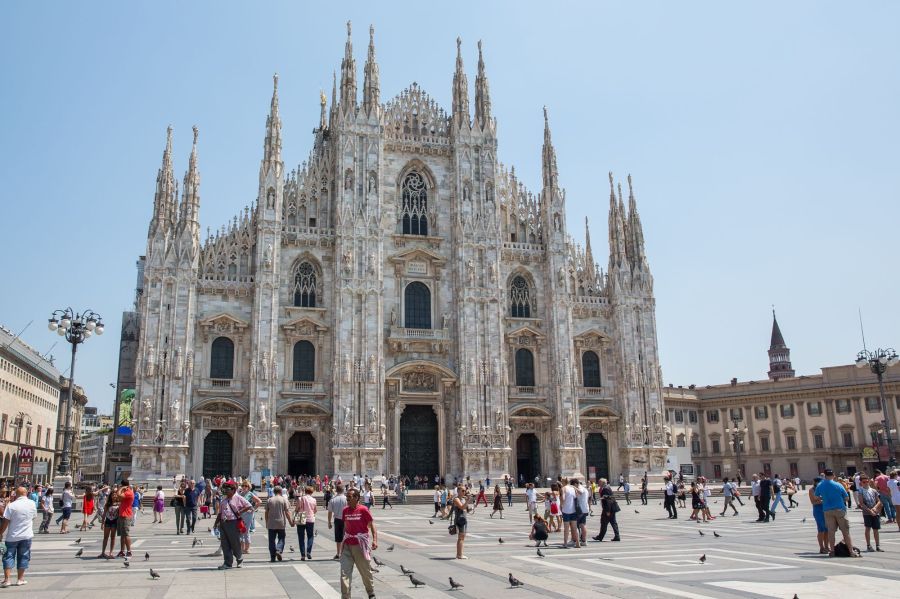
Arriving in front of the Milan Cathedral, we glanced at one another and sighed in unison: “Wow… how many steps are left to the top?” We breathed a collective sigh of relief when we realized our tickets included the elevator ride—I’m already tired of spiral-stair marathons, crowds, and extreme exercise without a breath of fresh air.
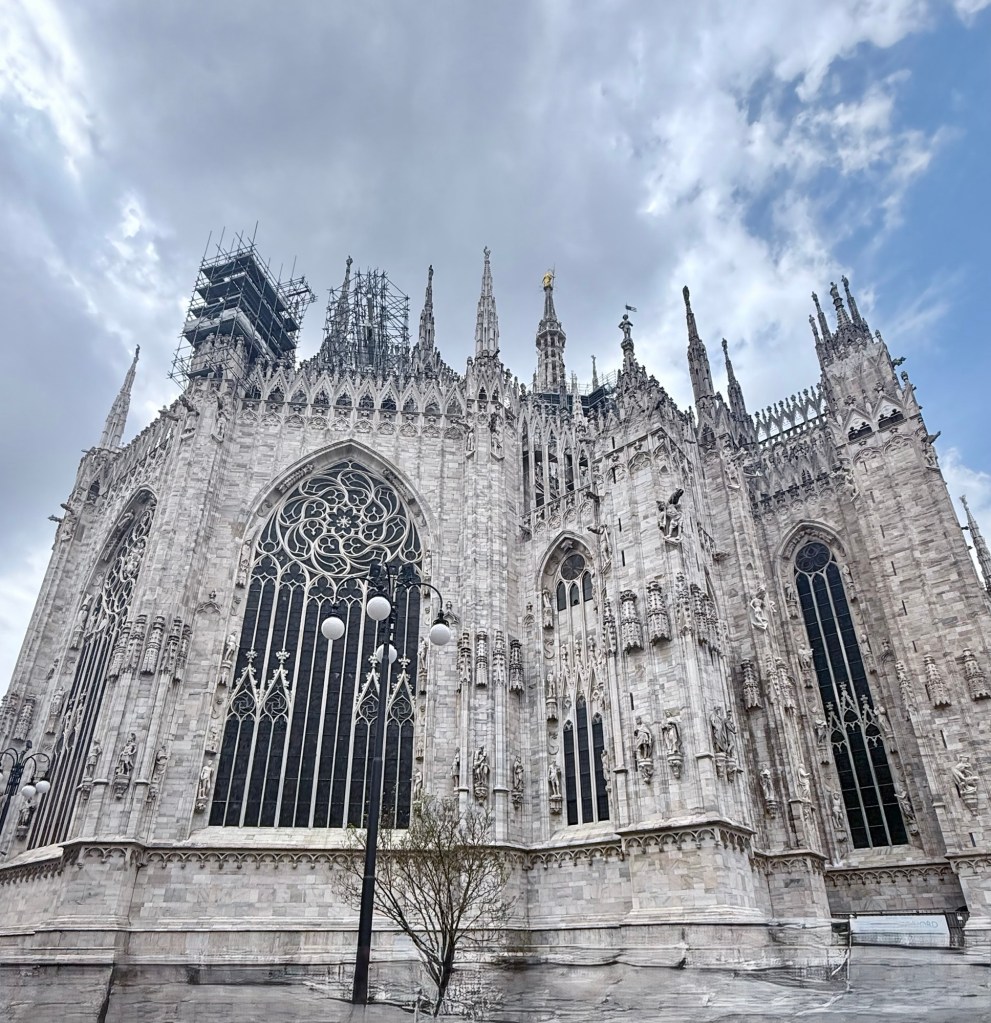
The cathedral, with its Gothic pinnacles and decorations so intricate they look as if they were crafted with tweezers, leaves you speechless—and not just because of the effort it takes to climb.
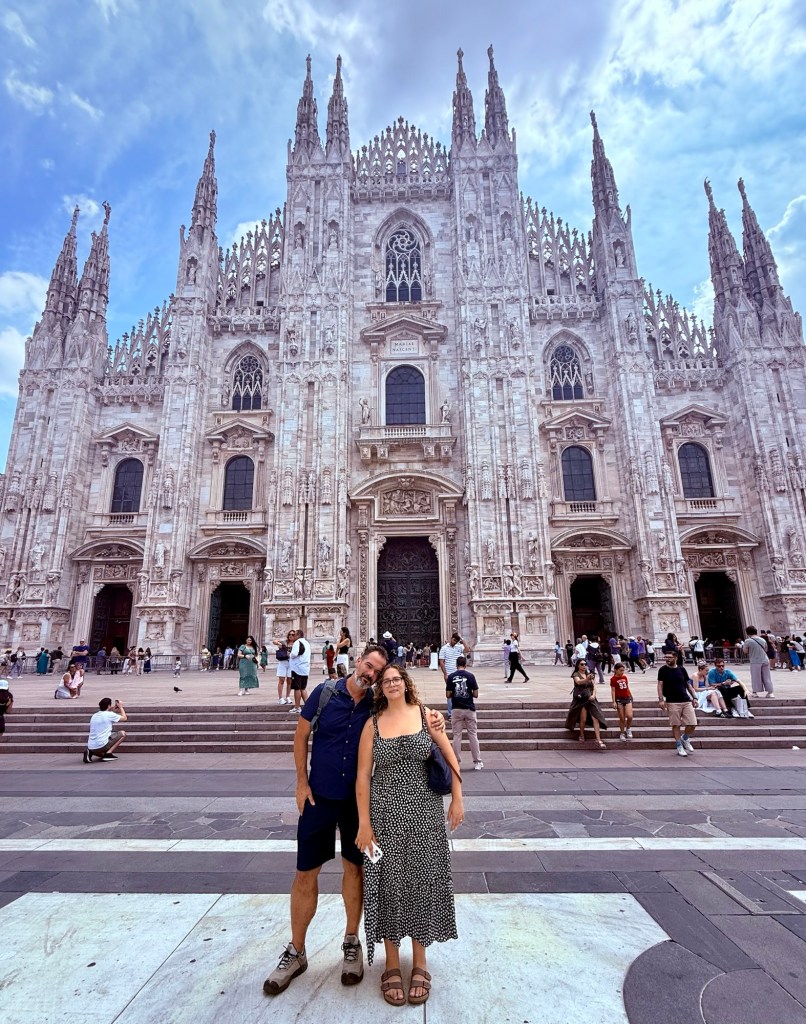
Construction began in 1386 and, in typical Italian style, was not officially completed until 1965. That’s almost 600 years of “let’s add another statue and we’re done.” Napoleon, pragmatic as he was, crowned himself king of Italy here in 1805 and ordered the completion of the façade – probably because he wanted a more photogenic backdrop for his coronation selfie.
The cathedral has over 3,400 statues, including one of Mussolini (discreetly hidden so as not to spoil the vibe) and a holy relic: a nail from the cross of Christ, kept at the top of the dome. Georges asked if we could climb up there. Anna said she would only go up if there was a gelateria at the top. 😀
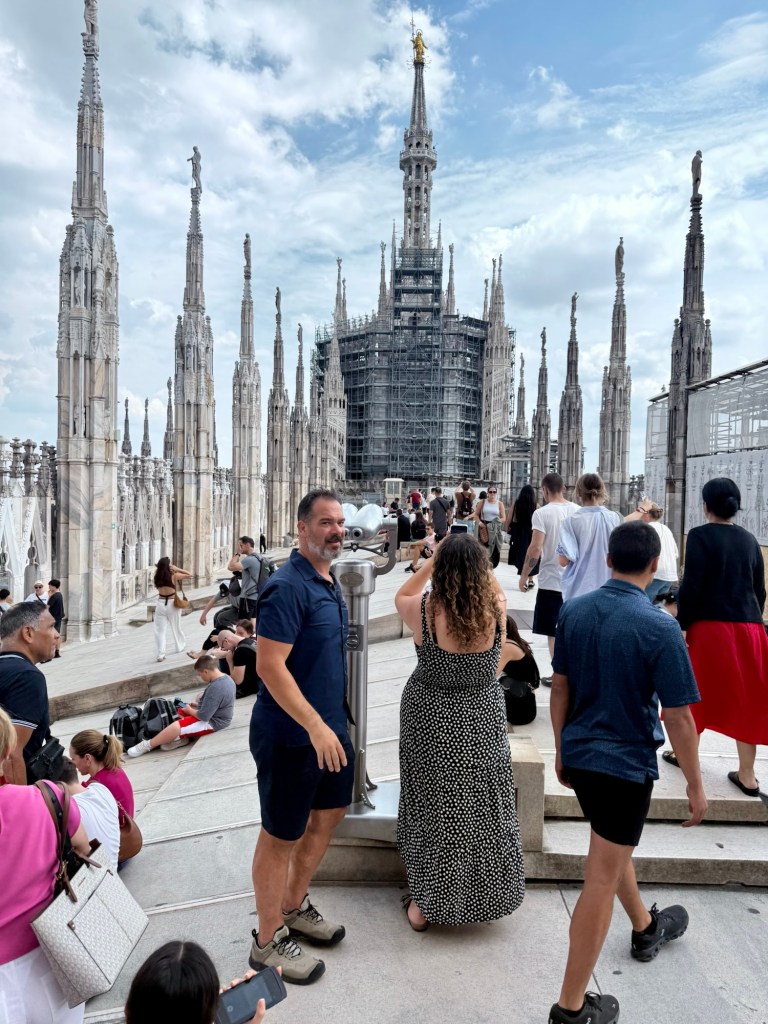
Finally, we climbed to the top (Anna and I by elevator, while George, naturally more spartan, took the stairs), and up on the rooftop, surrounded by dozens of Gothic spires rising like stone flames toward the sky, we came to a halt. Not for photos. Not for Instagram or Facebook. But because, for a few moments, we felt that rare kind of silence that makes you fall quiet without feeling awkward. From there, Milan looked like a living painting, and the Duomo—a cathedral not just of marble, but of time, of faith, and of dreams sculpted with patience. It’s incredible how much people can build when they’re in no hurry.
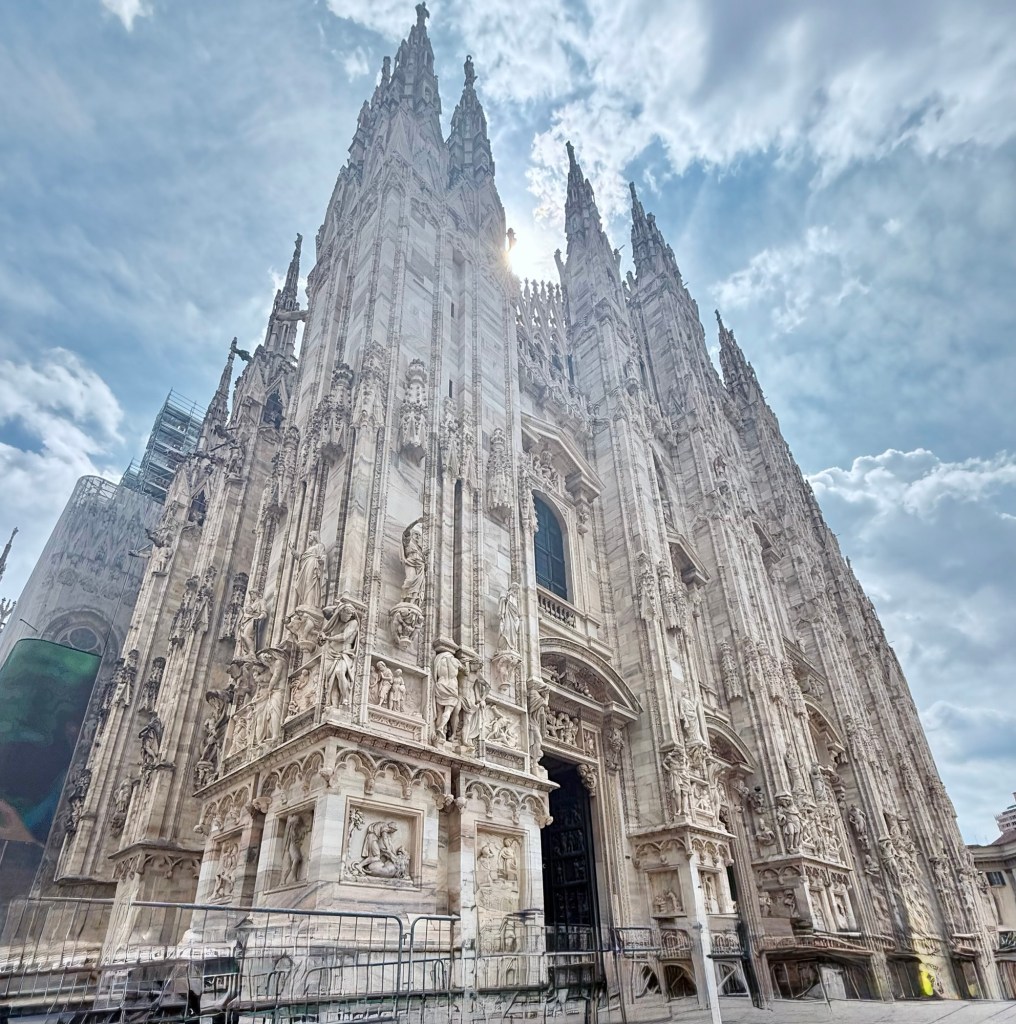
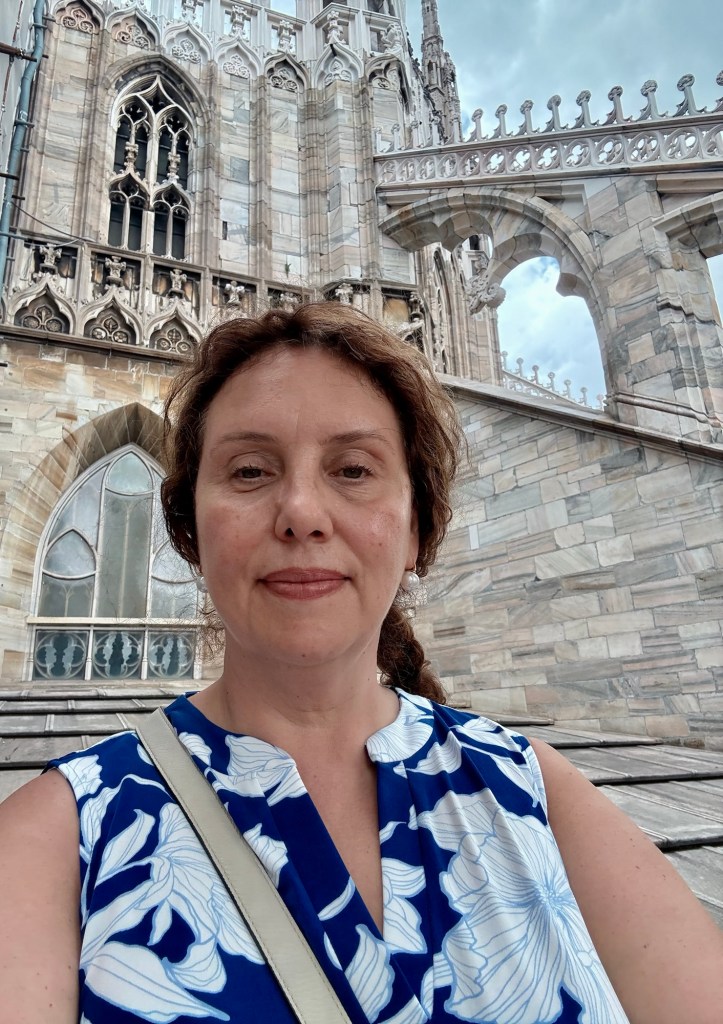
There, we came across more winding staircases, beautifully ornamented and as narrow as my post-vacation shopping list, which carried us up another level—to the very top.
Consequently, under 32 °C and the blazing sun, I realized I hadn’t escaped that final staircase marathon.
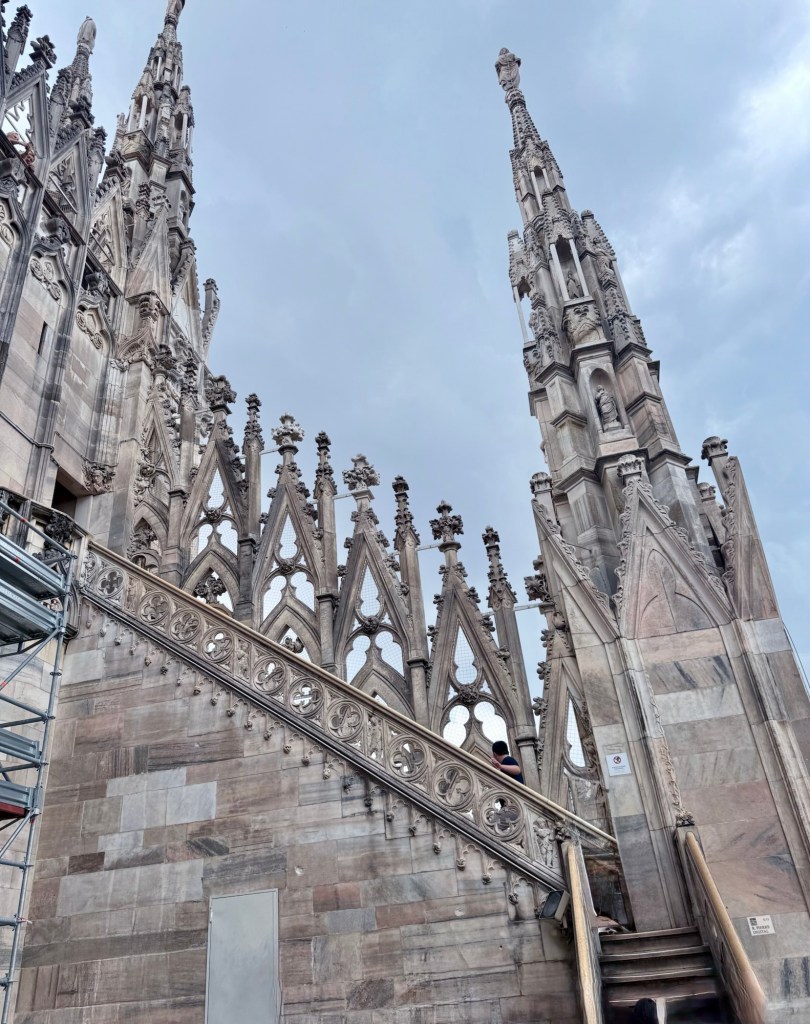
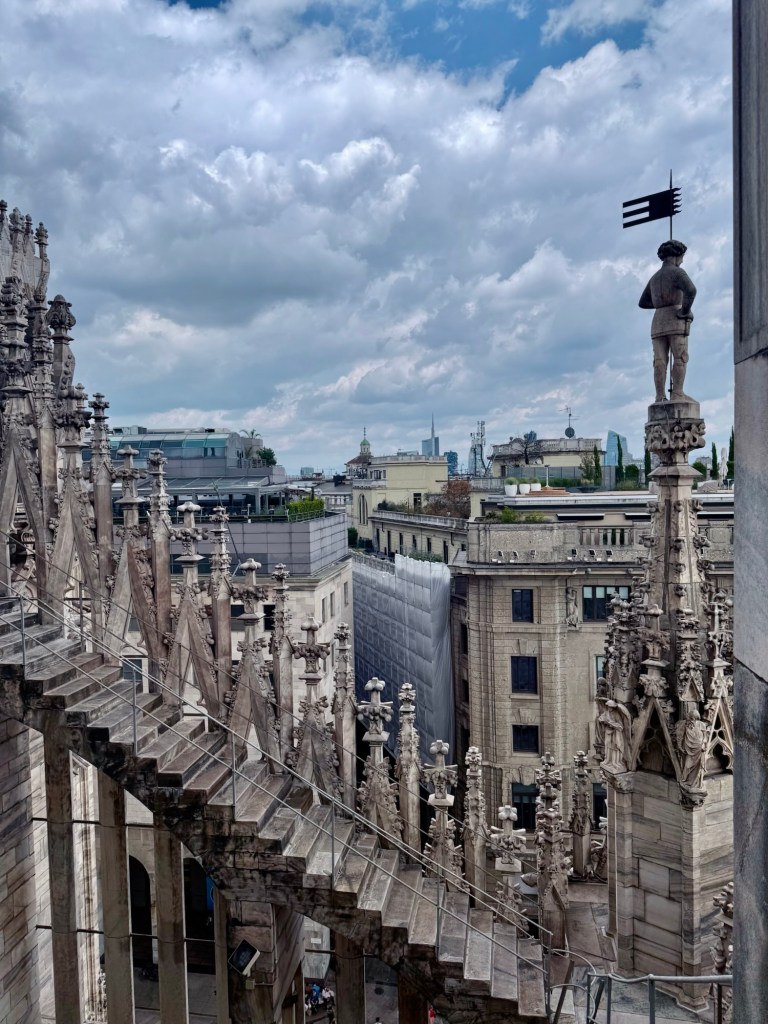
The statue of Saint George at its summit, created by Giorgio Solari in 1403, was damaged in the bombings of 1943 and moved to the Duomo Museum.
The current replica, installed by Mario Bassetti in the 1950s, replaces the original one.
This spire symbolizes both the cathedral’s rich history and the generosity of its benefactors.
Eventually, we climbed to the top, and up there, on the roof, surrounded by dozens of Gothic spires rising like stone flames toward the sky, we stopped. Not for photos. Not for Instagram or Facebook. But because, for a few moments, we felt that rare silence that makes you quiet without feeling awkward. From there, Milan looked like a living painting, and the Duomo—a cathedral not only of marble, but of time, faith, and dreams patiently sculpted. It’s incredible how many great things people can build when they’re not in a hurry.

Galleria Vittorio Emanuele II – the royal mall with some superstitions underfoot
After taking in the view from the roof of the Duomo, we stepped into the Galleria Vittorio Emanuele II – where Milan shows off its elegance with nonchalance. Opened in 1877, the gallery is like a royal walkway covered in glass and steel, one of the first structures of its kind in Europe. If Instagram had existed in the 19th century, this would have been the place to take all the photos.
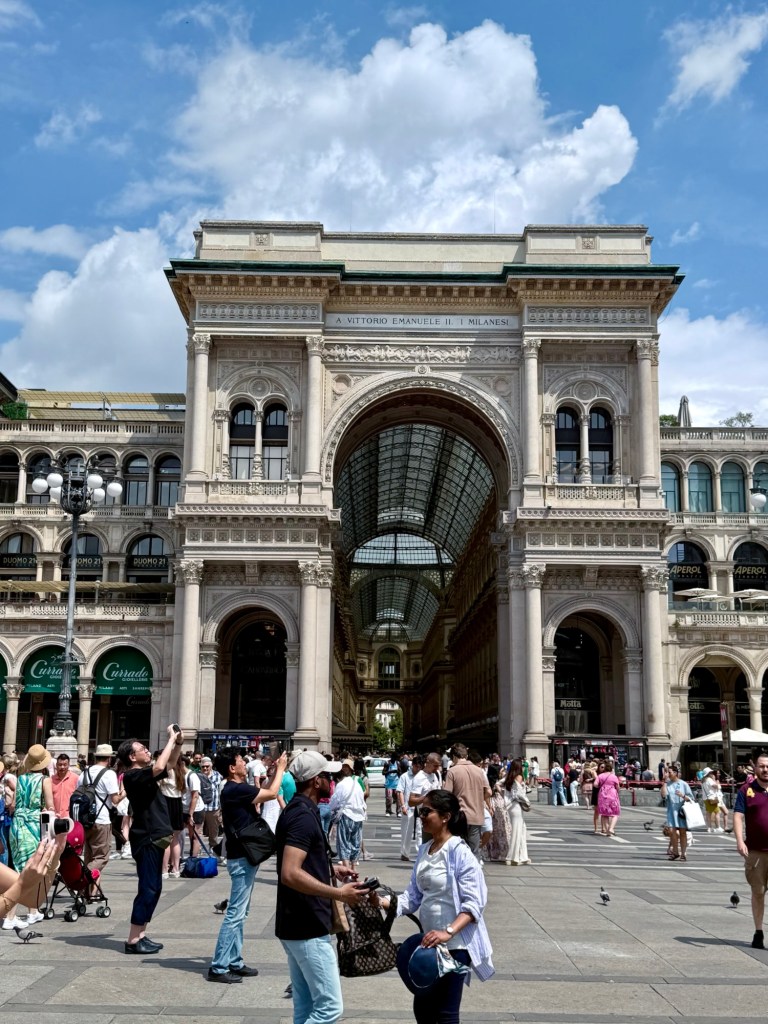
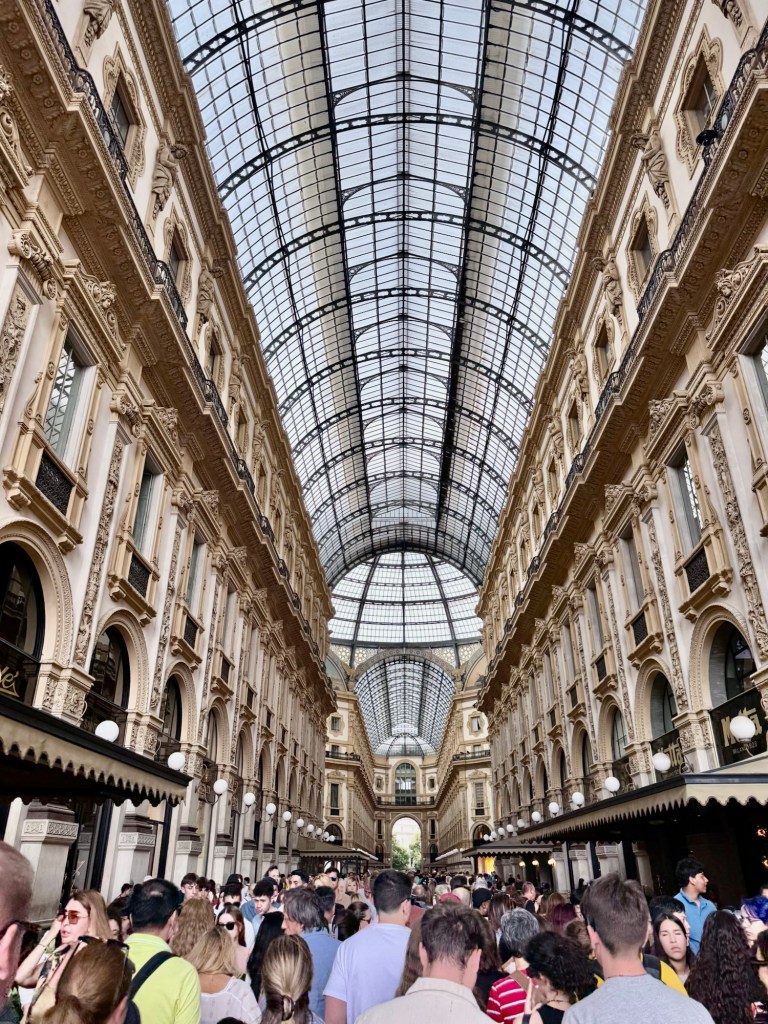
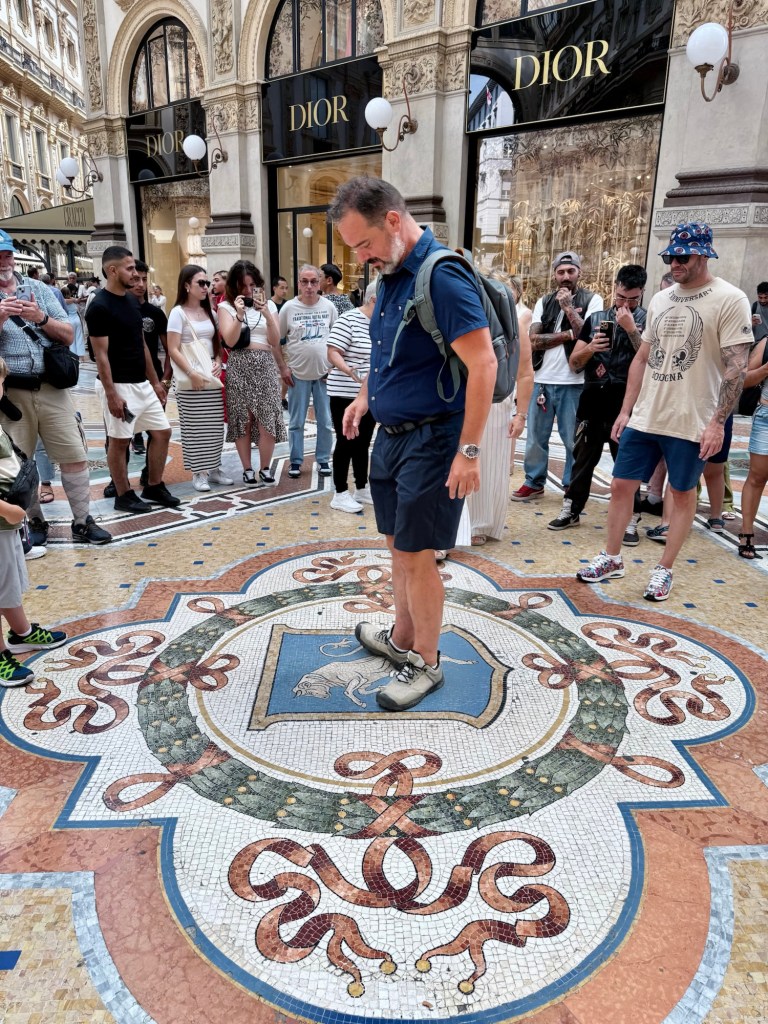
However, the real attraction is not just the architecture, but the mosaic of the Turin Bull, located right in the middle.
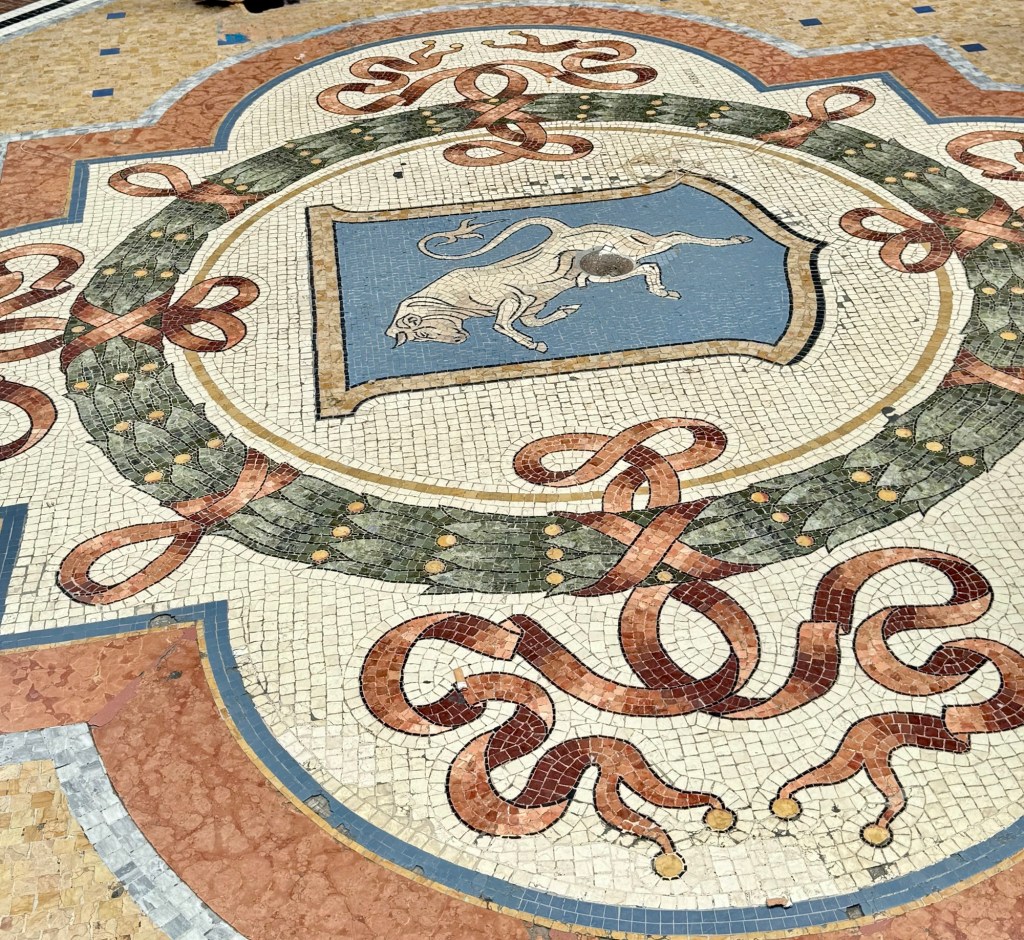
Tradition has it that if you turn your heel on the bull’s “jewels,” it will bring you good luck.
Georges, skeptical but curious, tried it discreetly.
Piazza della Scala – from medieval church to opera temple
Our last stop of the day took us to Piazza della Scala, an elegant and peaceful square where history and art come together subtly but firmly. The name comes from the famous La Scala theatre, built in 1778 on the site of a former church, Santa Maria della Scala – a detail that seems to say that in Milan, music has taken the place of prayer, but has retained its solemnity.
Few people know that the theatre was almost completely rebuilt after being bombed during World War II. Today, it seems untouched by time, with its sober and imposing facade, like a veteran actor who no longer needs applause to know who he is.
In front of the theatre, Leonardo stands serious and imposing, surrounded by four students who look ready to ask him for homework. It’s the kind of statue that not only looks good in pictures but reminds you that Milan is not just about fashion – it’s also about genius, patience and ideas that have changed the world.
Wrapping it up: Milan, between rushing around and moments that last forever
Milan had us running around. It took us up on rooftops, spun us around on mosaics, walked us through history, and tested our patience (especially in the morning, when Anna would not wake up without some serious negotiation). But it also won us over. With its Gothic beauty, stories hidden in its walls, small, intense coffees, our laughter in front of monuments, and Georges’ jokes, which have already become family legends.
We came with plans, booked tickets, and a long list of “must-sees.” We leave with memories, memorable quotes, and a photo album full of crooked but authentic shots. And, above all, with the feeling that, even though we were always on the run, we were together. And that makes all the fatigue worthwhile.
Milan, thank you for the adventure. And yes, Anna still dreams of a vacation where she doesn’t wake up at the crack of dawn. But I know that, despite her grumbling, she enjoyed it. Maybe even more than she wants to admit.
Discover more from "The world is your oyster".
Subscribe to get the latest posts sent to your email.
