
For the past two days, we have left behind the charms of Milan to explore Switzerland, and I must confess I haven’t regretted this decision for a single moment.
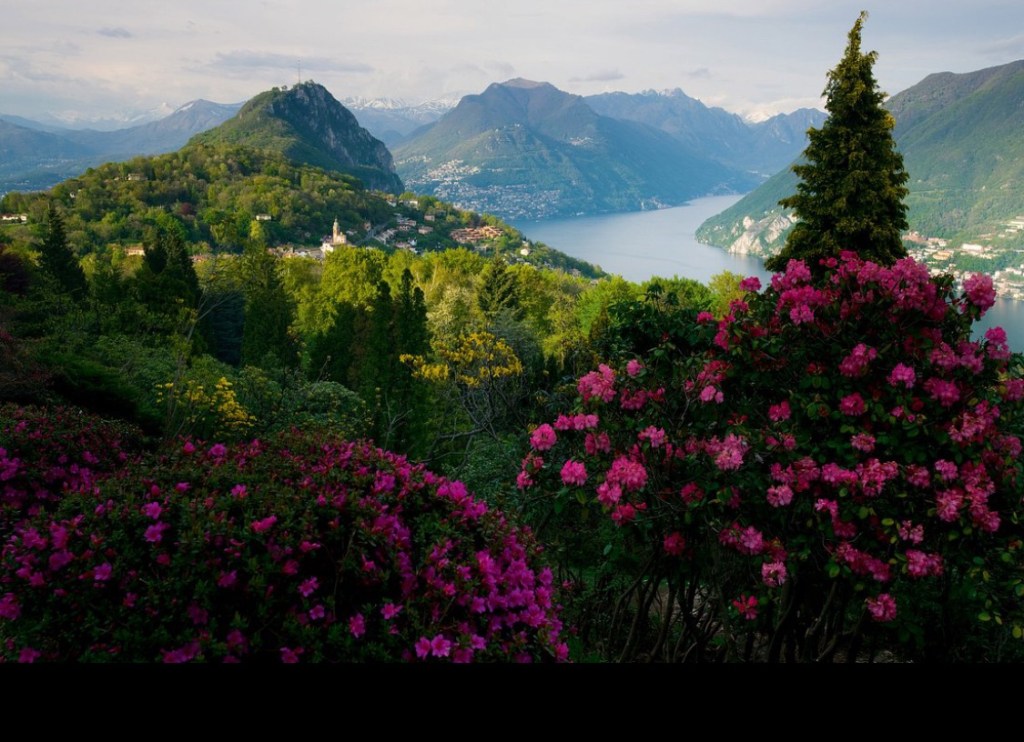
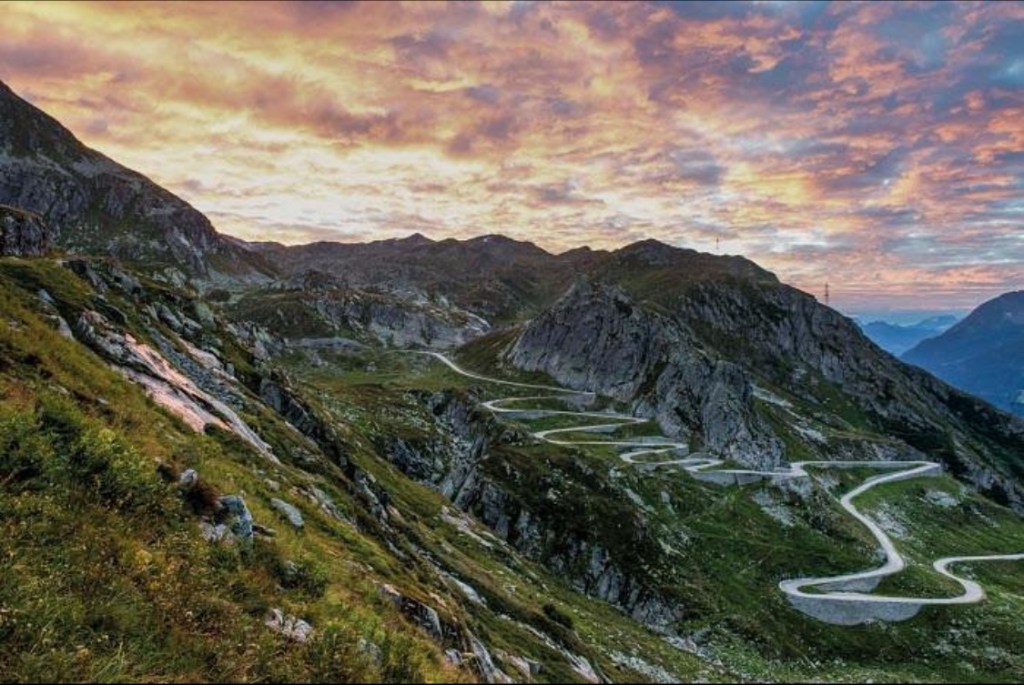
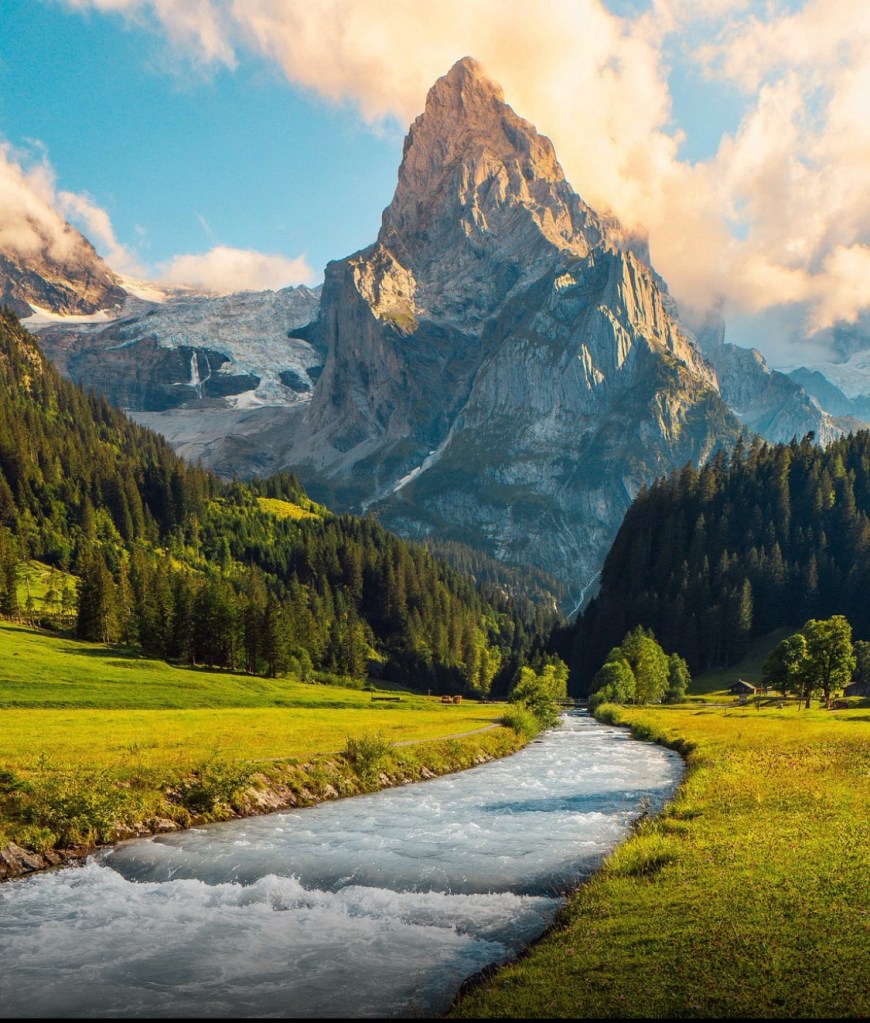
Until now, I believed nothing could outshine the majestic splendor of Canada, but I was wrong: Switzerland reveals itself as a fairytale realm, a true paradise.
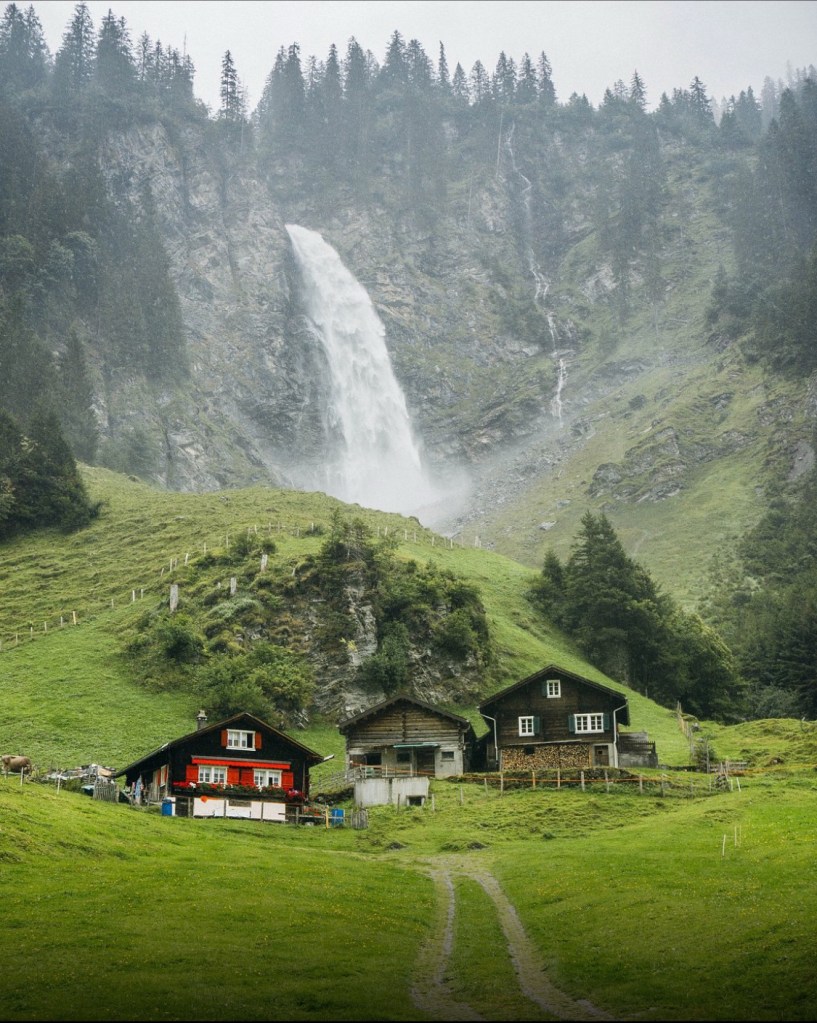
Towering mountains shimmer in crystalline lakes, springs burst forth from rocky cliffs, and the air is so pure it feels like it cleanses your soul.
On the lush meadows, alpine flowers cast their vibrant colors, while cows graze in an idyllic setting.
Impeccable cleanliness, unwavering respect for rules, and a high level of civility make every corner here an unforgettable experience.
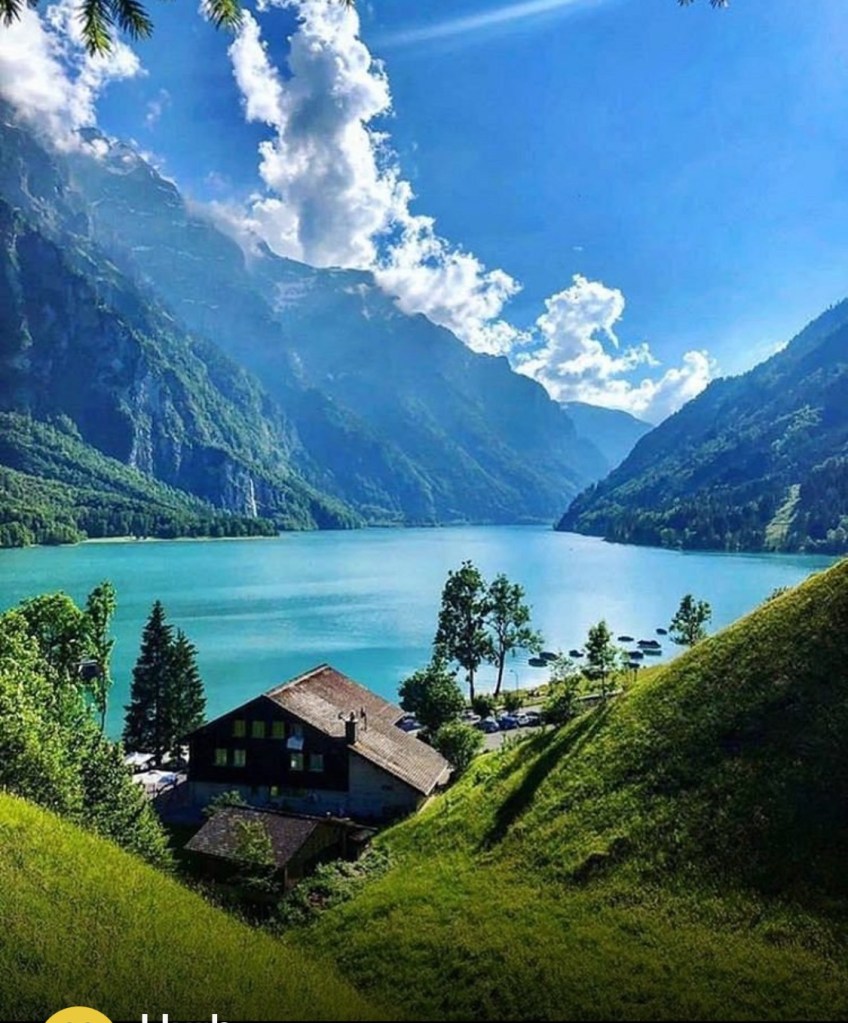
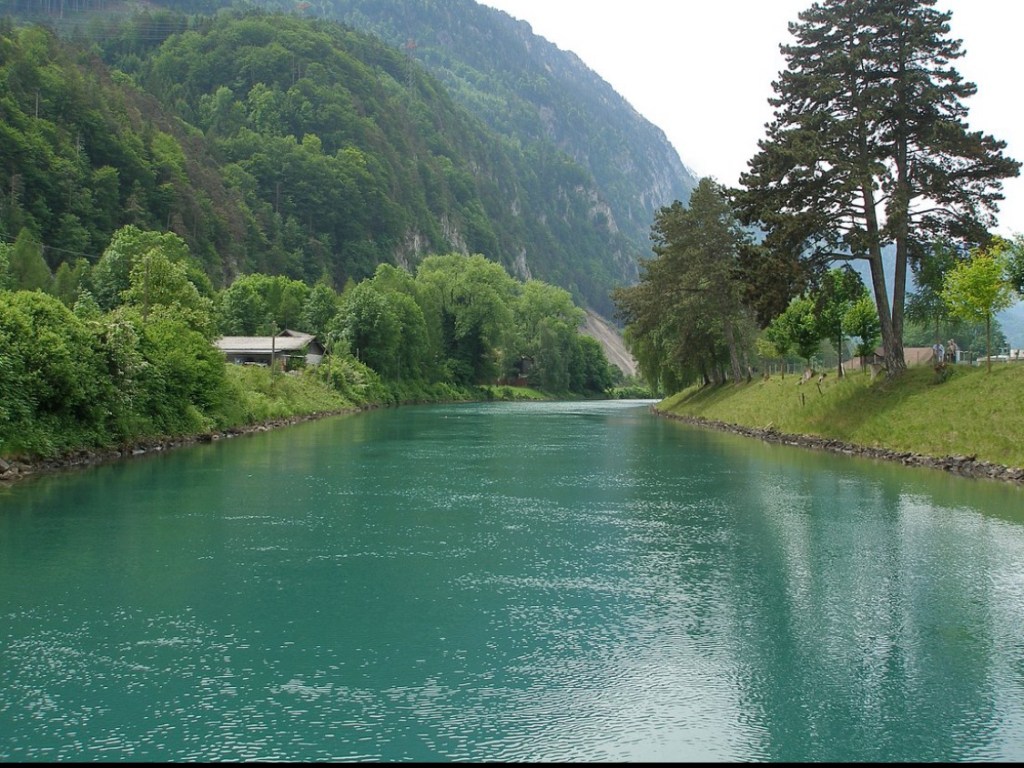
We ended up visiting Switzerland because Georges isn’t the type to buy a fridge magnet as a souvenir. No. He wants a halberd. 🙄 When I asked him why, he said, “It’s for feng shui. Chi energy flows better when intimidated. And here we are, straying from our Italian itinerary to reach Sempach, the town where we will retrieve the aforementioned… cleaver. Sorry, halberd.
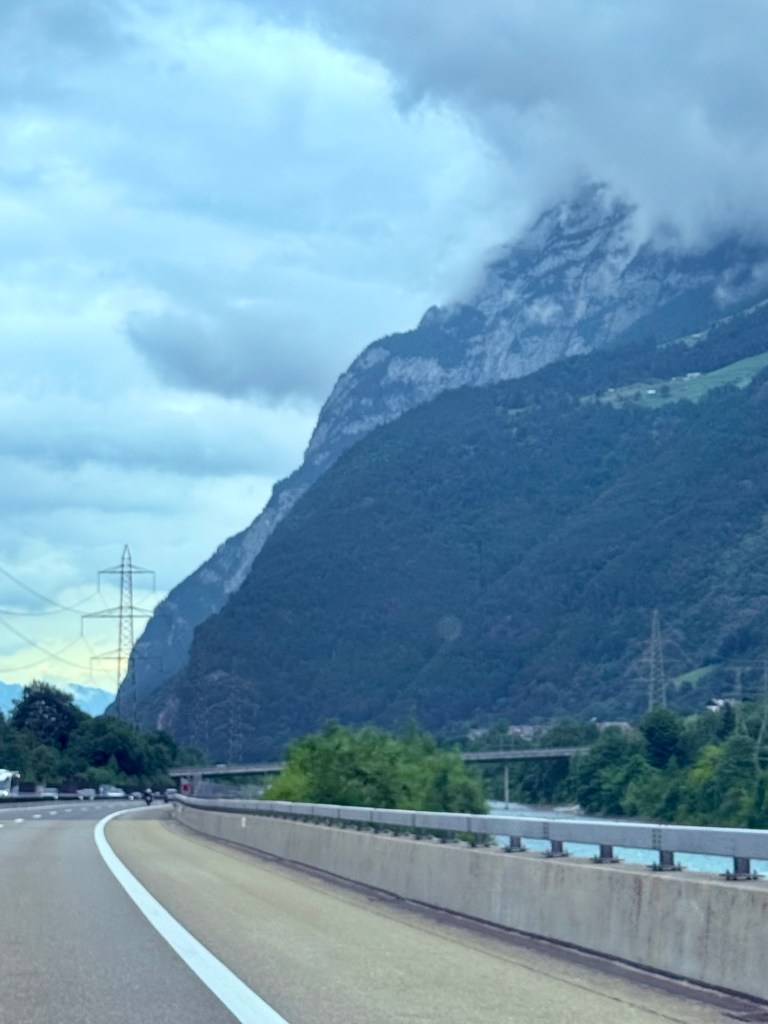
We woke up at the crack of dawn (or so said Georges, who considers any waking before 9:00 a.m. a form of medieval torture) and got in the car, coffee in hand and GPS set to “souvenir shop for retired knights.” The road was pure poetry: winding lanes, tunnels that seemed to teleport us from one valley to another, and mountains rising majestically on either side, like silent spectators watching our road show.
Bellinzona: Because One Castle Just Isn’t Enough
We hadn’t planned on visiting Bellinzona. It wasn’t on my itinerary, the map, or even in my vague mental sketch of “places that sound vaguely Italian and have good food.” But then Georges got it into his head that we needed to see a castle. Not just any castle—one with “presence.” Something with towers, history, and ideally, a gift shop that sells medieval weaponry. So, off we went.
Bellinzona is home to three castles—Castelgrande, Montebello, and Sasso Corbaro—each perched at different elevations like a medieval sibling rivalry frozen in stone. Together, they form the only example of a medieval military complex in the Alpine region and have been a UNESCO World Heritage Site since 2000.
- Castelgrande is the oldest and most central, built on top of a rocky spur fortified since Roman times. It once housed a Roman garrison that was able to repel 900 Alemannic soldiers with only a few hundred defenders. Today, it offers impressive views and a lift that takes visitors up and down the hill smoothly and silently, because nothing says “ancient fortress” better than modern accessibility.
- Montebello, built by the Rusca family in the 13th century, is located higher up and was once a noble residence. It is a typical example of medieval multi-level architecture, with inner courtyards, fortified towers, and even a chapel dedicated to Saint Martin. Today it houses the Museo Civico, where Georges spent an unusually long time in front of the archaeological exhibits, no doubt looking for sketches of halberds.
- Sasso Corbaro, the smallest but highest of the three castles, was built in just six months in 1479 by the Sforza family. It is not connected to the other two castles, giving it the air of an introverted brother who moved to the top of the hill for more space. Today, it houses art and popular culture exhibitions and offers a panoramic view that is well worth the climb.
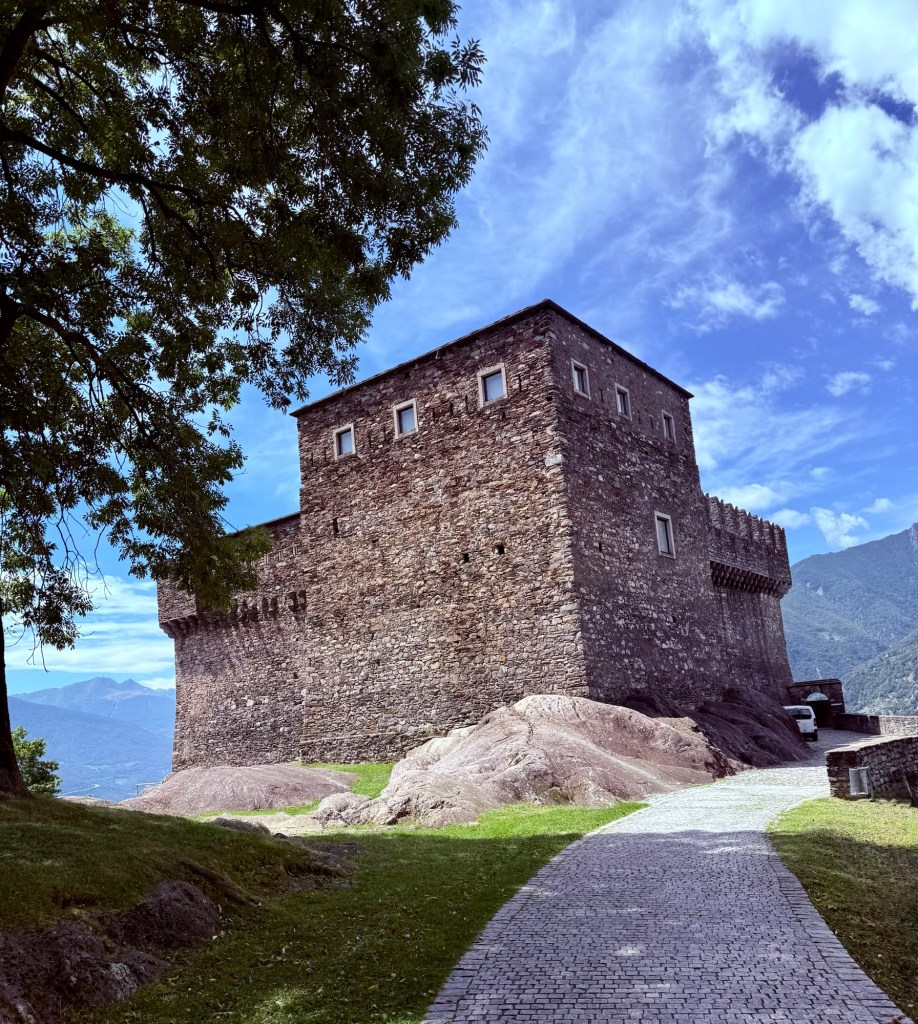
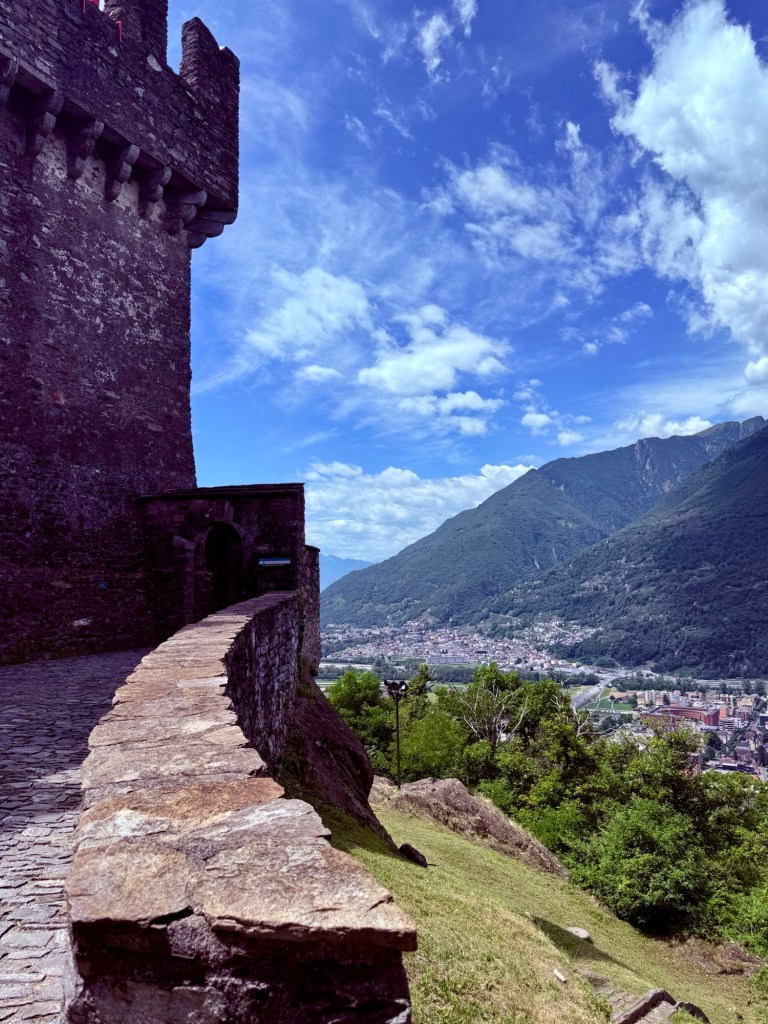
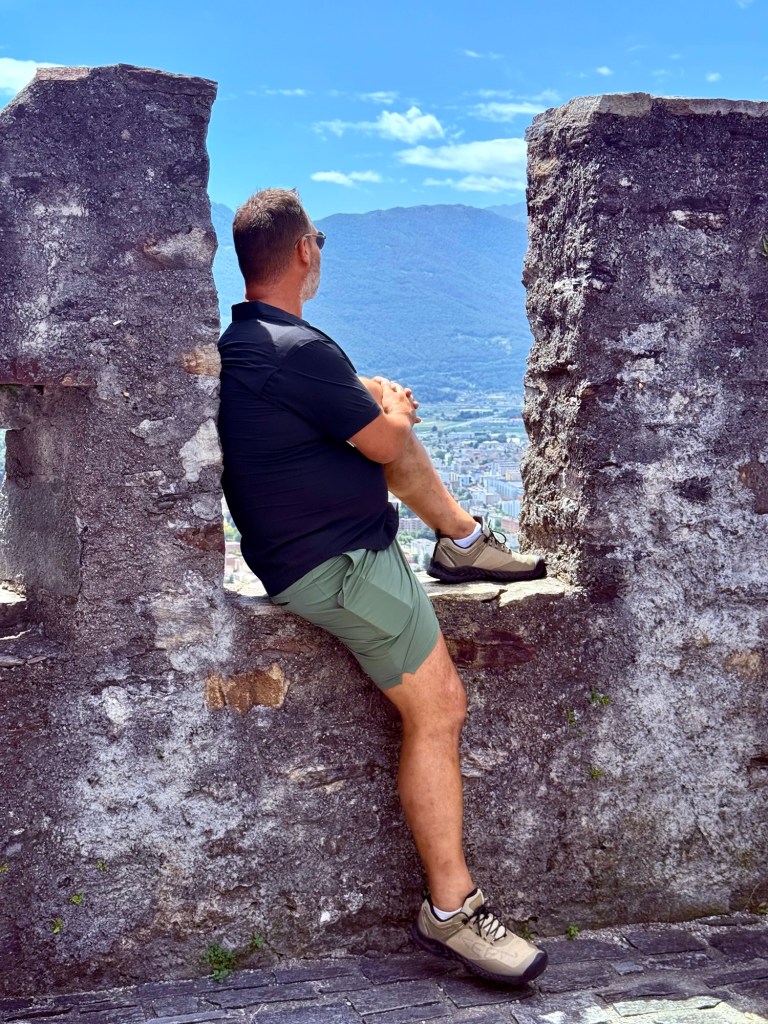
Each castle has its own personality, its own quirks, and its own slice of history. And while we didn’t leave with a full-sized halberd, we did leave with a deeper appreciation for medieval engineering and a bottle of local wine.
🏞️ Lake Como – picturesque, photogenic, and perhaps a bit too perfect to be real
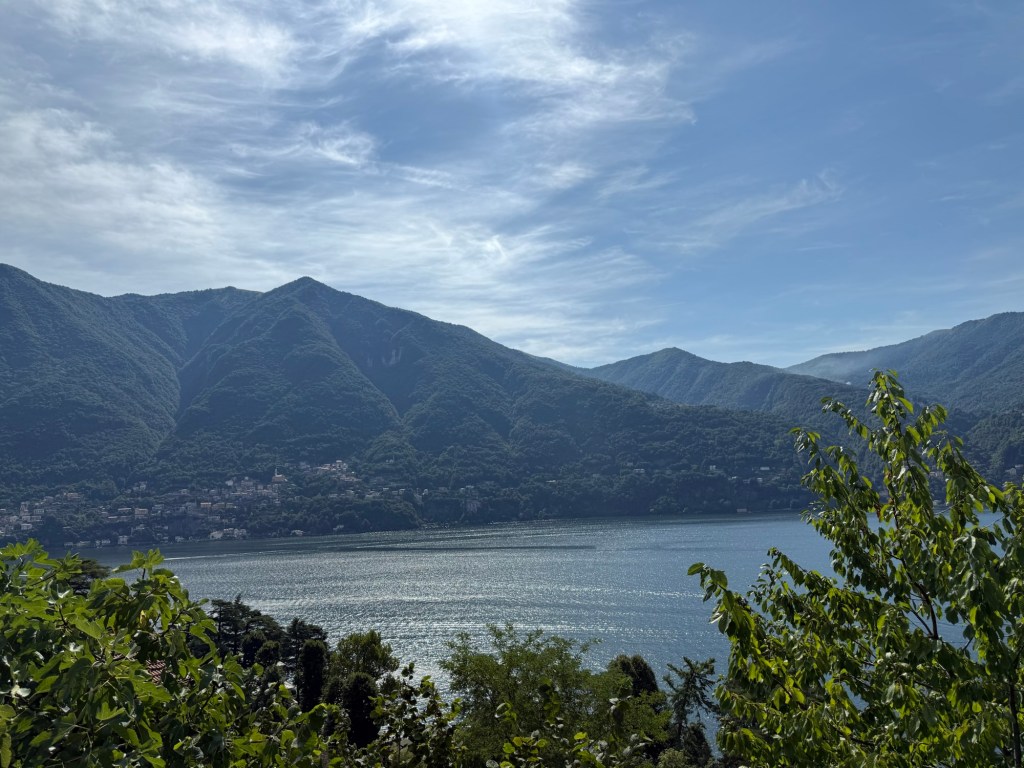
As we approached Lake Como, the landscape got more and more like something out of a movie. The colorful houses perched on the hills, the cypress trees swaying lazily in the breeze, and the lake glistening through the olive branches made us turn down the music and just gaze at the view. It was too beautiful to comment on.
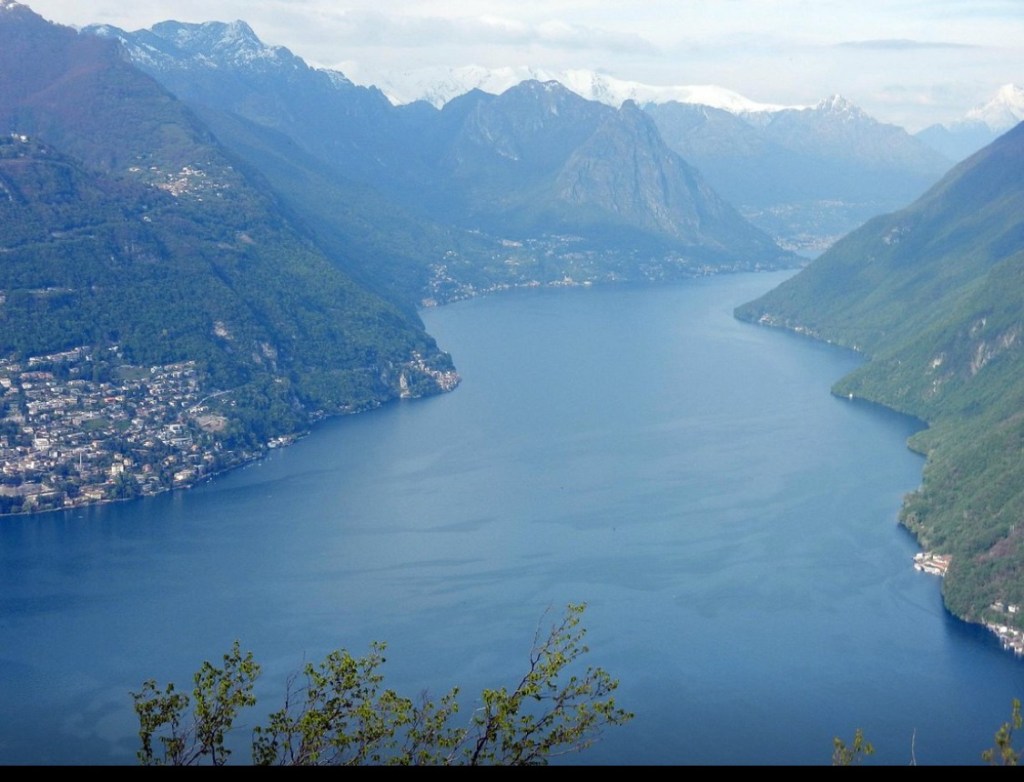
Even Georges fell silent. For three minutes. That was when I caught him contemplating the mountains with an almost dreamy expression. Then he began—as usual—to tell us about Switzerland. In great detail. From the color-coded recycling system to how people vote by mail in the cantons. Georges has been a fan of Switzerland for years and, if it were up to him, we would have moved long ago to a village with an unpronounceable name, where everyone has precise watches and decorative halberds on their walls.
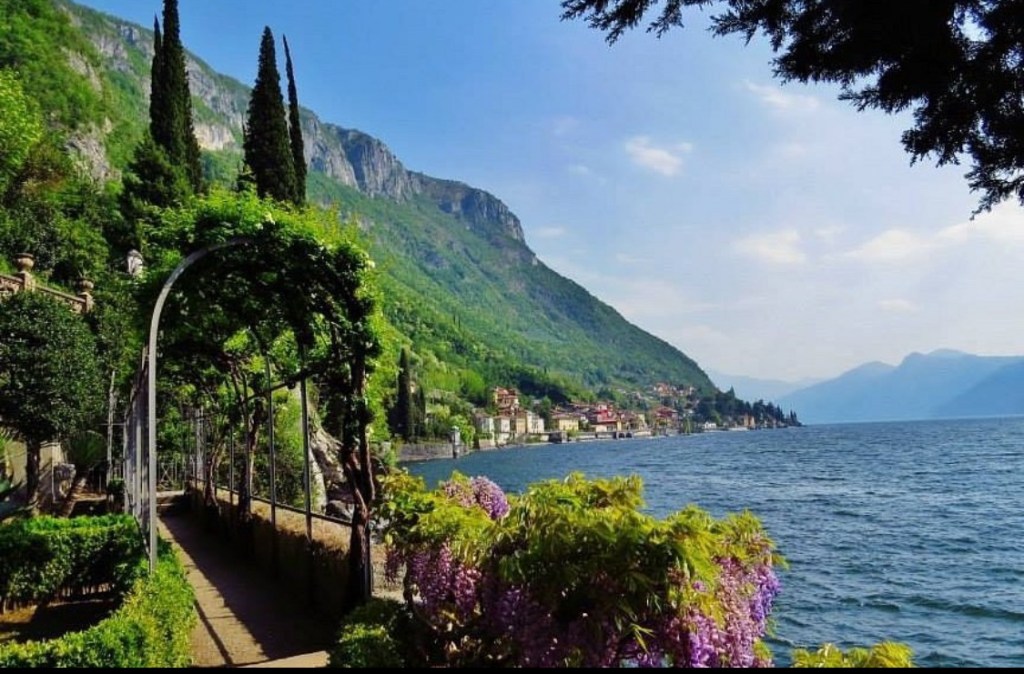
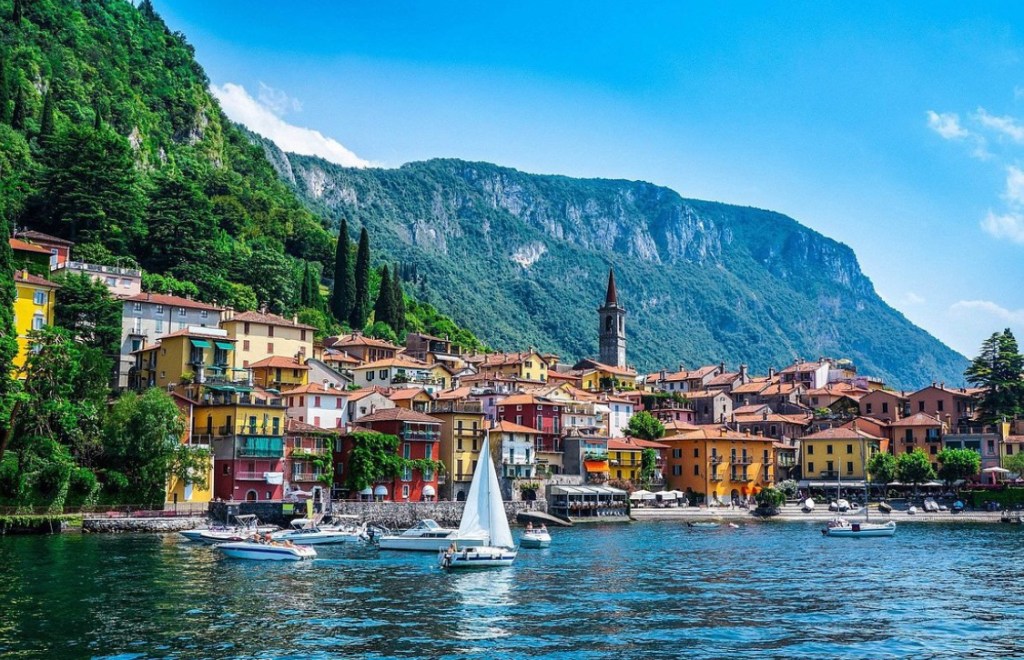
We stopped in Bellagio, the pearl of the lake, and got on a boat for a ride on the water. Lake Como is like a mirror stretched between the mountains, and from the boat you see everything differently: elegant villas that look like something out of a movie, lush gardens, small harbors where boats sway lazily. We floated slowly, with the sun in front of us and the wind in our hair, and for a moment we forgot everything. Even about the halberd. 😀
After our boat ride on the lake, with the sun and breeze making us feel like stars in an Italian period film, harsh reality hit us: we were hungry. And thirsty. And craving something delicious. So we stopped at a chic bistro overlooking the lake, where the prices were sky-high.
We opened the menu with enthusiasm and closed it again with palpitations. A glass of water cost as much as a bottle of wine at home, and a plate of pasta seemed to include the chef’s rent. But we were too hungry to back out. We consoled ourselves with the thought that we were eating with a view and that the plates were probably handmade by a local artist who had studied in Florence.
Georges, in his inimitable style, sighed dramatically, looked at the menu and said, “It’s expensive, but at least we don’t have to sell the car. Just a wheel. And maybe a kidney, if we have dessert.” 😀
After satisfying our hunger, thirst, and wallet (which was now making cricket noises), we got back in the car and headed for Lucerne.
🕰️ Lucerne: between medieval bridges, blue lakes, and Georges’ history lessons
The drive was a delight: winding roads, impeccable tunnels (this is Switzerland, after all), and landscapes that looked as if they had been painted by an artist obsessed with order and symmetry. As we approached Lucerne, the mountains became more dramatic and the lakes bluer than the Windows XP desktop background. Georges, of course, started his Swiss geography lessons again, explaining how Lucerne is the “gateway to the Alps” and that German is spoken here, but with a holiday accent.
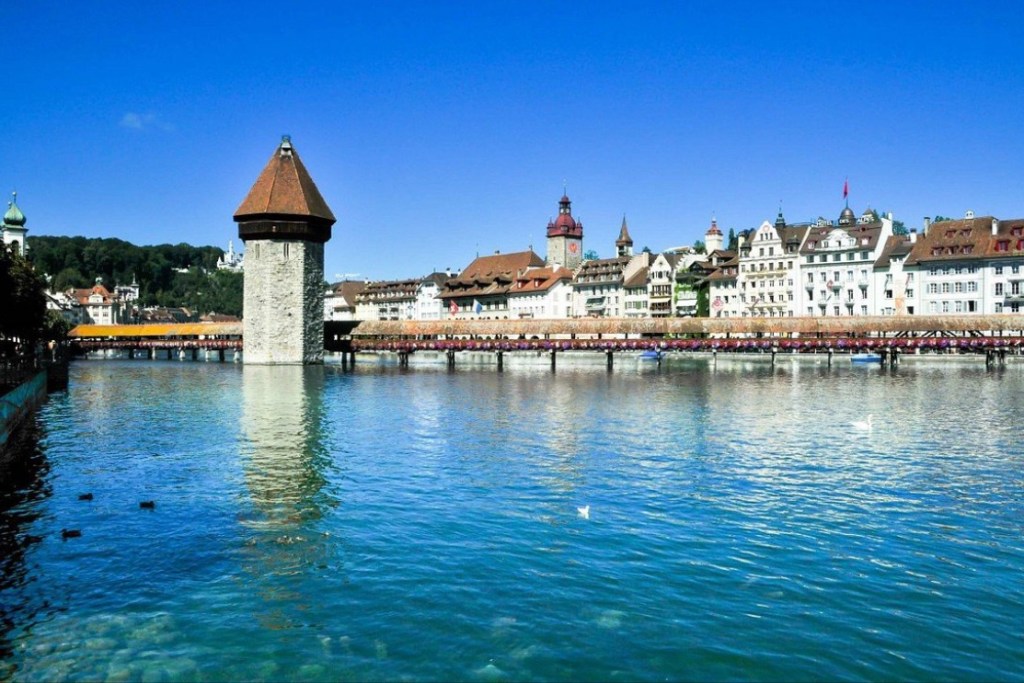
From the “Did you know?” category
– Lucerne has one of the oldest wooden bridges in Europe, the Kapellbrücke, built in the 14th century. What makes it special? In addition to its rustic charm, it has old paintings inside illustrating moments in the city’s history – a kind of medieval Instagram.
– The city has a clock tower, the Zytturm, which, out of a medieval whim, strikes the hour one minute before all the other clocks in the city. Why? Because it can. It’s a small detail that says a lot about the Swiss spirit: precision, but also a touch of personality.
– And, bonus for Georges: Lucerne has a transport museum that also includes… historical weapons. Coincidence? I don’t think so. 🙂
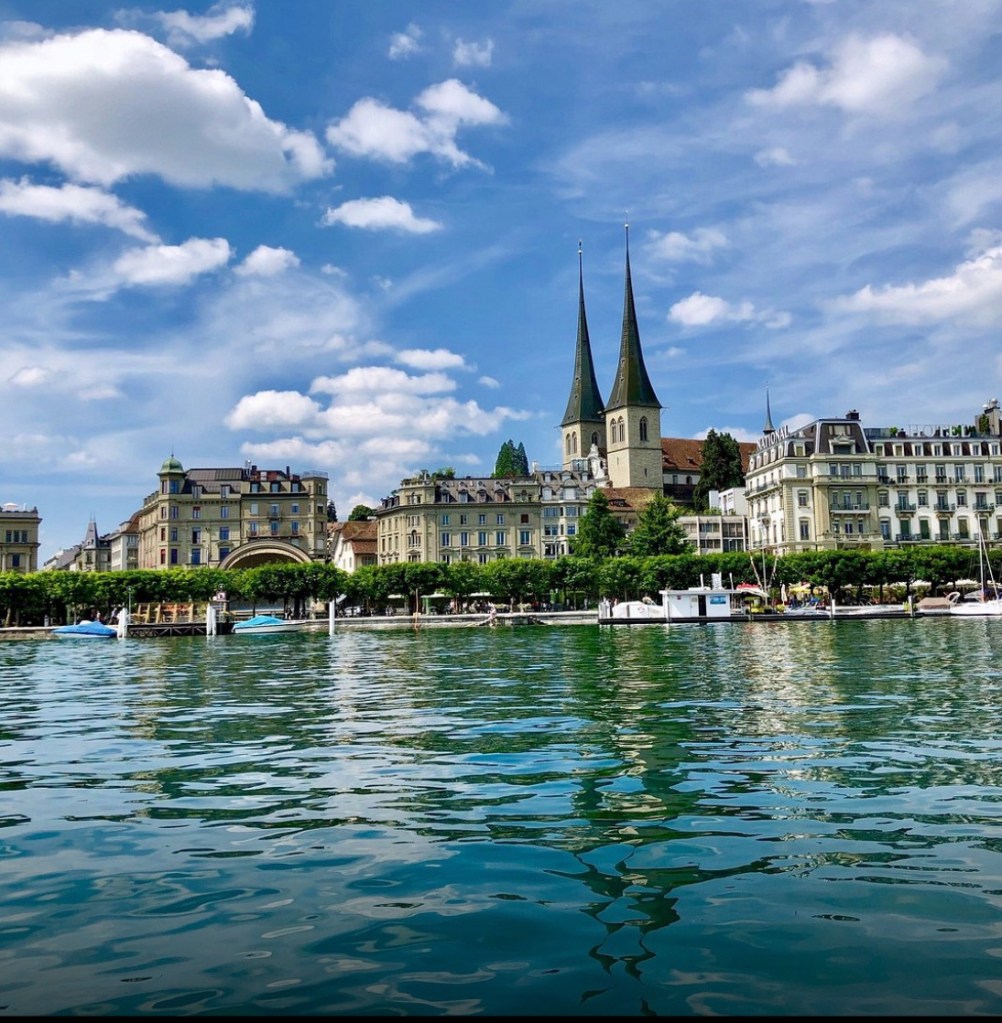
For a tourist, Lucerne can seem like a city from a parallel world: there’s no trash, no honking, and trains leave on the dot. But all this comes at a price. Literally. A cup of coffee can cost as much as a meal in another country, but at least you get to drink it while looking at the lake and the swans.
⚔️ Sempach: from glorious battles to Medieval shops with Georges
Sempach is a historically significant place in Switzerland, and the abundance of halberds in the area is no coincidence. The town is famous for the Battle of Sempach, which took place in 1386 between the Swiss Confederation and the Habsburg army. This confrontation is considered a key moment in the Swiss struggle for independence.
The halberd, a typical weapon of the Middle Ages, became a symbol of this struggle. In particular, legend has it that a Swiss peasant named Arnold von Winkelried sacrificed himself during the battle by throwing himself onto the enemy’s spears to open a breach in the Habsburg ranks—a heroic gesture that has remained deeply engraved in the Swiss collective memory.
Today, in Sempach, the halberd is not only present in museums and souvenirs, but also as a symbol of local identity. There are shops specializing in historical replicas, commemorative parades, and even exhibitions dedicated to medieval weapons, all reflecting pride in that historic moment.
So yes, if you want a halberd, Sempach is the perfect place 😉—a kind of Disneyland for medieval history buffs.
After wandering around Lucerne for a while, with wide eyes and a small wallet, we remembered our historical mission. Literally. Georges’ halberd. So we got back in the car and drove another 15 km to that shop – me still hoping, in vain, that it would be closed. Or that the owner was on vacation. Or that the shop had gone bankrupt. Or that it had been turned into a pastry shop in the meantime. But it was not to be. The owner was there, on duty, with a smile on his face and shelves full of trinkets that would have made any medieval knight cry with happiness.
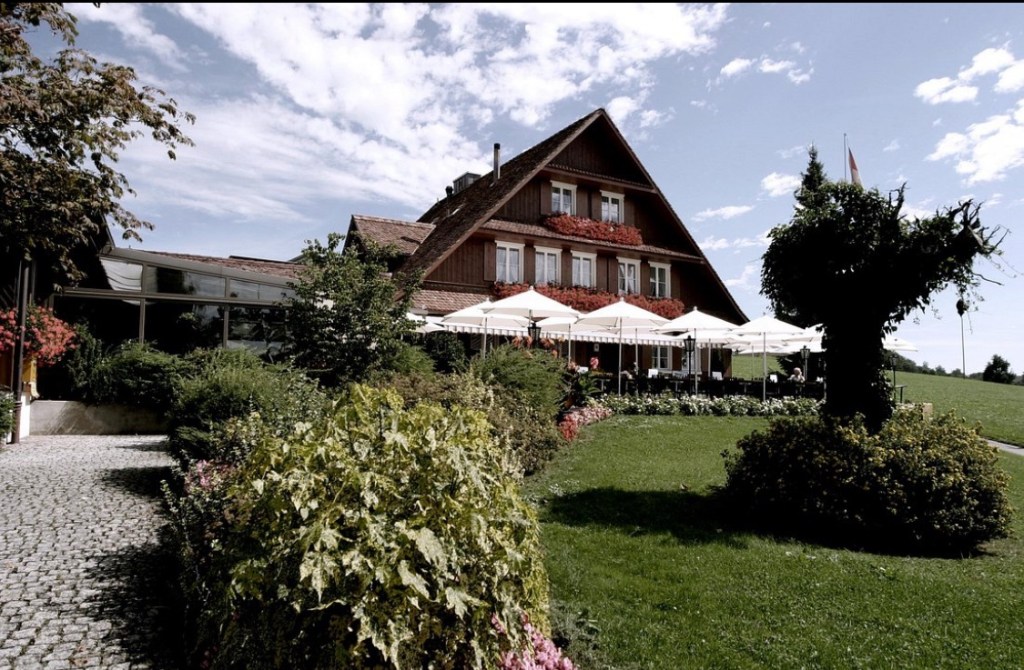
We wandered through the store like children in an interactive museum, except that here everything was for sale.
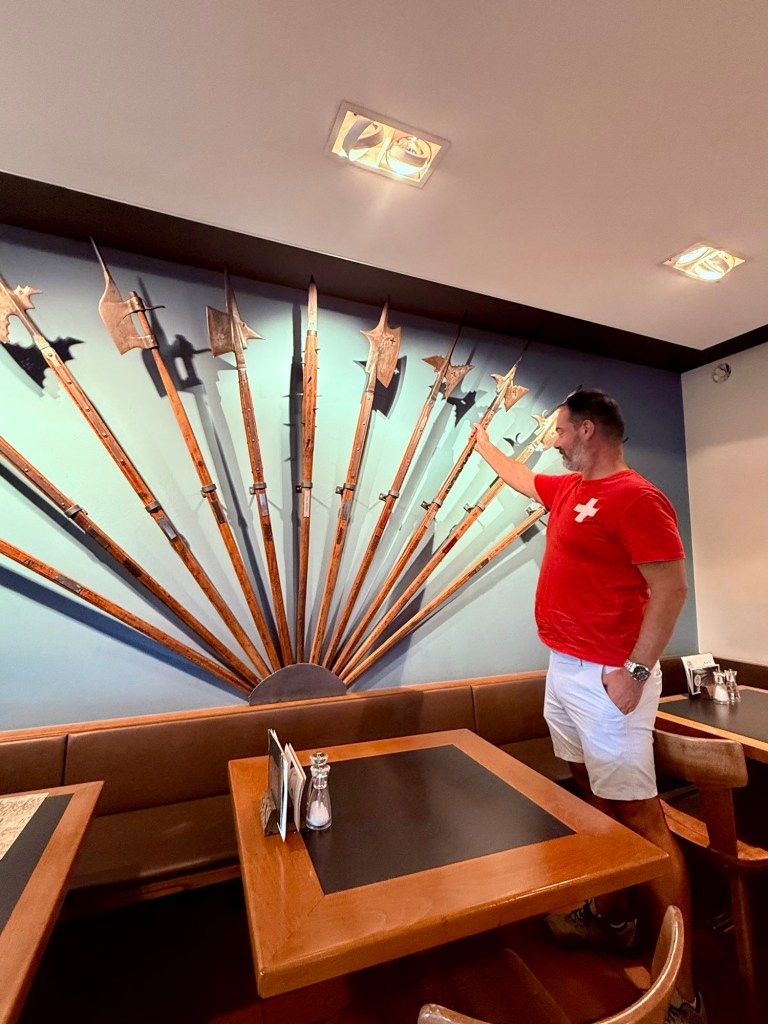
Georges inspected each piece with the seriousness of an archaeologist: “This one is too decorative. This one looks wobbly. This one has a handle that’s too modern.” After about 40 minutes of intense deliberation, he made his choice. A halberd with a sober appearance, but with personality. Just like him.
The key question followed, of course: “How do I transport it on the plane?” Because, no matter how much of a “medieval toy” it is, it’s still a piece of metal with a sharp point. And it doesn’t really fit in your carry-on luggage, unless you want to be detained at security and end up all over the news. In the end, after weighing all the transport options, he decided to leave it there. Maybe someone else will buy it. He thought it was safer that way. For us. For the security staff. And for our international reputation. 😀
I won’t even mention how much the whole adventure ended up costing, because there’s no point. Let’s just say that if the halberd had been made of solid gold, it would have been cheaper to bring it here by elk-drawn carriage. The fact is that now, in Georges’ collection—which already includes bayonets, pistols, Swiss helmets from who-knows-what wars or centuries—this ridiculous halberd takes center stage. With its lacquered handle and sharp tip, it stands proudly on the wall, between a hussar’s helmet and a ceremonial sword.
I’m seriously considering using it myself one day when cutting meat for the grill. At least it would be useful. Or, who knows, maybe Georges will take it with him on his walks around the neighbourhood to instill respect when taking out the trash.
Towards evening, we returned safely to Milan. Not only because we had already paid for the hotel and didn’t want to deal with the cancellation policy, but also because… honestly, we couldn’t afford to stay in Switzerland. There, you get the impression that you have to be at least a millionaire to spend a few days in a hotel without selling a kidney. Beautiful, clean, civilized—but our wallet breathed a sigh of relief when we crossed the border back into Italy. Georges, with his enthusiasm as an unofficial tour guide, promised us that he would take us to Bern sometime. “You’ll see how beautiful it is there!” he said, his eyes sparkling with plans.
I smiled politely, already mentally planning how to stock up on food back in Milan—because without reinforcements, we’d barely have enough left for a bowl of soup. If we were heading back into Switzerland, we’d better go in armed… with snacks. It’s a stunning country, no doubt, but our wallet is still in recovery mode after the halberd situation.
Discover more from "The world is your oyster".
Subscribe to get the latest posts sent to your email.
