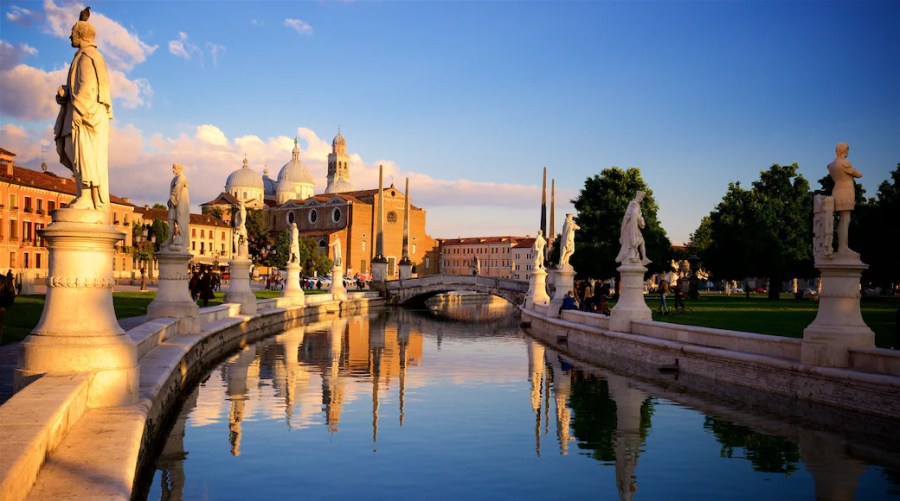
Last night we arrived in Padua and was surprised by how clean and well-organized the city is. The cobblestone streets sparkled under the yellow glow of the street lamps, and every corner seemed to proudly showcase its understated, harmonious beauty. We hadn’t expected to find a city so clean and full of life – Padua surprised me with an unexpected balance between history and urban freshness.
Who would have thought that such a small city could hide so many treasures? Padua, Venice’s lesser-known neighbor… We started out with the idea of visiting a few tourist attractions and, if the luck was on our side, enjoying a decent pizza. What did we discover? A surprising mix of history, art, spirituality, and… a café with horror stories served at dessert. In just two days, we went from sacred relics to frescoes, from botanical gardens with Renaissance roots to squares that look like movie sets. And yes, we drank mint coffee in a place where the ghost of a revolutionary is said to haunt.

Basilica di Sant’Antonio – where spirituality meets art (with a touch of mystery)
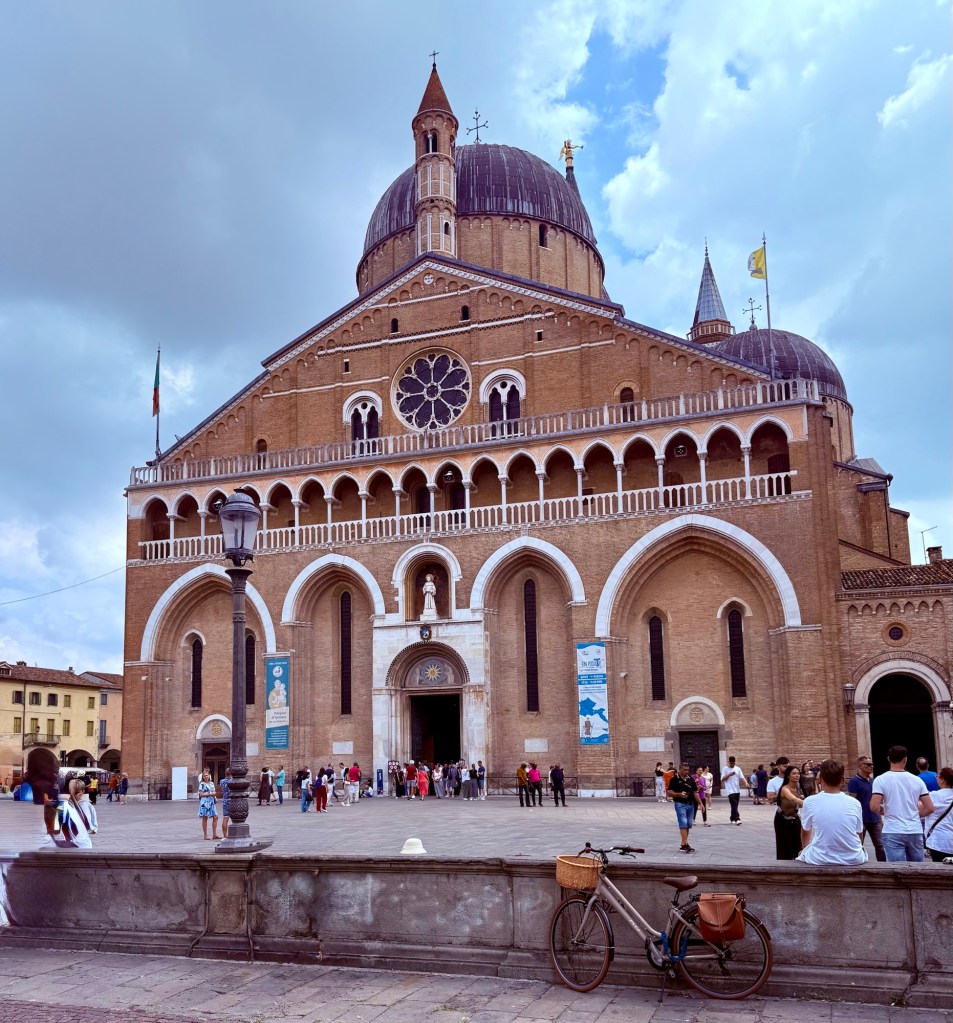
Our first serious stop in Padua was at the Basilica di Sant’Antonio – or, as the locals simply call it, Il Santo. And rightly so. This is not just a church, but a true symbol of the city, a place of pilgrimage for millions of people from all over the world. Built in the 13th century, the basilica is a spectacular mix of styles: Romanesque, Gothic, Byzantine, and even a little Moorish. It’s basically an architectural collage that looks surprisingly good. Inside, it’s quiet, but the place is charged with emotion. People come here to pray, light a candle, or simply admire the beauty of the place.
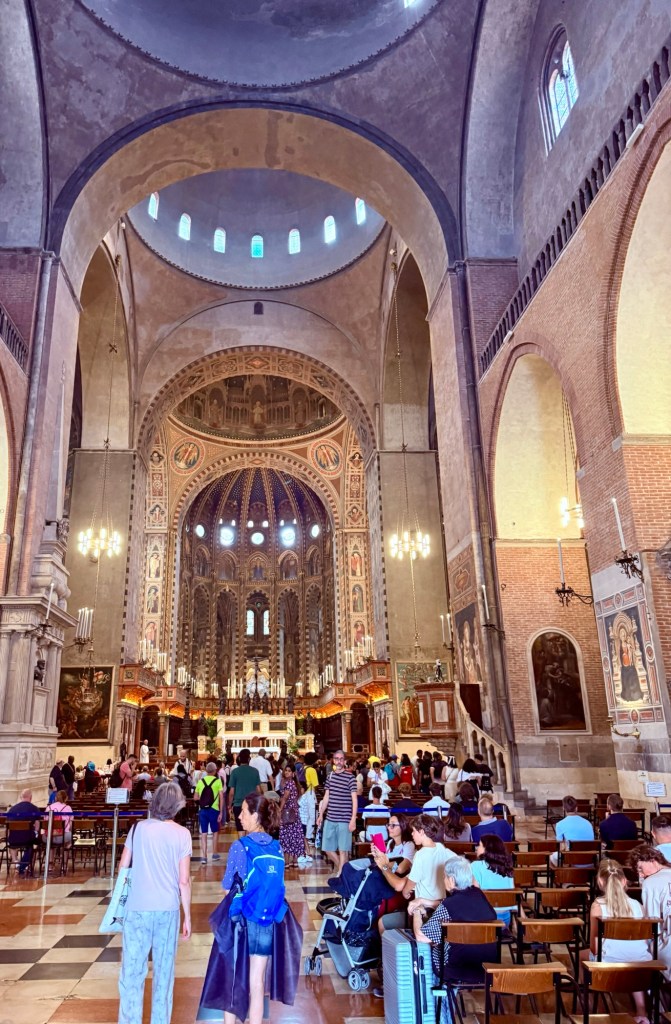
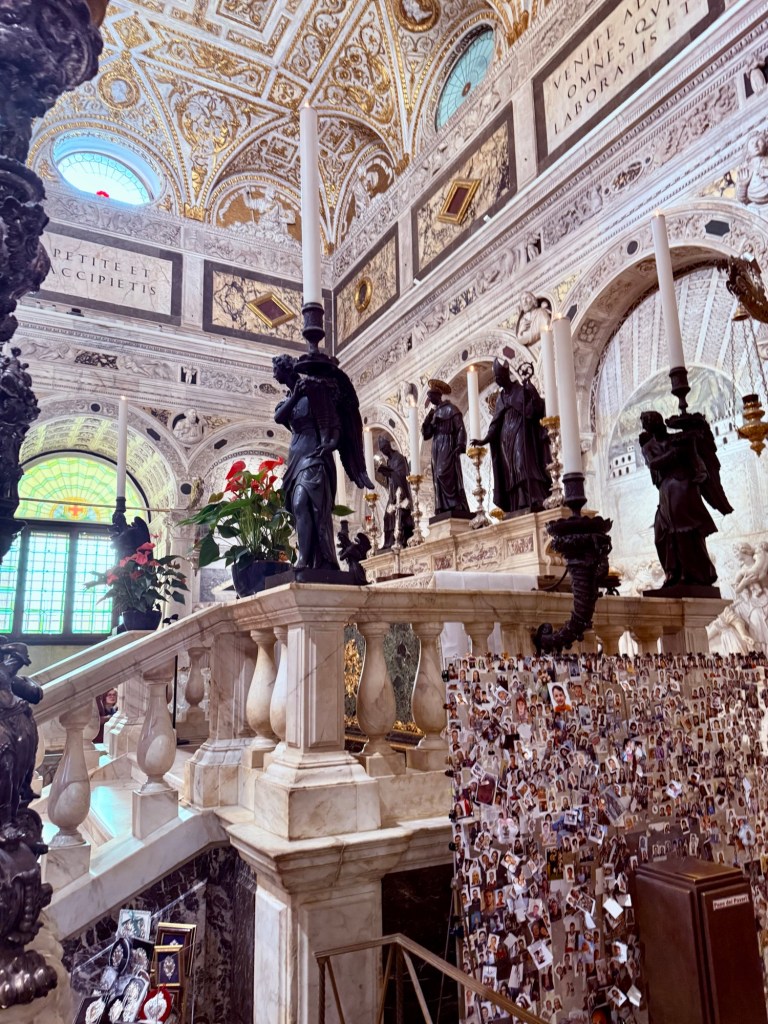
But what is truly fascinating? The relics. Yes, you read that right.
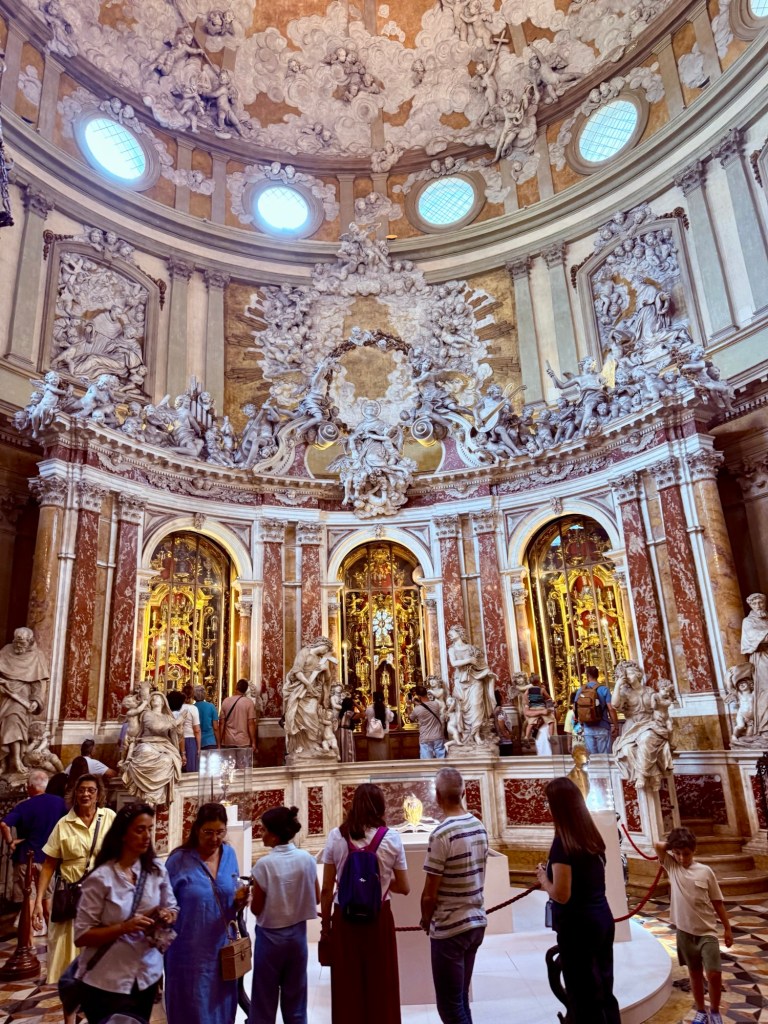
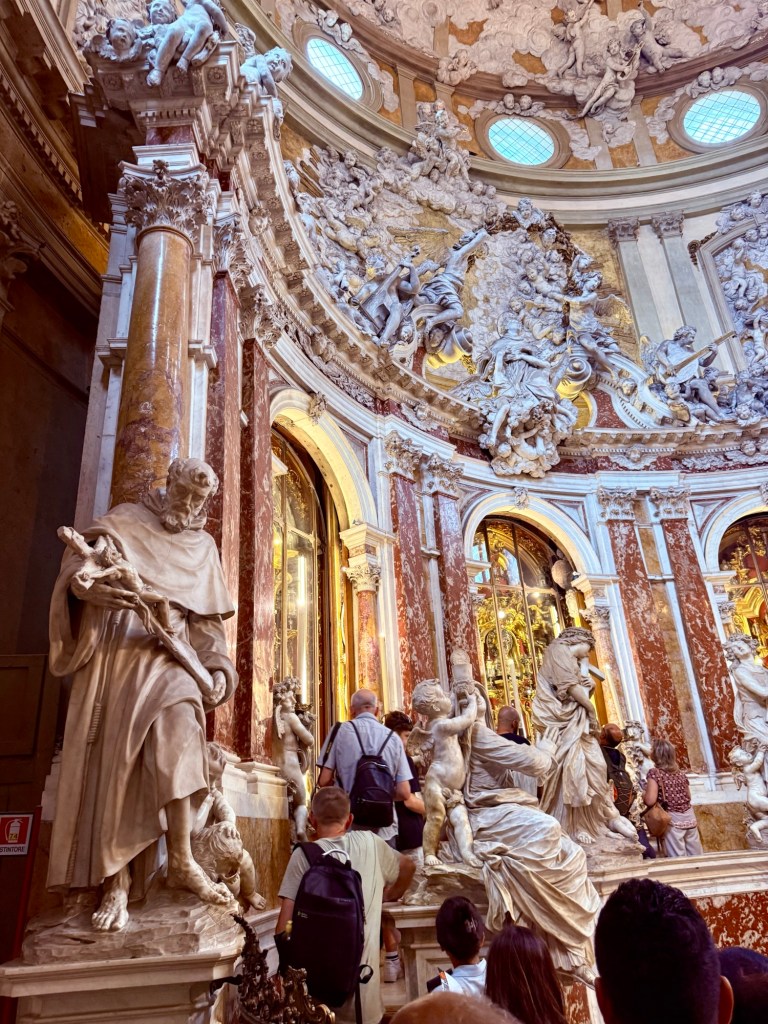
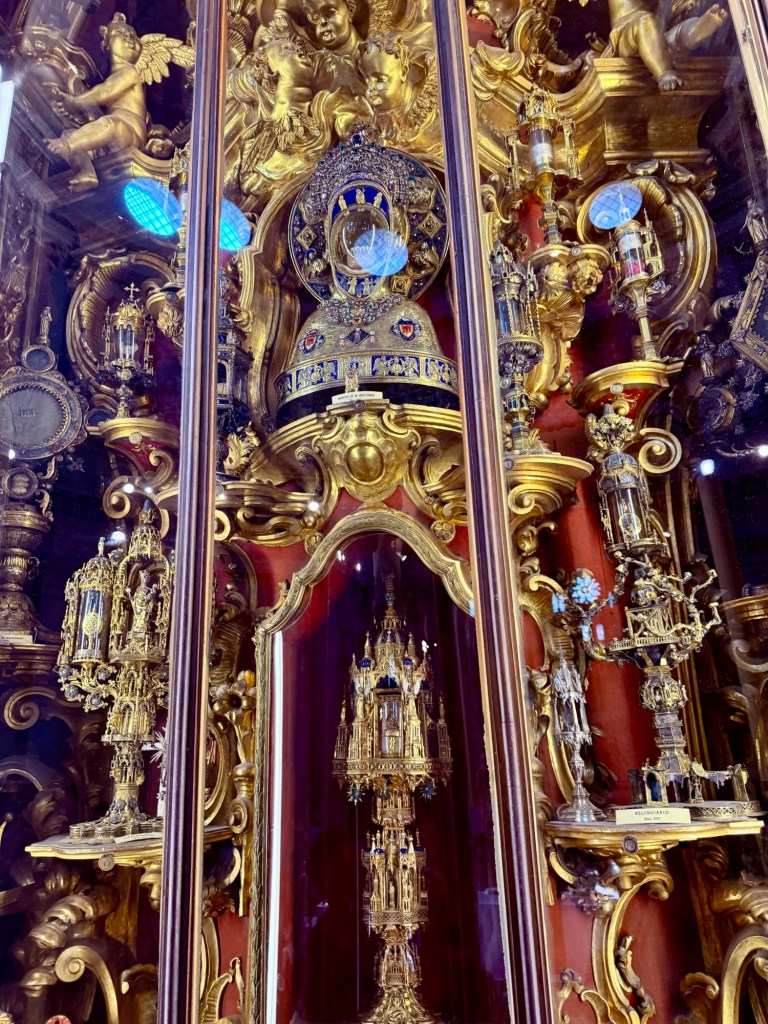
The Chapel of Relics houses the perfectly preserved tongue of Saint Anthony of Padua, which is said to be proof of his talent as a preacher. Next to it are the vocal cords and lower jaw of the same saint. It’s not exactly what you’d expect to see on vacation, but it’s the kind of detail that stays with you. 😁
And while we’re on the subject of art, the main altar is adorned with bronze sculptures by Donatello – yes, the great master of the Renaissance himself. His works are impressive, expressive, and rich in detail, making you stop and admire them in silence.
Piazza del Santo – more than just a square, a place with soul

Leaving the Basilica of Saint Anthony, we came straight to Piazza del Santo, a real open-air theatre of Paduan life. Here, history, faith, and everyday life come together to create an atmosphere that invites you to stop and observe. The square is dominated, of course, by the imposing silhouette of the basilica, but it does not allow itself to be overshadowed. In the middle stands the equestrian statue of Gattamelata, also by Donatello, the first equestrian statue of the Renaissance cast in bronze since Antiquity. And no, Gattamelata is not a cartoon character, but a respectable condottiere, dressed in armor and with a determined look. The statue is so well done that you get the impression that if you look at it too long, the horse will start to stamp its hooves.
But what we liked most about Piazza del Santo wasn’t necessarily the history, but the atmosphere: people strolling peacefully, tourists taking pictures, locals drinking coffee on the terrace, children running among the pigeons. It’s the kind of place where you can sit for an hour doing nothing and still feel like you’ve experienced something beautiful. And if you’re lucky enough to be here in the late afternoon, when the light takes on a golden hue and the bell tower of the basilica rings softly, you’ll be completely captivated by the charm of Padua.
Orto Botanico – a green oasis with deep roots in history

After the hustle and bustle around the basilica and the square, we felt the need for some peace and quiet. So we headed for the Orto Botanico, the botanical garden of the University of Padua. We didn’t know exactly what to expect, but what we found there was more than just a collection of plants – it was a lesson in history, science, and patience.
Founded in 1545, this garden is the oldest of its kind in the world still located in its original location. Imagine: medicinal plants have been grown here for medical students since the Renaissance, experiments have been conducted, and treatises have been written. And all of this is still present today—it is a place that breathes knowledge.
We strolled through the shady alleys, discovering rare plants, some with fascinating stories, others with names impossible to pronounce. We also found a modern greenhouse, where the climate changes from one step to the next—from the tropics to the desert, without leaving Padua. The garden is organized by theme—medicinal plants, carnivorous plants, rare or endangered species—and also has a futuristic greenhouse where the climate changes from one step to the next. It’s like a mini botanical safari, but without the mosquitoes. Some plants are direct descendants of those planted hundreds of years ago. The most famous? Goethe’s palm tree, planted in 1585, which the German poet mentioned in his writings. Yes, that Goethe.
The Scrovegni Chapel – frescoes that speak louder than words
The Scrovegni Chapel is one of the most iconic moments in art history. Set in a quiet park near the city center, the chapel might seem modest at first glance. But once you step inside, you feel like you’ve entered another world, painted by a genius.
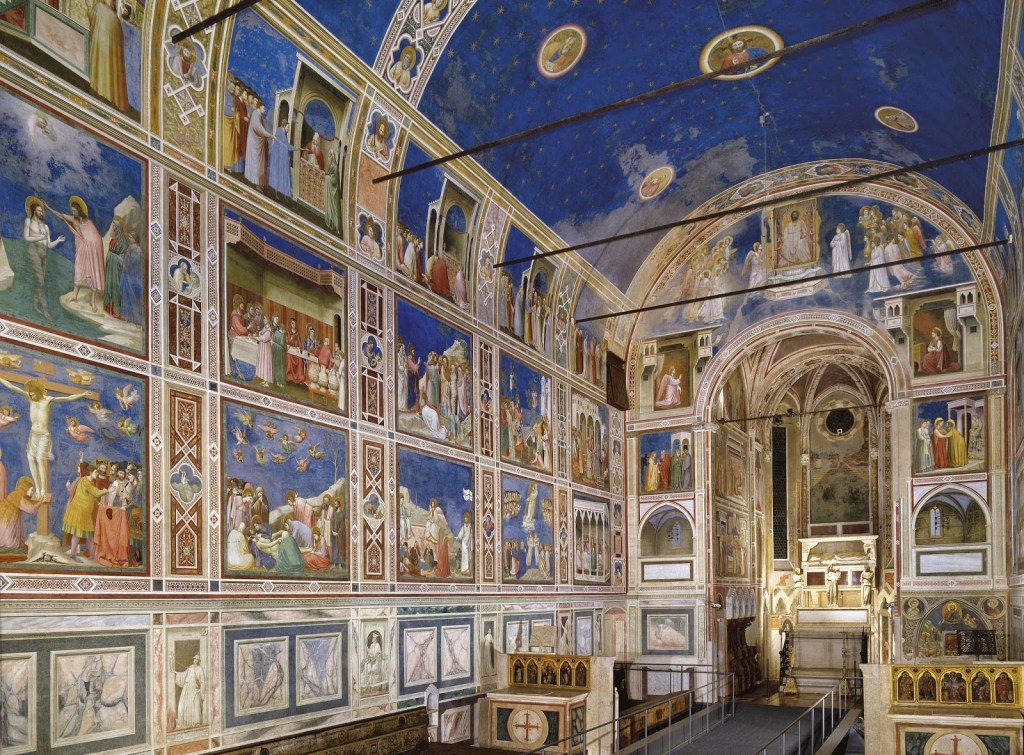
The interior is a delight to the eyes, thanks to its colours and spectacular composition. The intense blue ceiling, dotted with golden stars, instinctively draws your gaze. And if you look closely at the expressions of the characters, you get the feeling that they are alive, that they suffer, that they love—just like us.
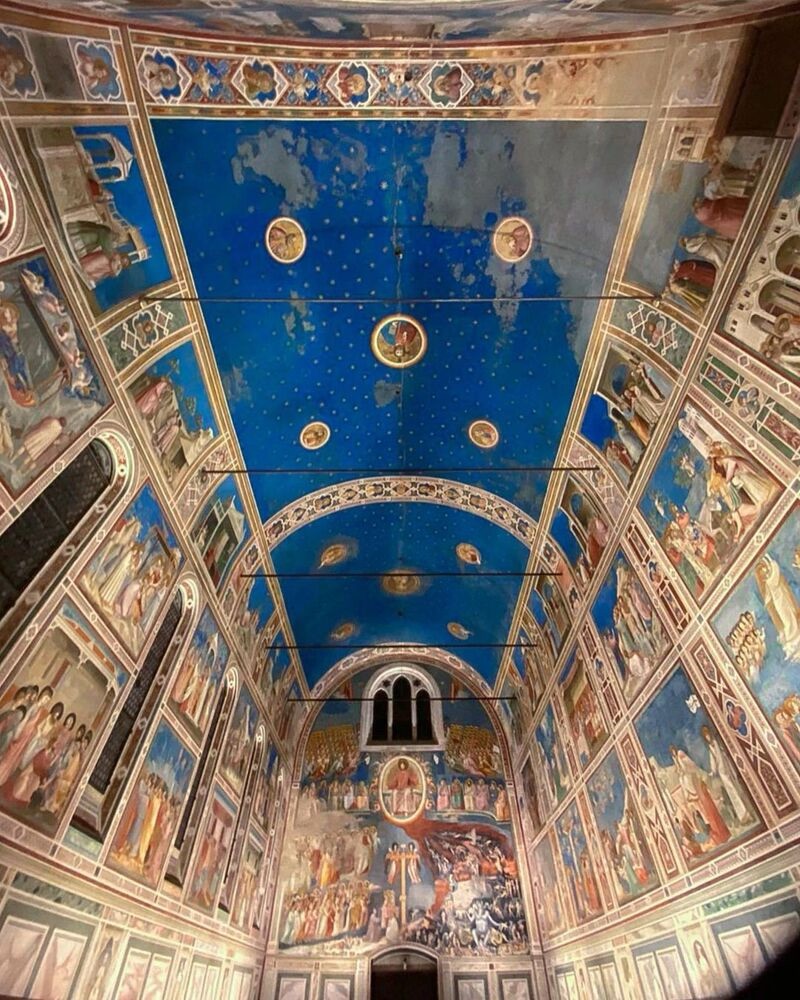
Giotto di Bondone, the painter who decorated the chapel in the early 1300s, not only revolutionized art but also managed to convey human emotions in a way that, until then, seemed impossible. Each scene—from the Birth of the Virgin to the Last Judgment —is full of expressions, gestures, and details that make you forget you’re looking at paintings that are over 700 years old.
But the story of the chapel is just as interesting as the frescoes. It was built by Enrico Scrovegni, the son of a banker accused of usury, who wanted to wash away his family’s sins with a grand gesture: a private chapel decorated by the best artist of the time. A kind of “spiritual rebranding” (spiritual image change), if you will.
Yes, you have to book in advance, and visiting time is limited. But I can assure you that 20 minutes spent in the Scrovegni Chapel is worth a whole day in many museums.
Palazzo della Ragione – a courtroom with the feel of a medieval planetarium
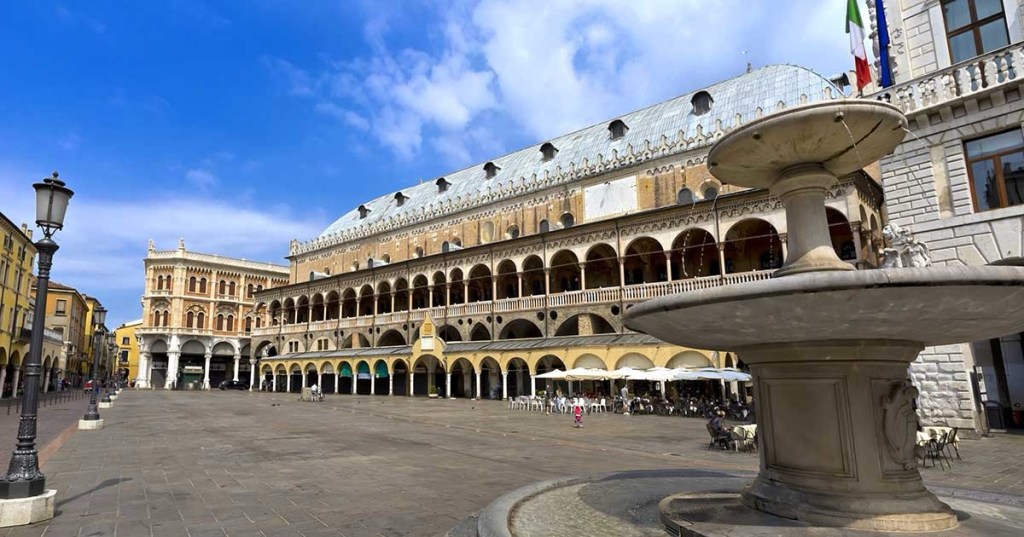
At first glance, Palazzo della Ragione looks like just another imposing building in the center of Padua. But once you step inside, you realize you have entered a very special place – a blend of history, art, and a touch of mystery. Built in the 13th century, the palace was the heart of the city’s legal and commercial life for centuries. It was here that trials were held, business deals were struck, and people probably eavesdropped on the latest gossip.
But the real magic begins when you step into the Salone, the main hall. It is one of the largest medieval halls without columns in Europe, and the ceiling—shaped like an upturned ship’s hull—gives you the feeling of being suspended between heaven and earth. It is solemn but spectacular.
On the walls, you are surrounded by over 300 frescoes—a veritable visual encyclopedia of the Middle Ages. The scenes are inspired by astrology, medicine, agriculture, and everyday life. Each month of the year is represented by zodiac signs, specific activities, and symbols that make you wonder, quite rightly, whether the judges of the time consulted their horoscopes before passing sentence.
The Palazzo della Ragione is not just a historical monument. It is a window into a world where justice, astrology, and art existed side by side.
Piazza dei Signori – elegance, watches, and a touch of dolce vita
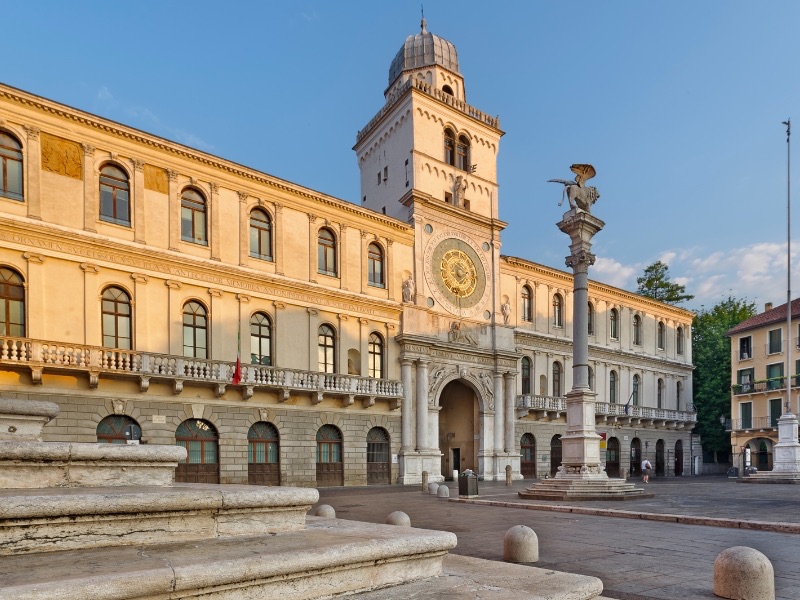
Here we are in Piazza dei Signori, where it feels like we’ve stepped into a different movie. While Piazza del Santo exudes spiritual energy and Palazzo della Ragione overwhelms you with symbols and frescoes, here everything is elegance and atmosphere.
The square is surrounded by beautiful buildings with bright facades and architectural details that make you feel like you’re in a Renaissance painting. The center of attention is the Torre dell’Orologio, the astronomical clock tower, which not only tells the time but also your zodiac sign, in case you forgot. The clock dates back to the 15th century and still works, reminding us that Italians know how to combine beauty with functionality.
But the real magic of the square lies not in the buildings, but in the life that vibrates around them: the terraces are full of locals enjoying their espresso with studied nonchalance, tourists taking photos on every street corner, and students engaged in heated discussions, probably on a topic covered in class or an exam question. It’s the kind of place where you can sit for an hour doing nothing and feel like you’ve lived something. A coffee, a ray of sunshine, a bell ringing in the distance—and there you have it, you’ve understood what la dolce vita means.
Caffè Pedrocchi – the café that never sleeps (and never lets you forget it)

No visit to Padua is complete without a stop at Caffè Pedrocchi – and not just for the coffee, but for its history. Opened in 1831, the café was intended as a place open to everyone at any time of day. Hence its nickname: “the café without doors.” Literally – for over a century, it had no doors at the entrance and was open non-stop. A dream for any lover of espresso and late-night conversations.
The interior is an elegant combination of styles – neoclassical, Venetian, with oriental accents – and each room has its personality.
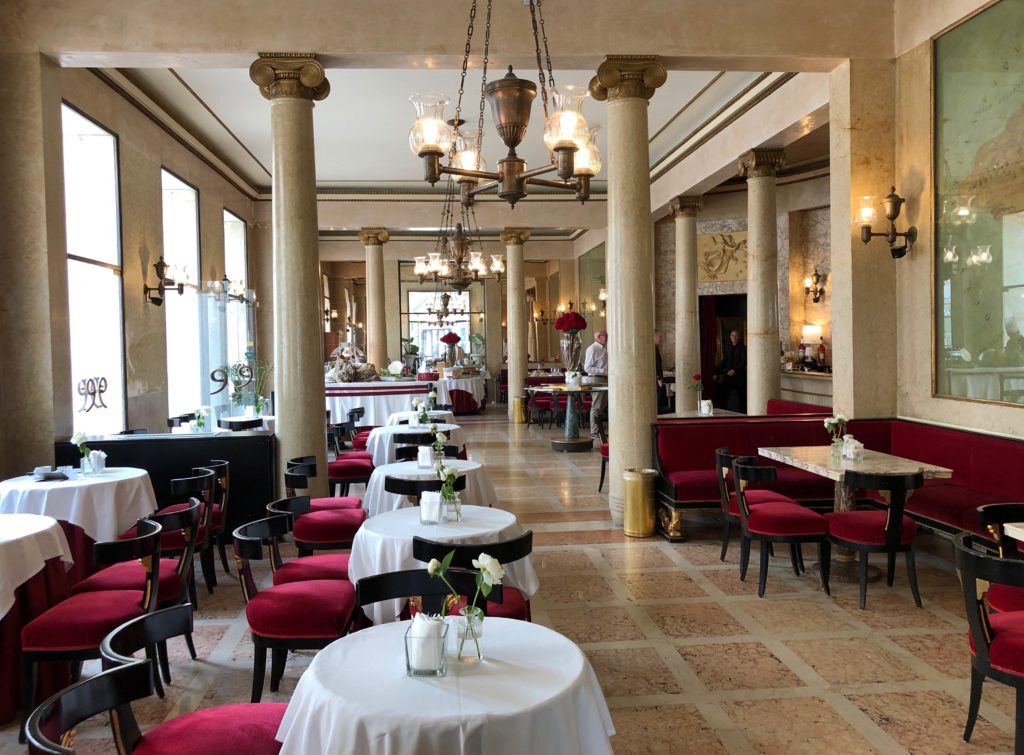
But beyond the decor, the place has a special vibe. Revolutionaries, writers, artists, and students who dreamed of a united Italy met here. It is even said that in 1848, a student was shot inside the café during a riot, and the bullet marks are still visible on the wall. It’s a small detail, but it says a lot about how alive the history of this place is.
We ordered, of course, a caffè Pedrocchi – espresso with whipped cream and a dash of mint. Sounds strange? Maybe. But the taste is surprisingly balanced, refreshing, and perfect for a break after a day full of discoveries.
We sat there for a while, watching the people around us, listening to the discreet buzz of conversation and letting our thoughts wander. It was one of those moments when nothing spectacular is happening, but you feel like you’re exactly where you need to be.
Discover more from "The world is your oyster".
Subscribe to get the latest posts sent to your email.


