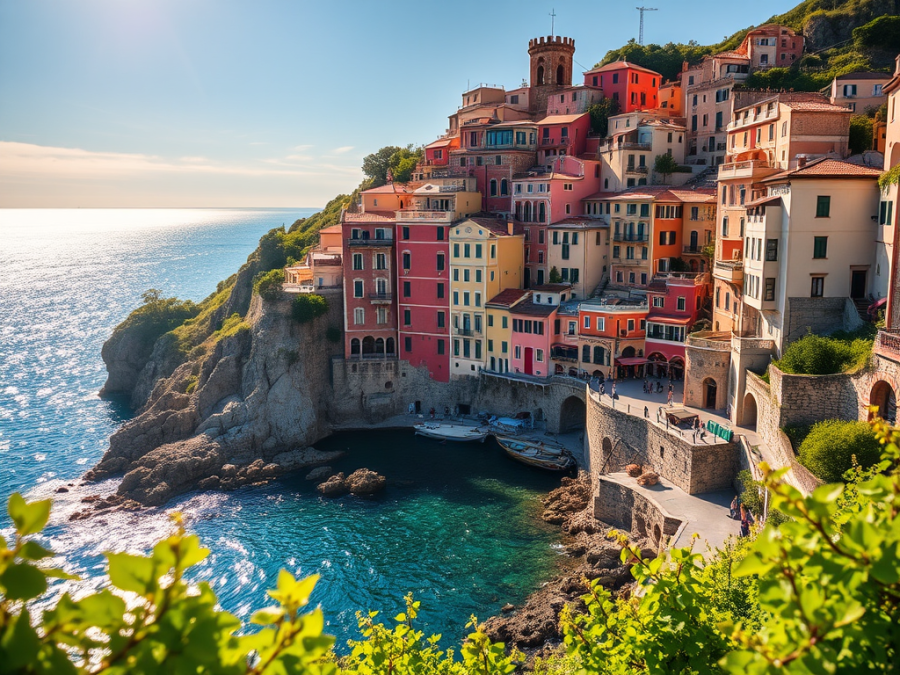
There are days that feel like something out of a dream, and our day trip from Genoa to Cinque Terre and Portofino was exactly that. With the Ligurian Sea shimmering under the July sun, we set off on a coastal walk that left us sun-kissed and completely enchanted.
We left Genoa early, the city still waking up as we wound our way along the A12 motorway. The journey was a picturesque prelude – cliffs plunging into the sea, terraced vineyards clinging to the hillsides and, every now and then, pastel-colored villages hidden in the folds of the coastline.
Our first destination: Cinque Terre, the legendary string of five fishing villages that have become a symbol of the rustic charm and beauty of the Italian coast.
🌈 Cinque Terre: A Living Postcard
We parked just outside Monterosso al Mare, the northernmost village, and hopped on the local train that connects the five towns. Each stop felt like stepping into a watercolor painting:
- Vernazza, with its tiny harbor and medieval Doria Castle, was a burst of color and history.
- Manarola stole our hearts with its cascading houses and the famous Lover’s Lane (Via dell’Amore).
- Riomaggiore, the southernmost village, was a maze of steep staircases and vibrant facades.
Cinque Terre’s origins trace back to the early medieval period, around the 11th century, when small communities began to form along the rugged Ligurian coastline. These villages—Monterosso al Mare, Vernazza, Corniglia, Manarola, and Riomaggiore—were carved into the cliffs by resilient farmers and fishermen who built terraced vineyards and olive groves on seemingly impossible slopes.

For centuries, the villages remained isolated and self-sufficient, connected only by steep mule paths and the sea. Their remoteness helped preserve a unique way of life, where traditions, dialects, and architecture evolved independently from the rest of Italy. Stone houses were built vertically to conserve space, and narrow alleys (called caruggi) became the lifelines of each village.

By the 15th century, Cinque Terre had become part of the Republic of Genoa, and the villages began to flourish through maritime trade and agriculture. However, it wasn’t until the 19th century, when the Genoa-La Spezia railway was constructed, that the region became accessible to the outside world.
Today, Cinque Terre is a UNESCO World Heritage Site, recognized not only for its breathtaking beauty but also for its cultural significance. The landscape is a living testament to human ingenuity and harmony with nature—where ancient dry-stone walls still support the terraced hillsides, and fishing boats still bob in the same harbors as they did centuries ago.
🍝 A Ligurian Lunch to Remember
Back in Monterosso, we lunched on trofie al pesto (a classic Ligurian dish featuring hand-rolled, twisted pasta tossed in creamy basil pesto. Its charm lies in the simple yet perfect balance between the pasta’s soft texture and the rich, aromatic sauce, traditionally served in small portions as a first course), paired with a crisp glass of Vermentino.
🏞️ Cinque Terre – Practical Information
📍 Location: Ligurian coast, between Levanto and La Spezia, Italy
🛤️ Getting There:
- By train: The most convenient option. The Cinque Terre Express runs every 15–20 minutes between Levanto and La Spezia, stopping in all five villages (Monterosso, Vernazza, Corniglia, Manarola, Riomaggiore).
- By car: Not recommended. Roads are narrow, and parking is scarce and expensive. It’s best to park in La Spezia or Levanto and continue by train.
- By boat: Seasonal ferries connect the villages from April to October, weather permitting.
🎟️ Cinque Terre Card:
- Includes unlimited regional train travel + access to hiking trails in the national park
- 2025 prices: From €19.50 to €32.50 per day depending on the season (discounts for children, families, and seniors)
- Available at local train stations or online
📅 Best time to visit: May, June, or September to avoid peak summer crowds while enjoying great weather
⭐ Highlights:
- Monterosso al Mare: The only village with a sandy beach, ideal for swimming
- Vernazza: Picturesque harbor and Doria Tower with panoramic views
- Corniglia: Perched on a cliff, accessible via a 382-step staircase
- Manarola: Famous for its colorful houses and sunsets
- Riomaggiore: Steep alleys and authentic village atmosphere
📸 Photo tip: Start early in the morning for crowd-free shots. Evening light is especially beautiful in Manarola and Vernazza.
🌟 Portofino: Glamour by the Sea
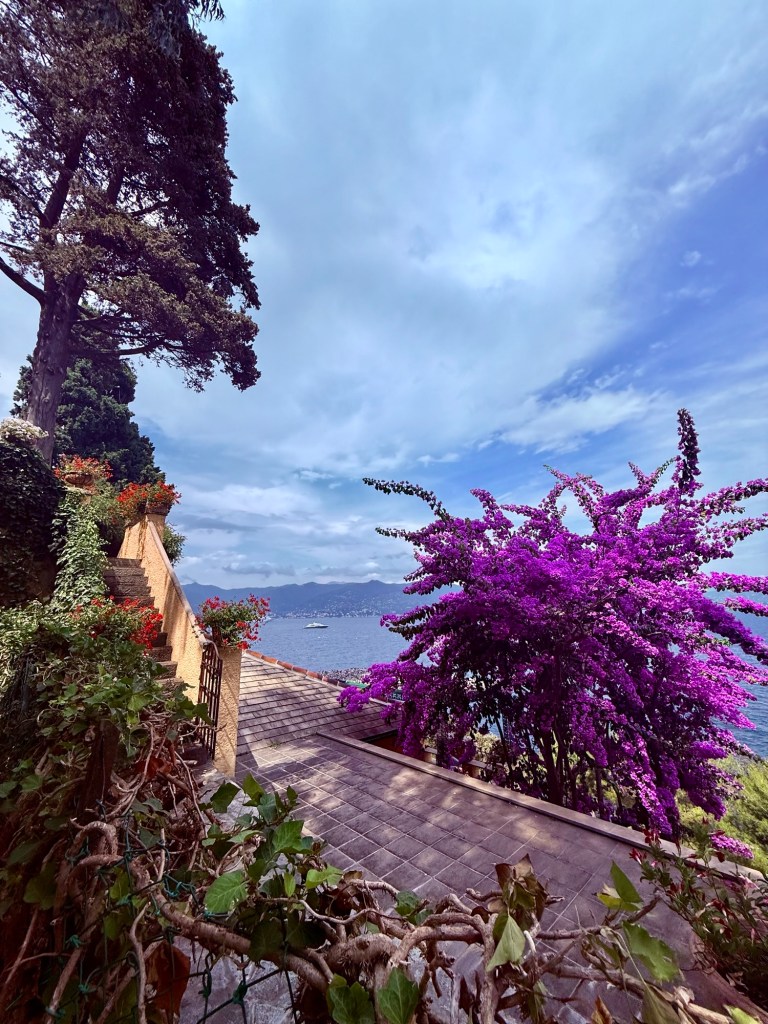
In the afternoon, we drove to Portofino, the jewel of the Italian Riviera. The road narrowed and twisted through lush hills before revealing the iconic crescent-shaped harbor, where luxury yachts gleamed and bougainvillea flowers spilled over terracotta walls.
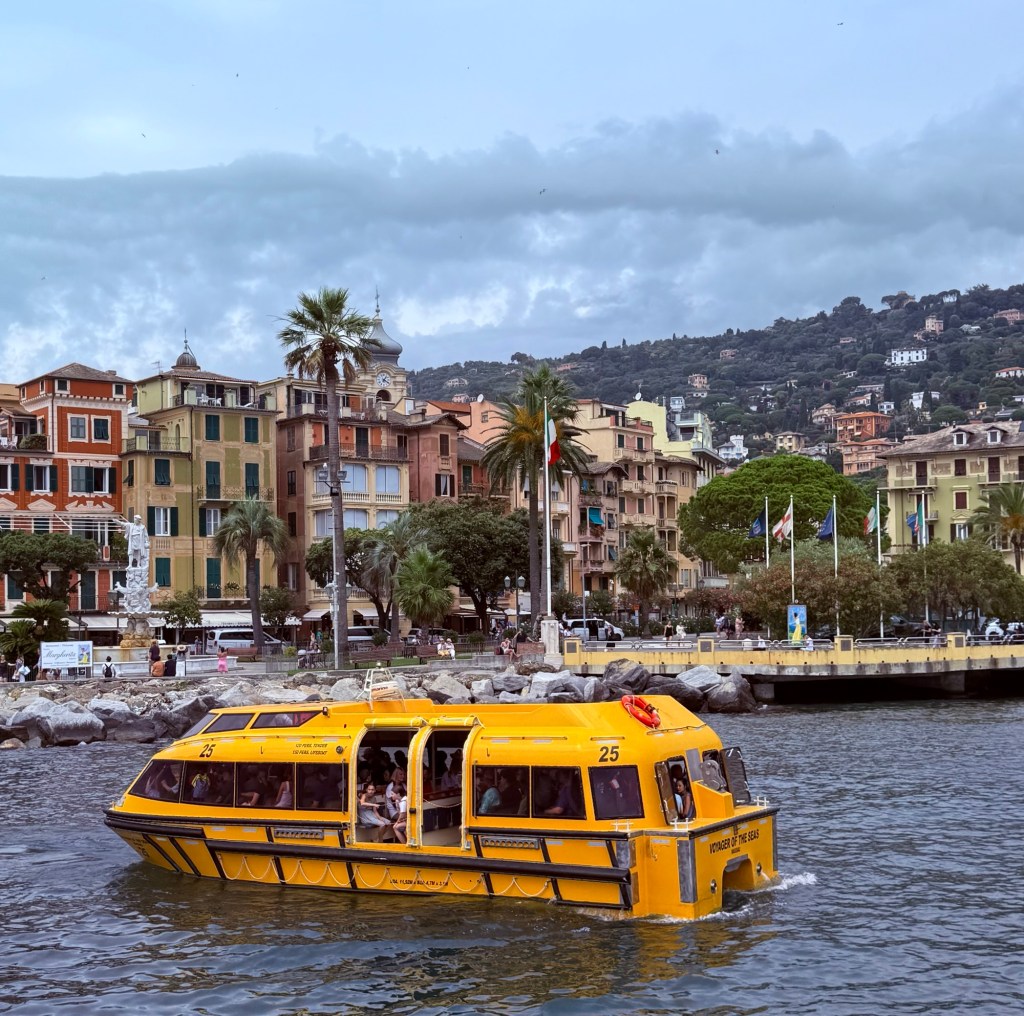
Though now synonymous with glamour, Portofino’s roots run deep. The area was known to the Romans as Portus Delphini— “Port of the Dolphin”—likely named for the abundance of dolphins in the Tigullian Gulf. The first documented mention of Portofino dates back to 986 AD, when it was granted to the Abbey of San Fruttuoso by Adelaide of Italy.
Over the centuries, Portofino passed through the hands of powerful families and states. It was part of the Republic of Genoa, briefly sold to Florence in 1409, and later returned. By the 15th century, it had become a fief of noble Genoese families like the Fieschi, Spinola, and Doria. In 1815, it joined the Kingdom of Sardinia, and by 1861, it became part of unified Italy.
Portofino remained a quiet fishing village until the late 19th century, when it was “discovered” by British and Northern European aristocrats. Writers like Elizabeth von Arnim and Aubrey Herbert helped popularize it as a romantic retreat. By the 1950s, it had transformed into a chic destination for the international jet set, attracting stars like Elizabeth Taylor, Humphrey Bogart, and Sophia Loren.
But beyond the glitz, Portofino is a place of quiet beauty. We hiked up to Castello Brown, a 16th-century fortress that once guarded the bay and now offers sweeping views of the harbor. Nearby, the Church of San Giorgio, rebuilt after World War II bombings, stands on a promontory where sailors once prayed for safe passage—and where their relics are still honored today.


🛥️ Portofino – Practical Information
📍 Location: Liguria region, Province of Genoa, Italy
🚗 Getting There:
- By car: From Genoa, take the A12 to Rapallo, then follow the scenic coastal road to Portofino (approx. 40 minutes).
- By train: Take the train to Santa Margherita Ligure-Portofino, then continue by bus, taxi, or on foot (5 km).
- By boat: Ferries connect Portofino with Rapallo, Santa Margherita, and the Cinque Terre from April to October. Tickets range from €11 to €25, depending on the route.
🅿️ Parking: Very limited and expensive (up to €5/hour). It’s often easier to park in Santa Margherita and walk or take a shuttle.
📅 Best time to visit: May, June, or September for pleasant weather and fewer crowds.
⭐ Highlights:
- La Piazzetta: The lively heart of the village, lined with cafés and luxury boutiques
- Castello Brown: A historic fortress with panoramic views over the harbor
- Church of San Giorgio: Perched on a cliff, home to relics of Saint George
- Portofino Lighthouse: A scenic walk leads to this peaceful viewpoint over the sea
📸 Photo tip: The harbor is especially photogenic at sunrise, when the light is soft and the crowds are minimal.
🌅 Sunset & Reflections
As the sun set, casting a golden light over the water, we sat on the harbor wall with ice cream in hand, watching the world slow down. It was one of those rare moments when everything seems perfect.
One day wasn’t enough, but it was unforgettable. Cinque Terre and Portofino are more than just beautiful places; they are living stories, shaped by the sea, stone, and centuries of human labor. If you ever find yourself in northern Italy, set aside a day for this trip. Your soul will thank you.
Discover more from "The world is your oyster".
Subscribe to get the latest posts sent to your email.
