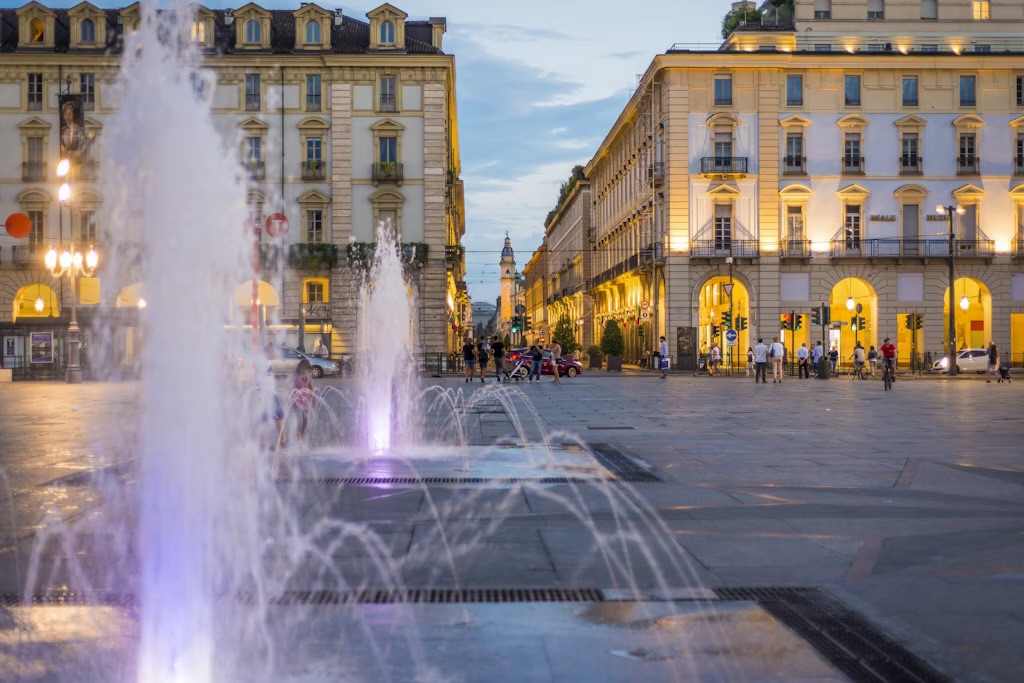
For two days we’ve been in Turin, one of Italy’s largest cities, famous for “la dolce vita,” but in a somewhat more sober and aristocratic version. Formerly the country’s first capital, the city today is an important cultural and economic hub in Italy.
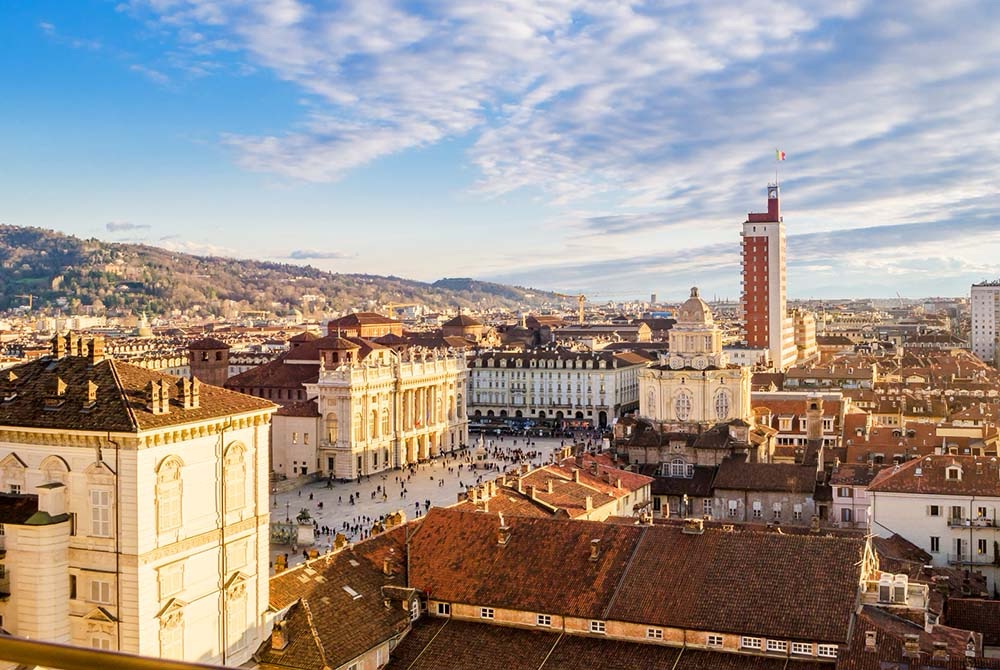
After World War II, Turin was rebuilt quickly, and the automotive industry became the engine of its economic recovery. Here, history and modern life meet at every turn—in classical buildings or contemporary spaces—always revealing fascinating places to explore.
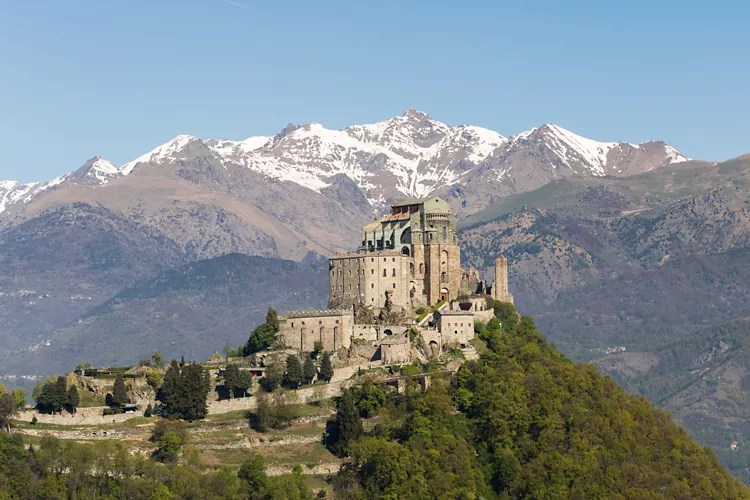
I’ll return to the old town later, but to start, I’ll tell you about our visit yesterday to the Sacra di San Michele, a place of worship perched atop a mountain. Then we strolled through Parco del Valentino, an oasis of tranquility and beauty, and stopped at Caffè Al Bicerin, a welcoming café where we savored a warm, aromatic drink.
🏰 The Archangel’s Stronghold: History of the Sacra di San Michele
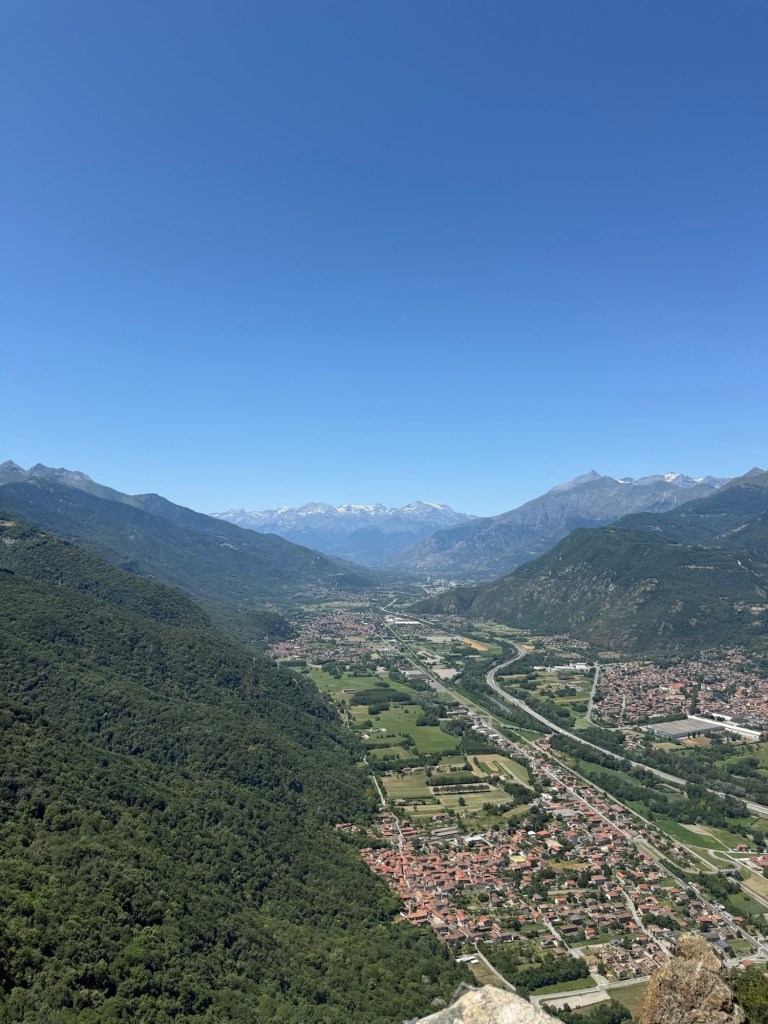
Perched nearly 1,000 meters above the Susa Valley, this ancient abbey is more than a religious site. It’s a monument of myth, mystery, and medieval mastery, carved into the very bones of the mountain.
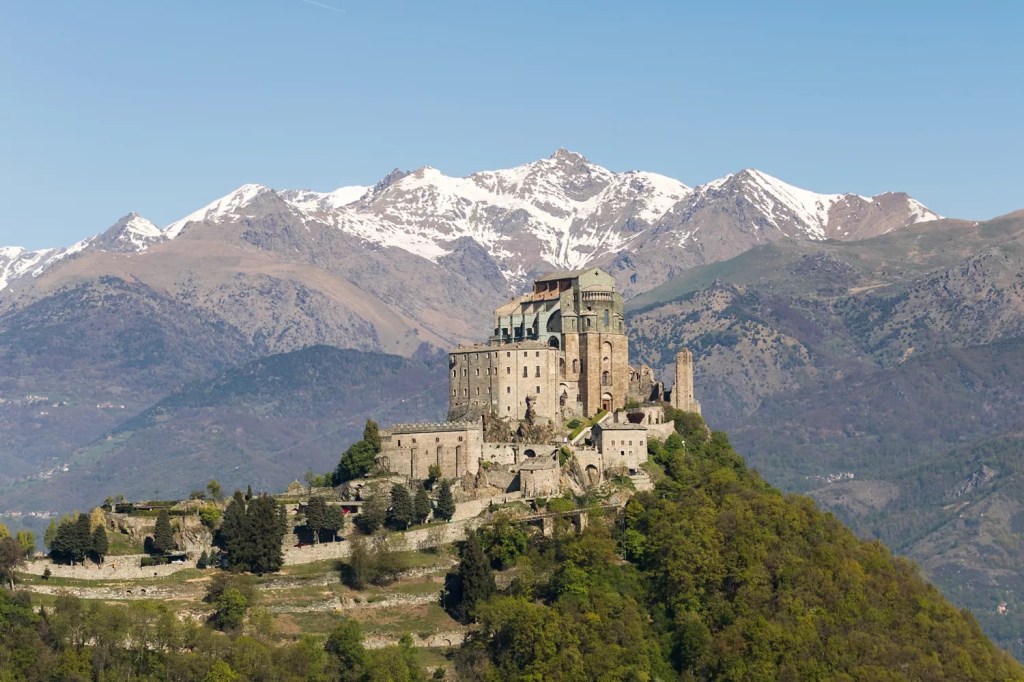
So, first thing in the morning we set off for this picturesque monastery about half an hour from Turin, so the drive didn’t take long. The real fun began only when we reached the foot of the mountain and started winding up the hairpin bends almost to the entrance.
Because our thrifty spirit kicked in, we didn’t want to pay the €15 for parking near the entrance and left the car nearly 2.5 km below. Big mistake: we climbed straight up, through the woods and over rocks, in sandals—like tourists prepared for any eventuality.

After nearly 40 minutes of buzzing flies, dragonflies, and bees—sweating and gasping from the steep forest climb—we finally reached the base of the monastery.

But the path wasn’t over: a series of steep, spiral steps lay ahead, testing your strength and making you wonder if you’ll ever want to climb a mountain again.

I guess the point is that when you finally make it to the top, you drop to your knees and exclaim with gratitude, “Lord, help me—I’ve conquered the trial!”
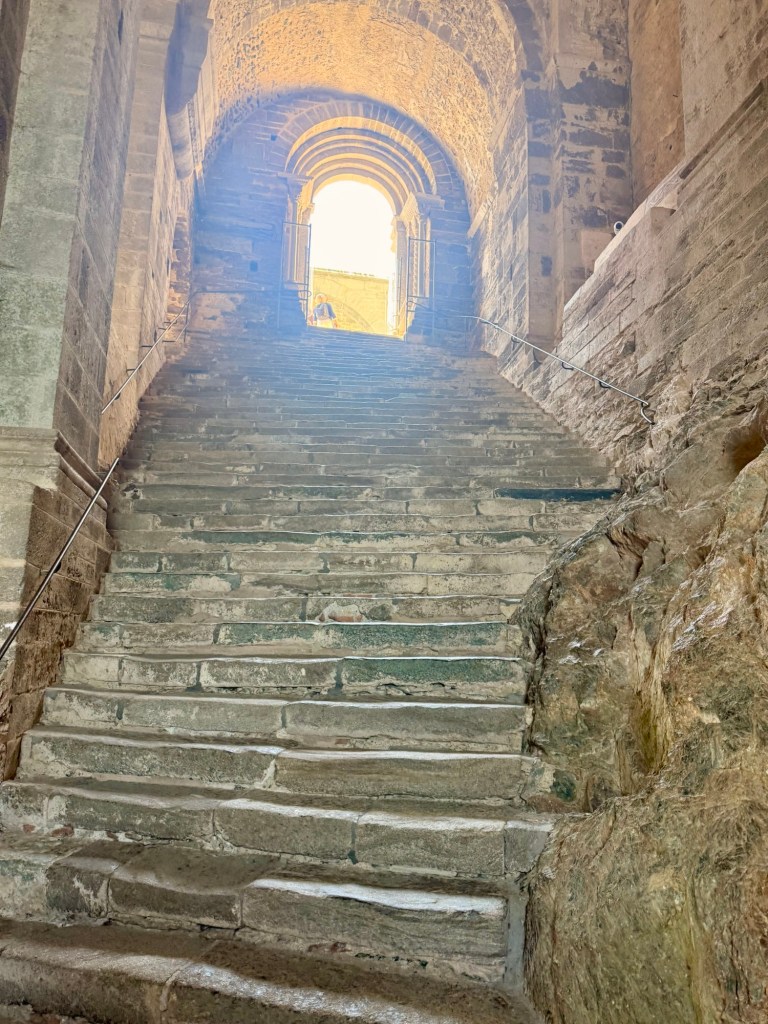

And here we finally are at the scene.

🧭 A Pilgrimage and a Fortress
Founded between 983 and 987 CE by Hugh of Montboissier, a French nobleman seeking redemption, the abbey became a key stop on the Via Francigena, the pilgrimage route from Canterbury to Rome. Over the centuries, it served as both a spiritual beacon and a defensive stronghold, with monks and warriors alike walking its halls.
The story begins around the year 983, when San Giovanni Vincenzo, a hermit and disciple of Saint Romuald, sought a place of solitude to live out a life of prayer. Inspired by the eremitical traditions of the Egyptian and Irish monks, he searched for a “desert”—a remote, sacred space to withdraw from the world.
According to legend, St. Michael the Archangel appeared to him in a vision and instructed him to build a monastery atop Mount Pirchiriano. Not only that, but the Archangel is said to have personally helped transport the building materials to the summit—an act of divine logistics that gave the site its sacred aura.
This miraculous origin story places the Sacra along the “Saint Michael’s line”, a mystical alignment of seven monasteries stretching from Skellig Michael in Ireland to Monte Gargano in southern Italy, and onward to Mount Carmel in Israel. The Sacra is the spiritual heart of this celestial line, which some interpret as the sword of the archangel striking the Earth.
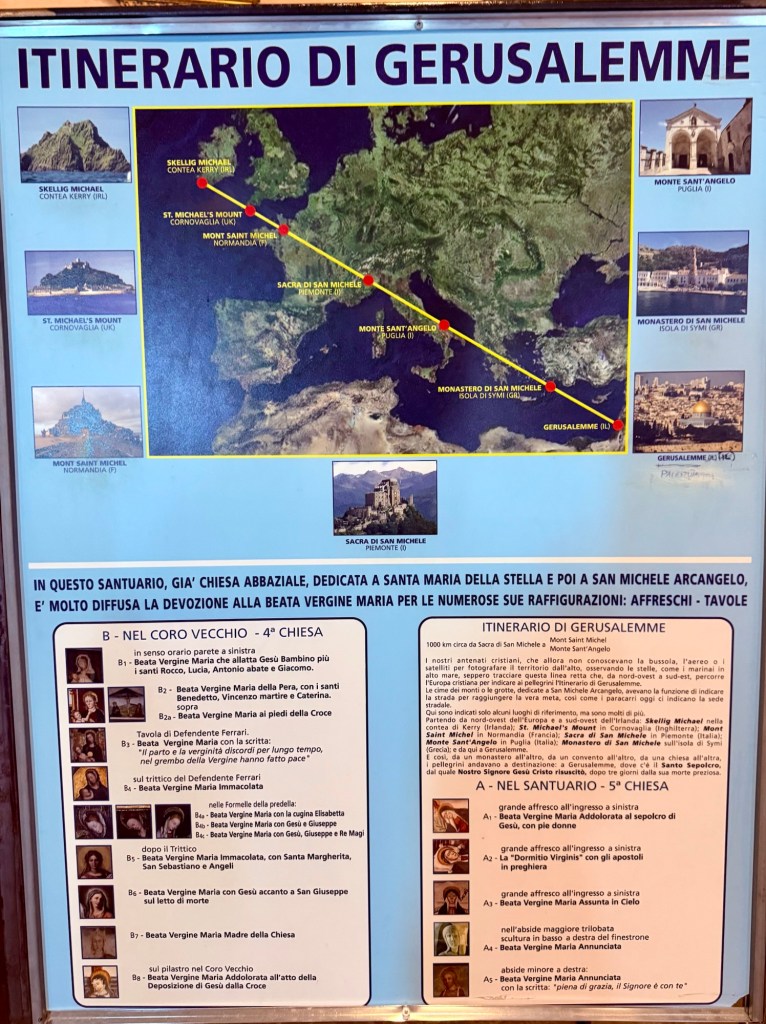
The sacred Saint Michael’s line is a symbol of the archangel’s blow that sent the devil to hell. It reminds believers of the call for justice, inviting them to follow the straight and enlightened path.

🧘 A Desert in the Sky
San Giovanni Vincenzo, the founder of the Sacra, was deeply influenced by the teachings of Saint Romuald, a reformer of monastic life in Italy. Romuald encouraged a life of solitude, silence, and contemplation—ideals that shaped the Sacra’s identity as more than a monastery, but a spiritual fortress.
One of St. Romuald’s most famous teachings captures this perfectly:
“Sit in your cell as in paradise. Put the whole world behind you and forget it. Watch your thoughts like a good fisherman watching for fish. The path you must follow is in the Psalms—never leave it.”
— St. Romuald
This quote wasn’t just poetic—it was practical. It guided monks to treat their solitude not as isolation, but as a gateway to divine presence. The Sacra, perched high above the world, became the perfect place to live out this vision.
🏛️ Architecture: A Symphony in Stone
The Sacra’s architecture is a breathtaking blend of Romanesque solidity, Gothic grace, and natural rock. The earliest parts of the abbey feature thick stone walls, rounded arches, and small windows—hallmarks of Romanesque design. The apse of the main church is aligned with the sunrise on September 29, the feast of Saint Michael.
One of the most iconic features is the Portale dello Zodiaco (Zodiac Portal), carved in the 12th century by Master Nicolao. It’s adorned with the twelve zodiac signs and celestial motifs, symbolizing the harmony between heaven and earth.
As you ascend the Scalone dei Morti (Stairway of the Dead), you pass a towering column supporting the church above and jagged mountain rock jutting into the stairwell. Until the 1930s, this passage was lined with the skeletons of monks, giving it its eerie name.
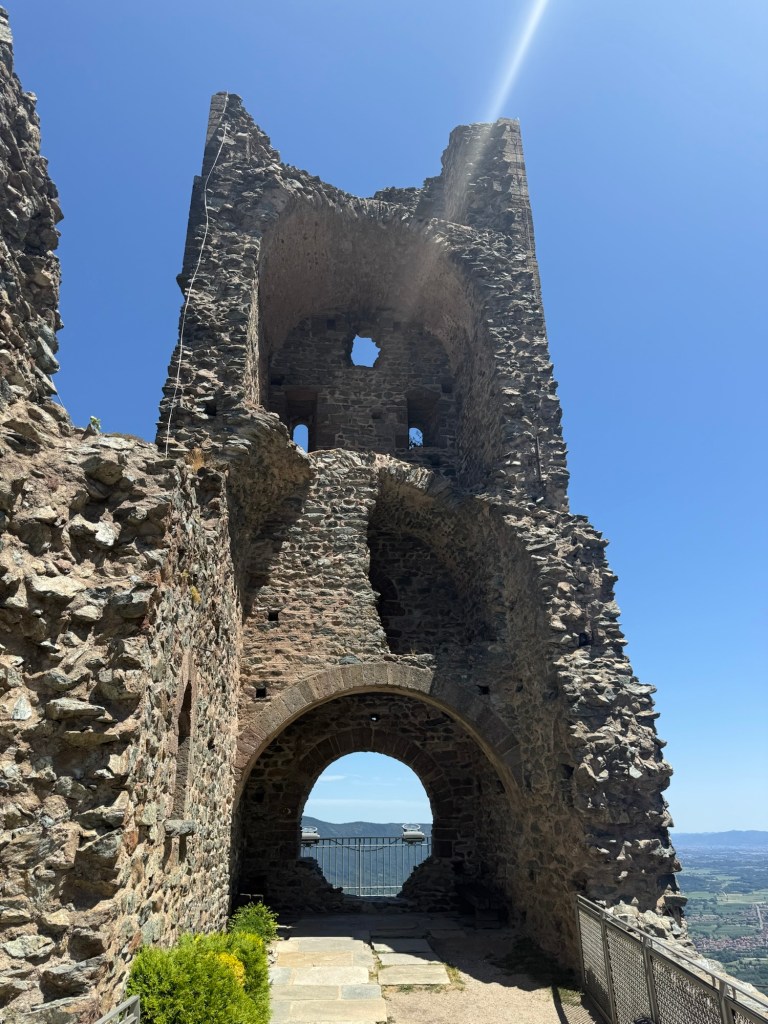
Encouraged by her good fortune, Alda—driven by vanity and a desire for gain—offered to repeat the leap for the unbelieving villagers. This time, however, she was not so lucky and died at the very spot where she had once been miraculously saved.
Above the apse, the Loggia dei Viretti—a Romanesque arcade—frames panoramic views of the Alps. Later additions introduced Gothic arches and battlements, including a Ghibelline-style merlon mistakenly added during 19th-century restorations (a fun architectural faux pas, since the abbey was aligned with the Guelfs!).
👑 Famous Visitors and Cultural Echoes
- King Charles Albert of Savoy was so captivated by the Sacra that he ordered its restoration in the 1830s and designated it a royal mausoleum. Today, 24 members of the House of Savoy rest here.
- Umberto Eco, author of The Name of the Rose, is said to have drawn inspiration from the Sacra’s haunting silhouette and labyrinthine corridors.
- Pilgrims and mystics have visited for over a millennium, drawn by its spiritual power and dramatic setting.
🚗 Getting There
- By car: The most convenient way is to drive from Turin (about 45 minutes). There’s a parking area near the base of the abbey.
- By train + hike: Take a train to Sant’Ambrogio di Torino, then hike the Via dei Pellegrini trail (about 2 hours uphill). It’s steep but scenic and rewarding.
- By tour: Some local operators offer guided day trips from Turin, which can include transportation and historical context.
🕰️ Opening Hours & Tickets
- Opening hours: Typically open daily from 9:30 AM to 5:30 PM, with later opening on Sundays (around 11:00 AM). Always check the official website before you go.
- Tickets: Entry is usually around €8 for adults, with discounts for students, seniors, and families. Guided tours are available and highly recommended.
👟 What to Bring
- Comfortable shoes: There are lots of stairs, cobblestones, and uneven paths.
- Water and snacks: Especially if you’re hiking up. There’s a small café near the entrance, but options are limited.
- Layers: The weather can change quickly at higher altitudes, and the interior of the abbey is cool even in summer.
📸 Photography Tips
- Golden hour: Visit early morning or late afternoon for the best light and fewer crowds.
- Best views: Don’t miss the Loggia dei Viretti for panoramic shots of the Susa Valley.
- Respect the silence: Photography is allowed, but flash and loud talking are discouraged inside the church.
🧘♀️ Bonus Tip: Soak in the Silence
Take a moment to sit quietly inside the main church or on one of the stone benches overlooking the valley. The silence, broken only by the wind and distant bells, is part of the magic.
🌳 Parco del Valentino: Turin’s Riverside Retreat of Royal Gardens and Medieval Dreams
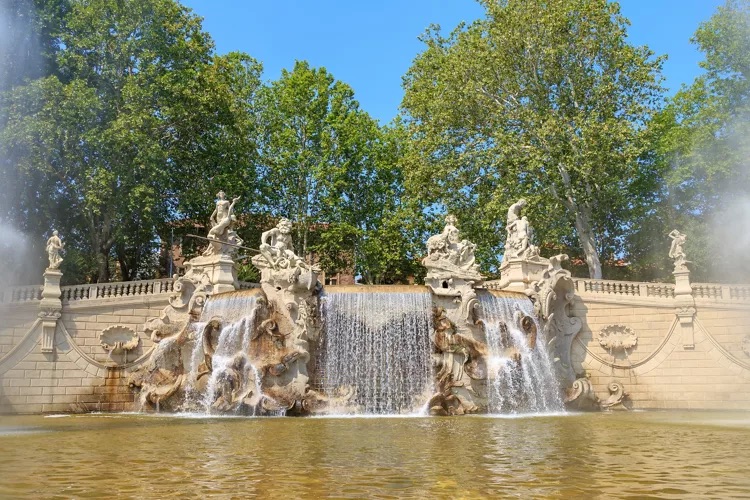
After the spiritual heights of the Sacra di San Michele, we descended into the heart of Turin for a different kind of wonder—Parco del Valentino, the city’s most beloved green space. Nestled along the banks of the Po River, this park is where history, nature, and imagination come together in perfect harmony.
🏰 A Royal Garden with a Storied Past

Long before Parco del Valentino became Turin’s favourite green escape, it was part of a grand vision shaped by royalty. The park’s crown jewel, the Castello del Valentino, was acquired in 1564 by Emmanuel Philibert, Duke of Savoy, a pivotal figure who moved the duchy’s capital from Chambéry to Turin. His acquisition marked the beginning of the area’s transformation into a noble retreat.
But it was Christine of France, wife of Victor Amadeus I, Duke of Savoy, who truly left her mark in the 17th century. She reimagined the castle as a lavish riverside residence, complete with elegant French-style gardens that echoed her royal heritage. Under her influence, the estate became a symbol of refinement and power.
By the mid-19th century, the surrounding grounds were opened to the public, and in 1856, Parco del Valentino officially became Italy’s first public park. What began as a royal garden evolved into a democratic space for all—a place where history, nature, and leisure now coexist beneath the shade of centuries-old trees.
In 1884, the park hosted the Turin International Exhibition, a grand event that showcased Italy’s industrial and artistic achievements. Many of the park’s most iconic features—like the Borgo Medievale and the Fountain of the Twelve Months—were created for this occasion and remain beautifully preserved today.
🌟 Highlights Within the Park
🏰 Castello del Valentino
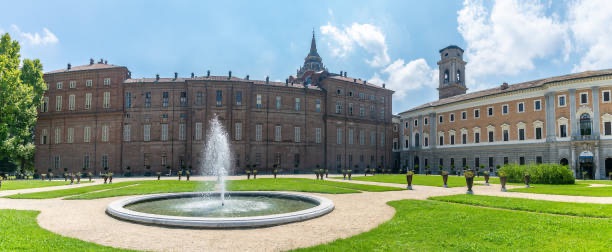
Originally a 16th-century royal residence, this elegant château is now part of the Polytechnic University of Turin and a UNESCO World Heritage Site. Its French-style architecture and riverside setting make it a standout landmark.

🏘️ Borgo Medievale
A full-scale replica of a 13th-century Piedmontese village, complete with artisan workshops, a drawbridge, and a castle. Built for the 1884 Expo, it’s a whimsical, immersive experience that feels like stepping into a fairy tale.
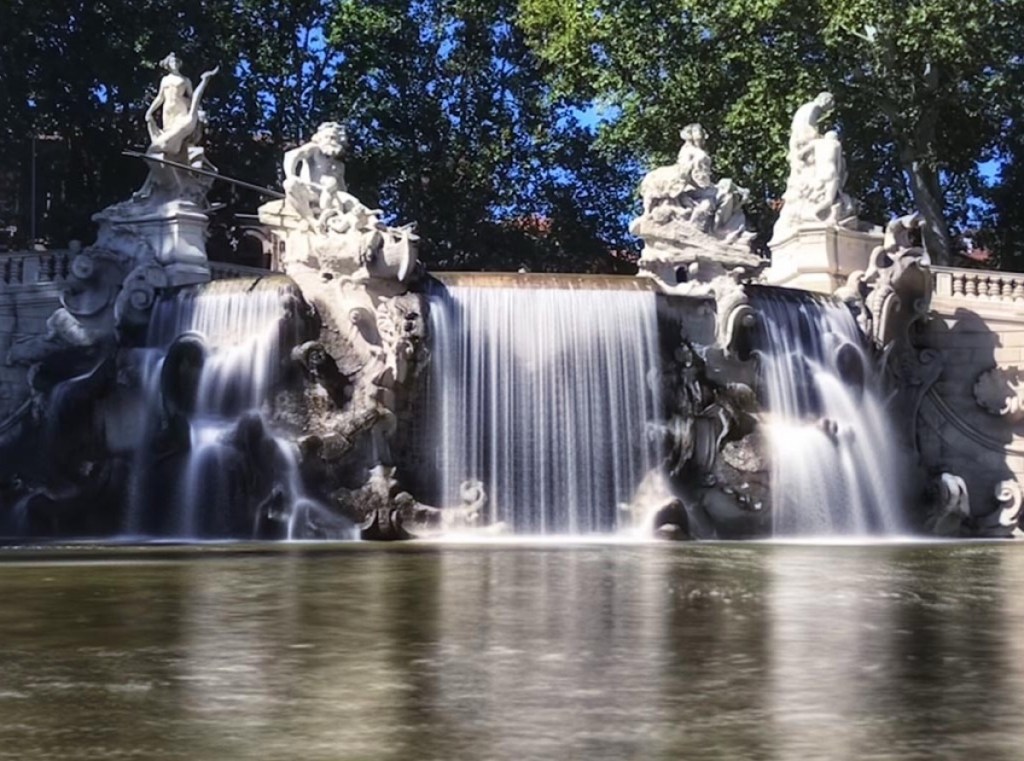
⛲ Fontana dei Dodici Mesi (Fountain of the Twelve Months)
Installed in 1898, this ornate fountain features statues representing the twelve months of the year, surrounded by allegorical figures of Turin’s rivers. It’s a favourite photo spot and a symbol of the city’s connection to nature and time.
🌿 Giardino Roccioso (Rock Garden)
Inspired by English landscape gardens, this serene corner of the park is filled with exotic plants, sculptures, and winding paths—perfect for a romantic stroll or quiet reflection.
🌺 Botanical Gardens
Home to over 4,000 species of plants and medicinal herbs, including a greenhouse and orangery. A must-visit for plant lovers and curious minds.
🎨 Art & Culture
Scattered throughout the park are sculptures, fountains, and even an exhibition hall—Torino Esposizioni—which hosts cultural events and fairs year-round.
🧺 Travel Tips for Visiting Parco del Valentino
- Best time to visit: Spring and early autumn offer the most vibrant colors and comfortable weather.
- Getting there: Easily accessible by tram, bus, or a scenic walk from the city center.
- What to bring: A picnic blanket, snacks, and a camera—you’ll want to linger.
- Don’t miss: Feeding the friendly squirrels (bring some nuts!) and catching a sunset by the river.
- Tours: Check for guided tours of the Castello del Valentino and Botanical Gardens, especially on weekends.
☕ Caffè Al Bicerin: Turin’s Most Delicious Tradition

After a long, leisurely stroll through the shaded paths and storybook corners of Parco del Valentino, we were ready for a different kind of indulgence—one that involved chocolate, coffee, and cream. So, we made our way to the historic heart of Turin, where a tiny café with a big reputation awaited us: Caffè Al Bicerin.
🍫 What is a Bicerin?
The bicerin (pronounced bee-cheh-REEN) is a layered drink of espresso, thick hot chocolate, and cold cream, served in a small glass without a handle. The ingredients are never stirred, allowing each sip to reveal a different flavor and texture. It’s rich, velvety, and deeply satisfying—especially after a day of walking.
The drink evolved from an 18th-century concoction called the bavareisa, and quickly became a favorite of locals, pilgrims, and even politicians. Camillo Benso di Cavour, one of Italy’s founding fathers, was a regular here.
🕰️ A Café with a Story
Caffè Al Bicerin has survived revolutions, world wars, and changing tastes, yet it remains a beloved institution. Its proximity to the Santuario della Consolata made it a popular stop for the faithful after Mass, and its discreet charm attracted writers, artists, and thinkers over the centuries.
Today, it’s still family-run and fiercely traditional. You won’t find Wi-Fi or modern décor here—just the quiet clink of spoons, the hum of conversation, and the comforting warmth of a drink that hasn’t changed in over 250 years.
🧭 Travel Tips for Visiting
- Address: Piazza della Consolata 5, Turin.
- Opening hours: Typically open from 8:30 AM to 7:30 PM, closed on Wednesdays.
- What to order: The classic bicerin, of course—but also try their hazelnut cake or zabaione if you’re feeling adventurous.
- When to go: Mornings are quieter; afternoons can get busy, especially on weekends.
- Insider tip: Sit by the window for a view of the piazza and the Santuario—it’s the perfect spot for people-watching.
🌇 Final Thoughts: A Day of Spirit, Strolls, and Sips
As the sun dipped behind the Alps and the city lights began to twinkle, we found ourselves reflecting on a day that felt like a journey through time and soul.
From the sacred silence of the Sacra di San Michele, where legends and stone intertwine, to the peaceful elegance of Parco del Valentino, where history blooms beside the river, and finally to the cozy charm of Caffè Al Bicerin, where centuries of tradition are served in a single glass—each stop offered a different flavor of Turin’s rich identity.
It was a day of contrasts: heights and stillness, gardens and fountains, espresso and chocolate. But more than anything, it was a day that reminded us why we travel—not just to see new places, but to feel them, taste them, and carry their stories with us.
Turin, you’ve officially won our hearts.
Discover more from "The world is your oyster".
Subscribe to get the latest posts sent to your email.
