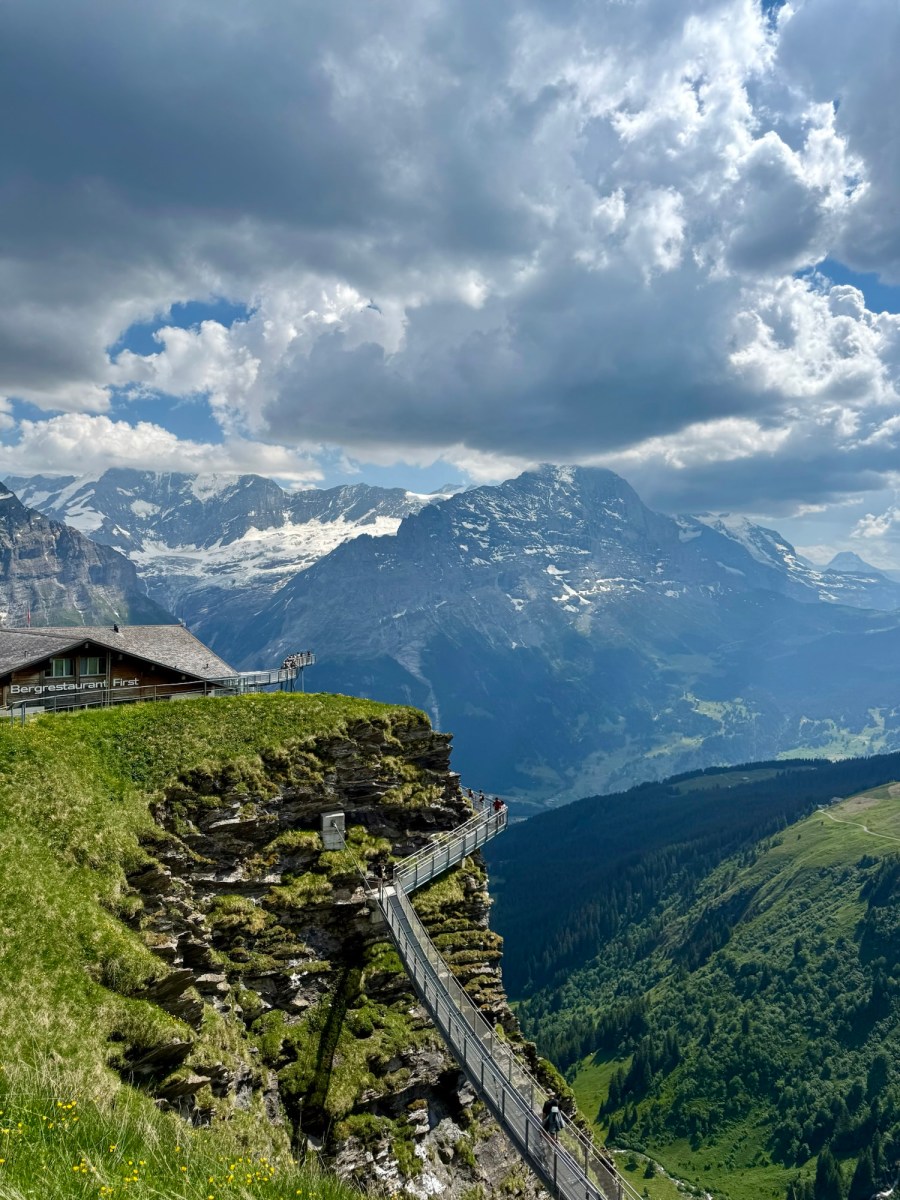
Yesterday we arrived in Grindelwald, a Swiss village in the Bernese Alps, famous for its spectacular scenery, massive glaciers, and alpine meadows. Since we were staying near Bern, we took the opportunity to explore the area. Grindelwald sits right at the base of the iconic Eiger North Face — a gigantic wall of rock and ice, known for its sheer verticality and the extreme difficulty of its climbing routes. The village has around 3,800 inhabitants and is one of the most beloved mountain destinations in Switzerland.
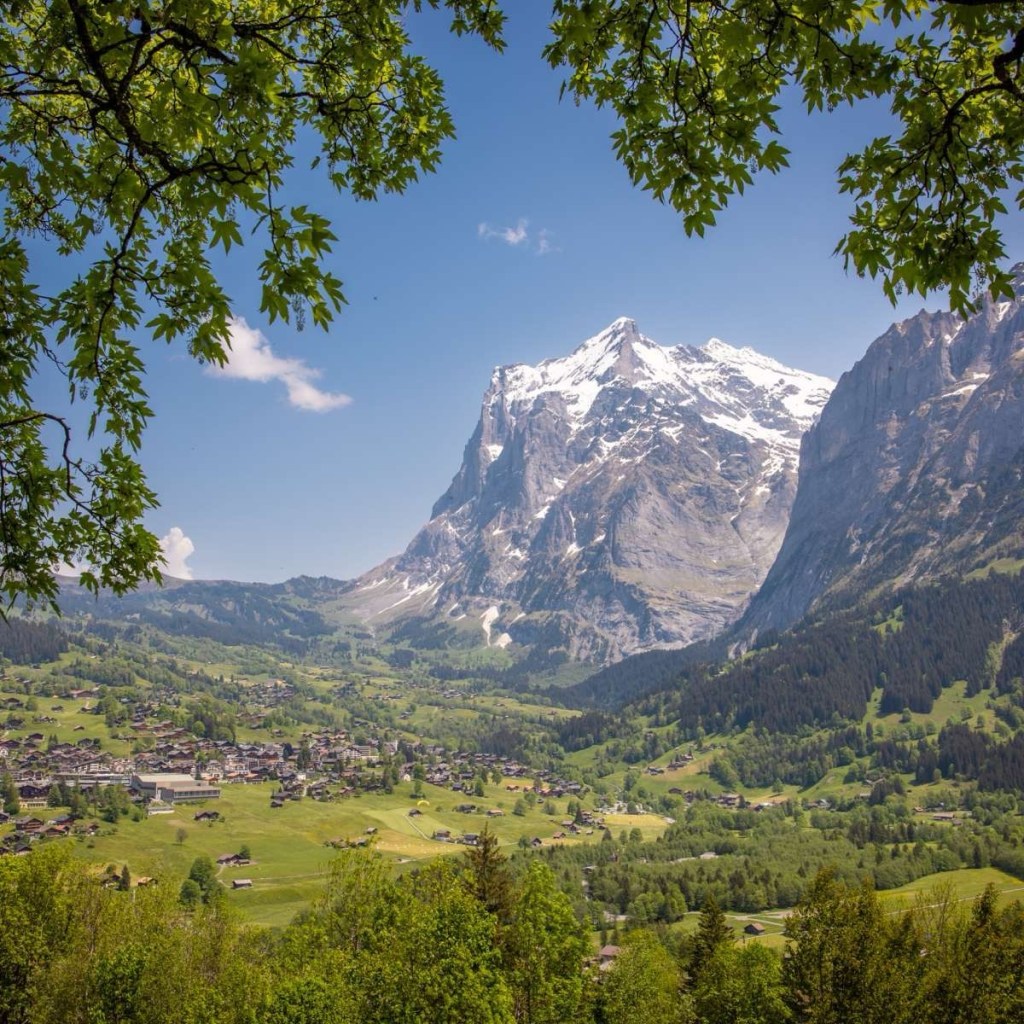
George then came up with the idea to take the cable car up to Jungfraujoch, the place nicknamed the Top of Europe. And rightly so: at 3,454 m, it’s home to the highest railway station on the entire continent.
I’ve had my share of cable‑car experiences since childhood and teenage years in Romania. Heights are not exactly my strong point, and in recent years I’ve even developed a proper fear of them. Still, I told myself I should get in the cable car — I hadn’t come all the way here just to admire the parking lot. What could possibly go wrong? Answer: everything. At the very first metal rattle of a support pillar, I entered a state where I felt like I was dying, resurrecting, apologizing to the universe, and promising never to do this again — all at once.
My advice: if you’re afraid of heights, don’t get in cable cars. I have no idea how I made it up there in one piece, how I made it down in one piece, and how I didn’t end up being carried out on a stretcher. From now on, I’ll avoid anything involving altitude, shaking cabins, or the possibility of seeing my life flash before my eyes.
Up top, the views are stunning — I have to admit. Almost worth the cable‑car trauma. And the cold air? A blessing. A perfect break from the 44°C heat at the base of the mountain.
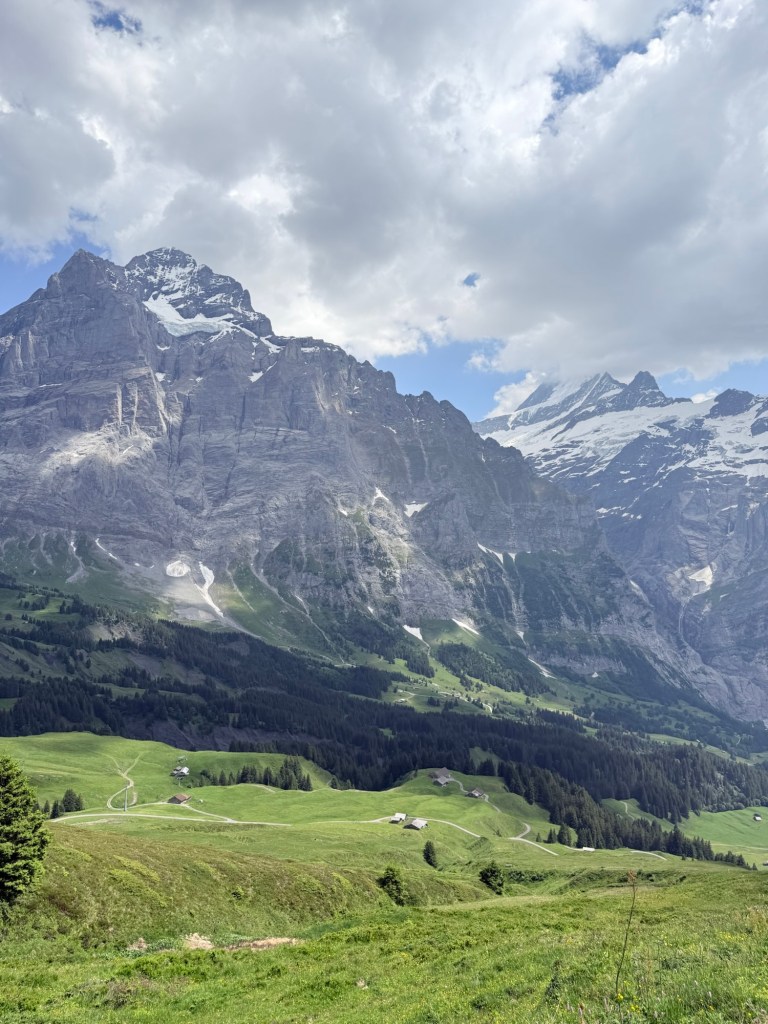
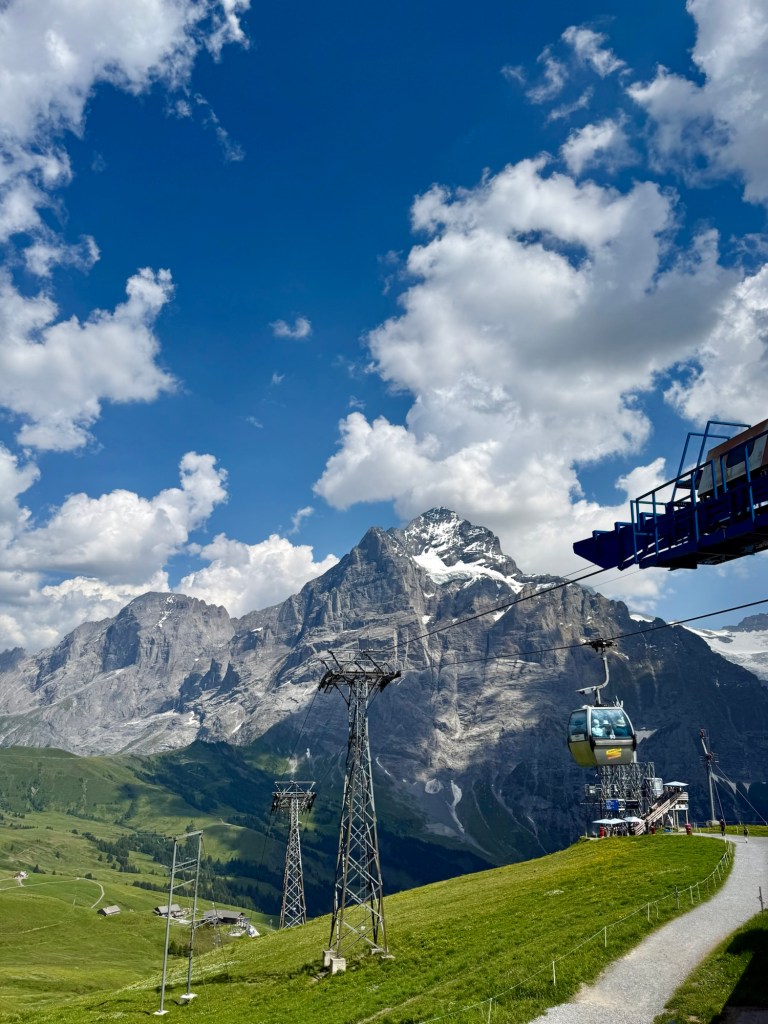
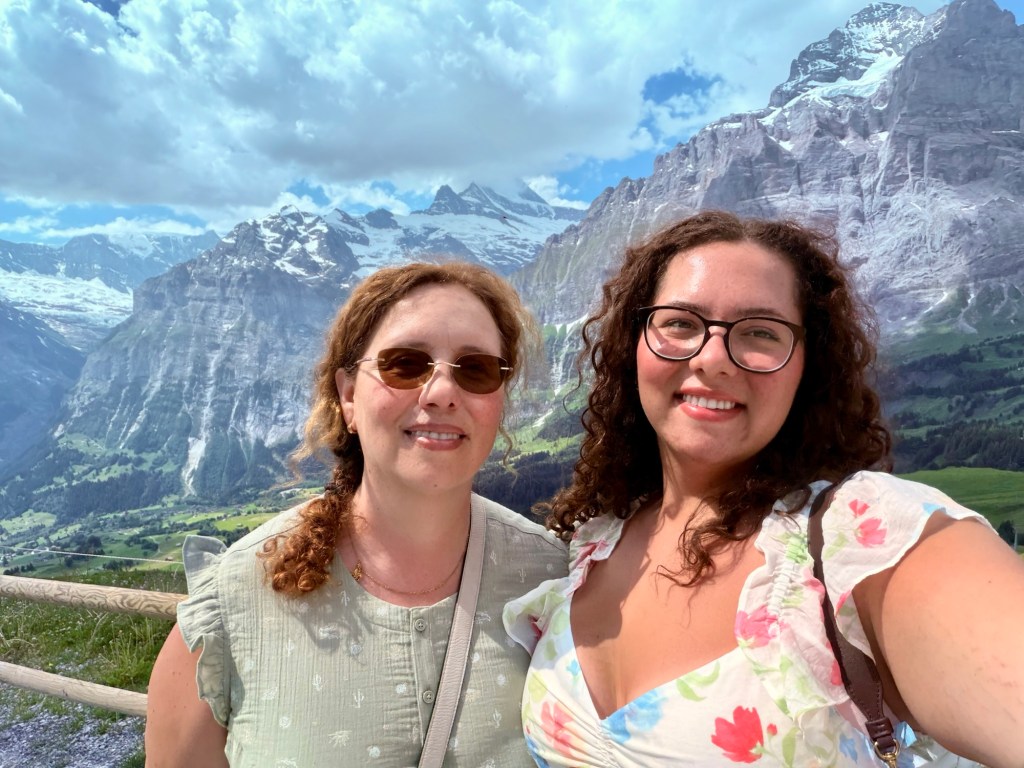
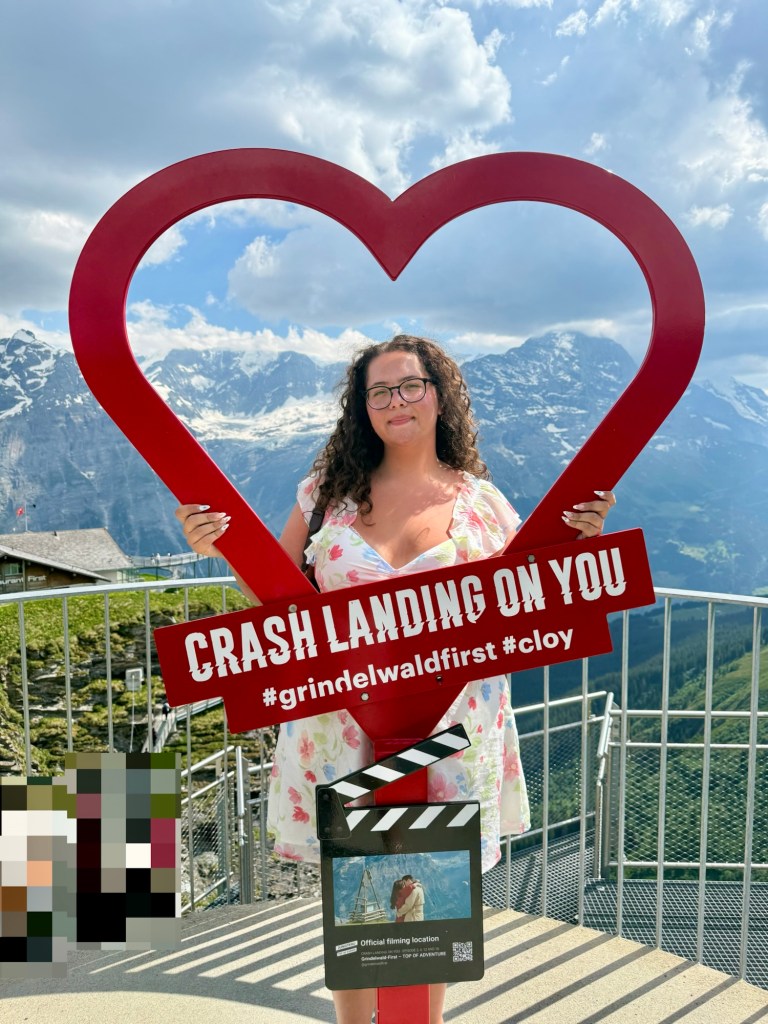
Up there we also found the famous Crash Landing on You photo spot, set up especially for fans of the Korean drama filmed in the Jungfrau region. I, of course, had no idea what it was about — I’m completely clueless when it comes to K‑dramas — but Anna enlightened me quickly. Apparently, the show made the Jungfrau area go viral across Asia: thousands of tourists come every year just to see the exact filming locations. The local authorities caught on and now even promote themed routes for fans.
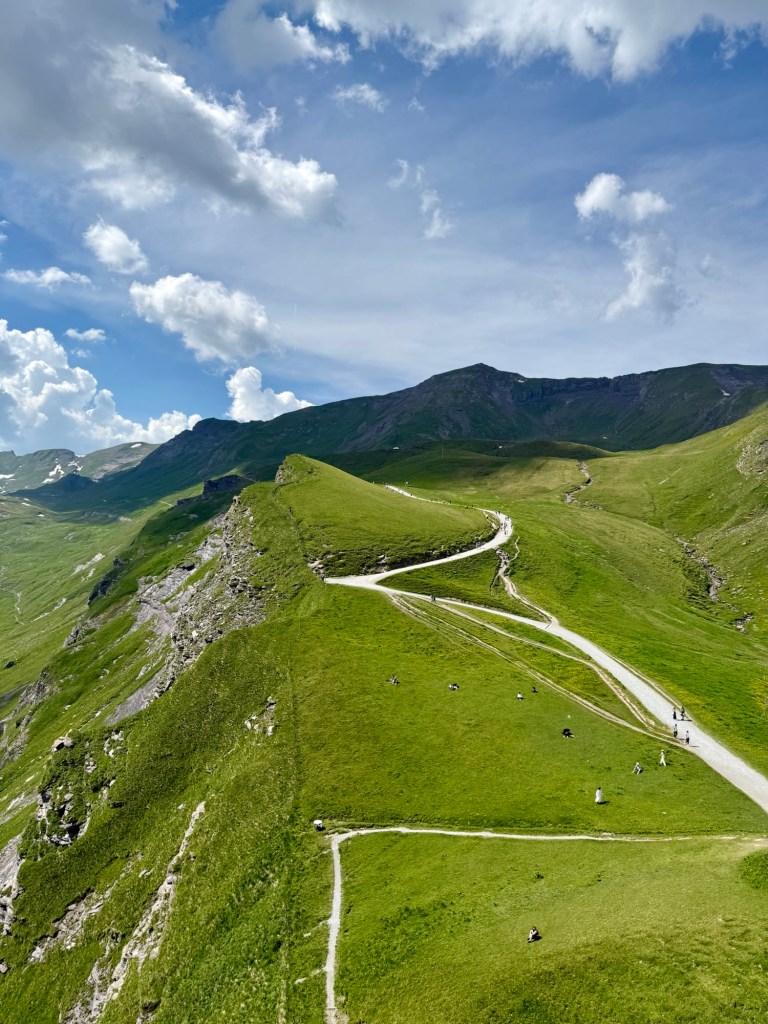
George, in peak form, decided that climbing this high wasn’t enough and added another 500 meters to reach a glacial lake (on the trail in the photo). He cooled off there and, naturally, found some Swedish tourists to chat with for what could have been an entire podcast episode.
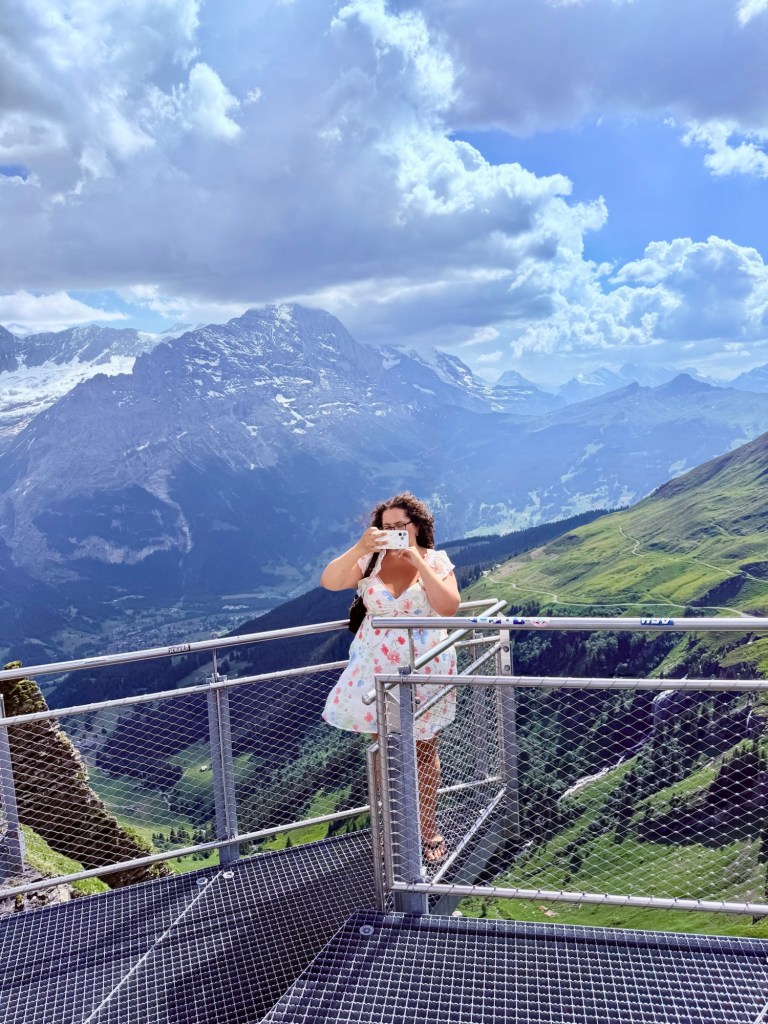
Anna, of course, had the brilliant idea to climb onto a sort of rocky promontory that juts 15–20 meters over one of the peaks — just to take Instagram‑worthy photos. Meanwhile, I was holding my breath, because beneath us was a drop as far as the eye could see.
By the way, if your knees don’t shake like mine, there’s also a restaurant up there where you can enjoy Swiss‑priced fast food — but at least the view steals your eyes before it steals your money.
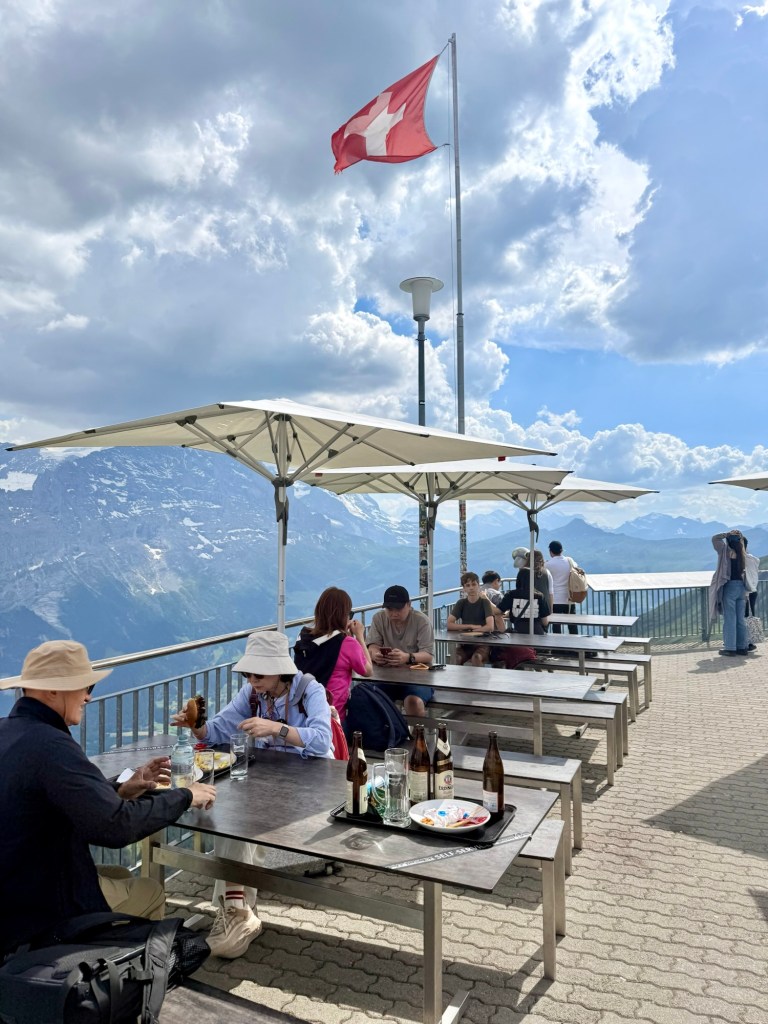
After wandering around for a while, I practically begged Anna to head back down. George was still chatting with his Swedes, of course, but I had reached the point where I felt I’d had enough adventure for the day and just wanted to get my feet back on solid ground — literally. Eventually, I convinced her, and we boarded that stressful cable car again. As we descended, I could feel my will to live slowly returning. 🤭
Since I behaved and didn’t faint in the cable car, they even gave me a “passport” certifying that I made it up to Jungfrau (loosely translated, the Maiden’s Peak).

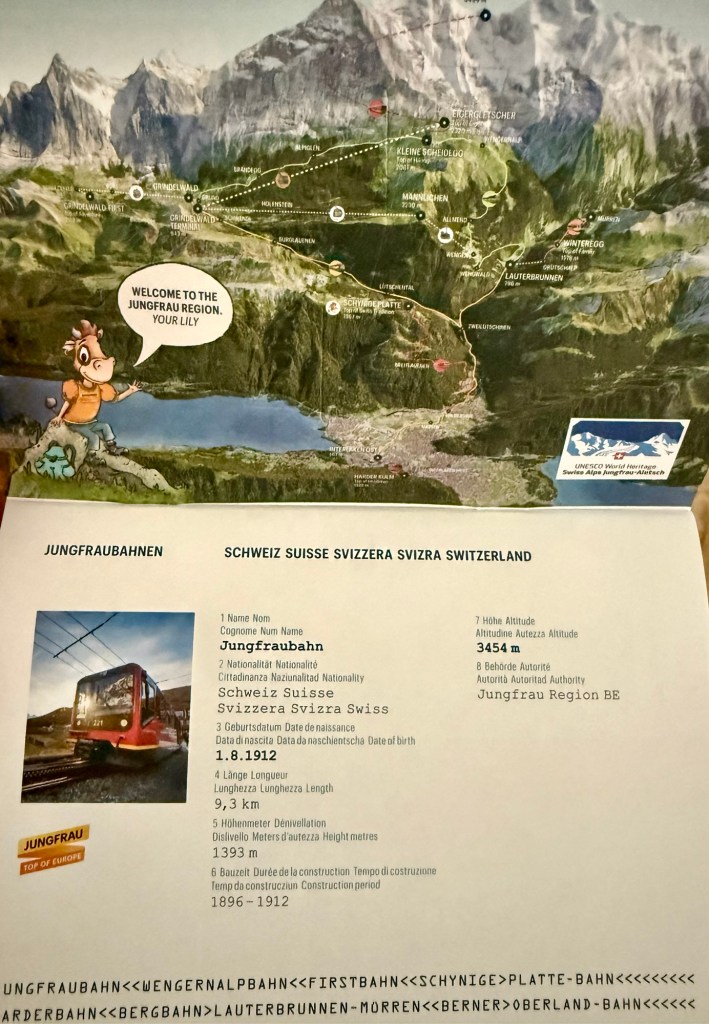
I consider it official proof that I deserve a medal for this unforgettable experience. 🥇
Gletscherschlucht Grindelwald
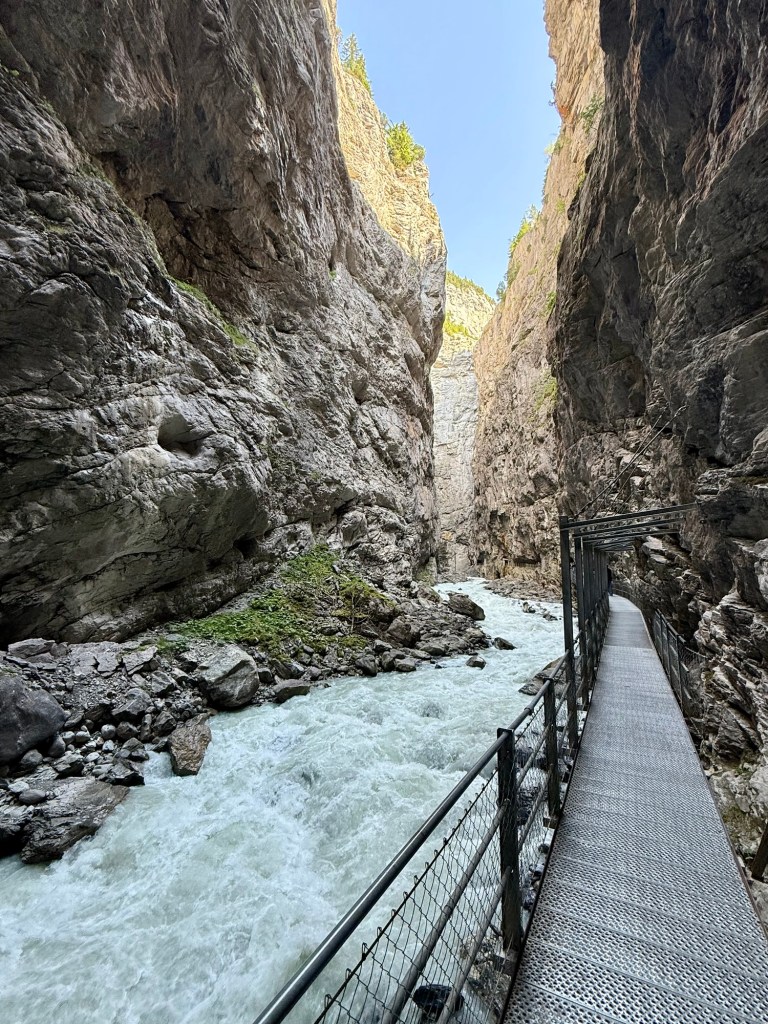
Since we apparently hadn’t had enough thrills, we then went to Gletscherschlucht — the Glacier Gorge in Grindelwald. Another icy experience, perfect given the heatwave sweeping across Europe lately. There, we experienced a new kind of thermal shock: from +40°C down to 12°C.
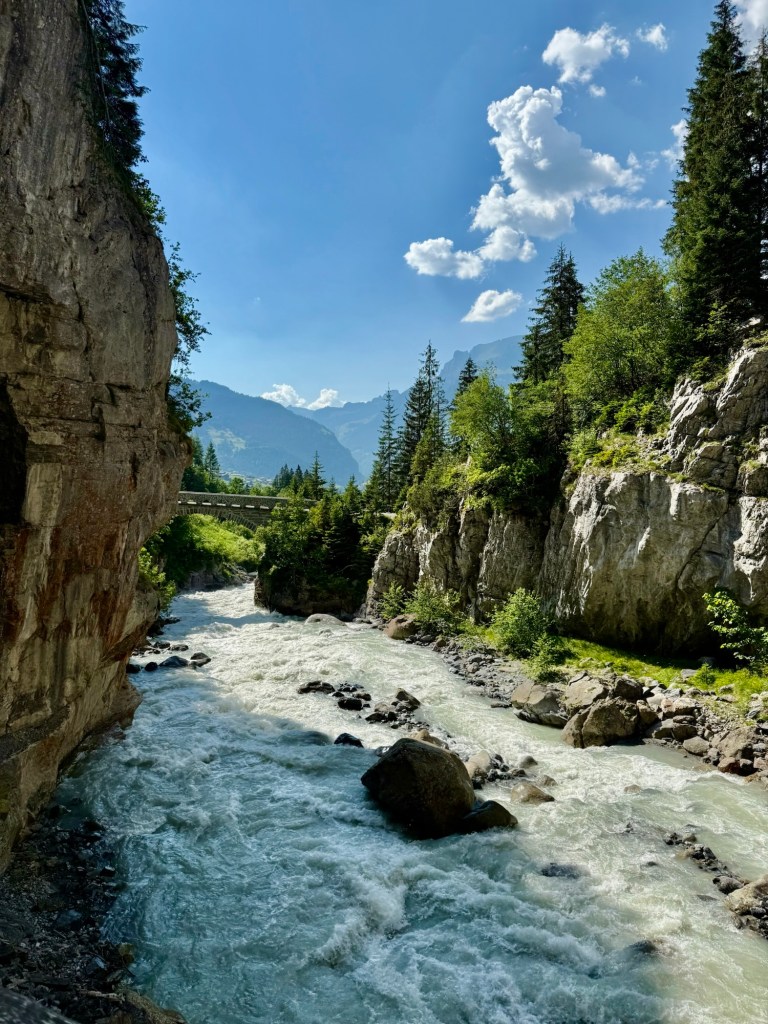
From what I understood, the canyon is a natural phenomenon formed over roughly 250 million years, gradually carved by the former Lower Grindelwald Glacier.
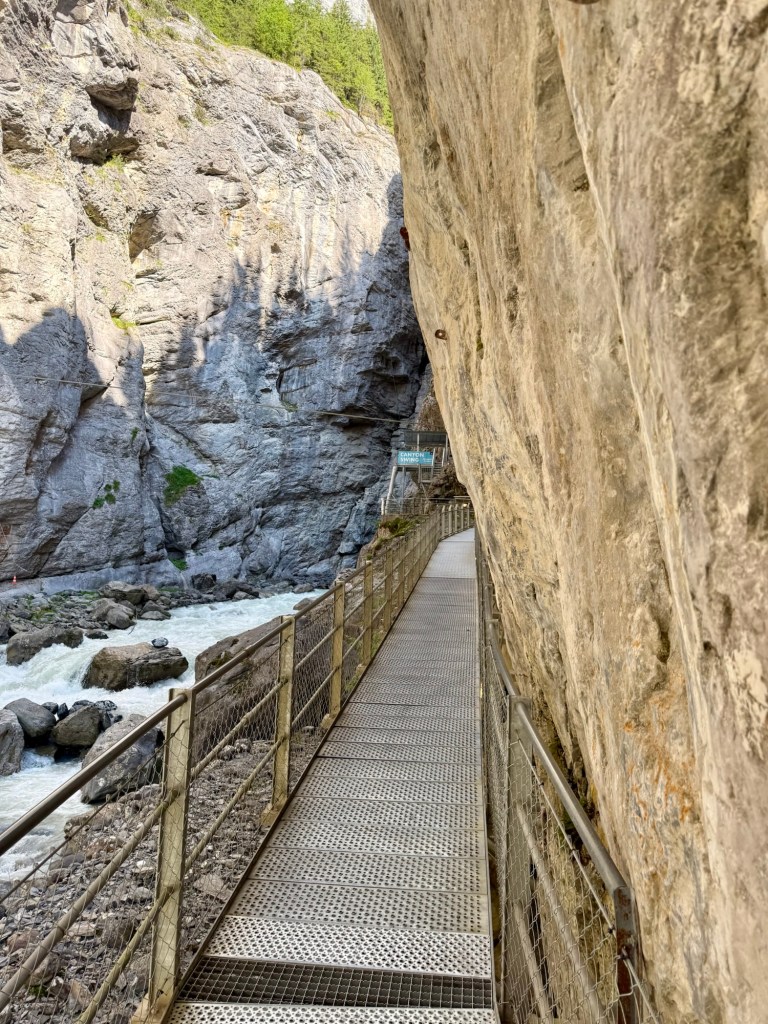
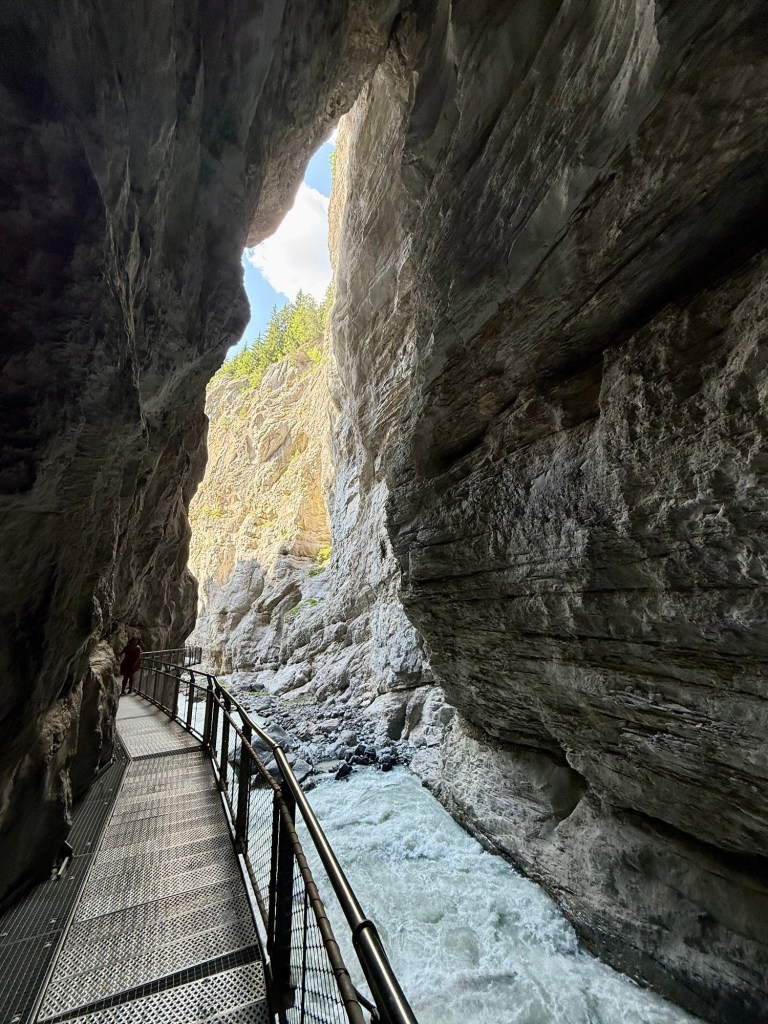
The rock layers, steep walls, and narrow corridors are the result of a combination of glacial pressure, erosion, and meltwater working tirelessly over millions of years. Basically, you walk through a “tunnel” that nature sculpted slowly, with infinite patience.
Luckily for me, everything is much easier to explore here thanks to the modern walkways — they don’t wobble and don’t give you heart palpitations. The only challenge is the temperature: you need something warmer, because inside the canyon it’s cold enough to make your teeth chatter, while outside it’s +40°C.
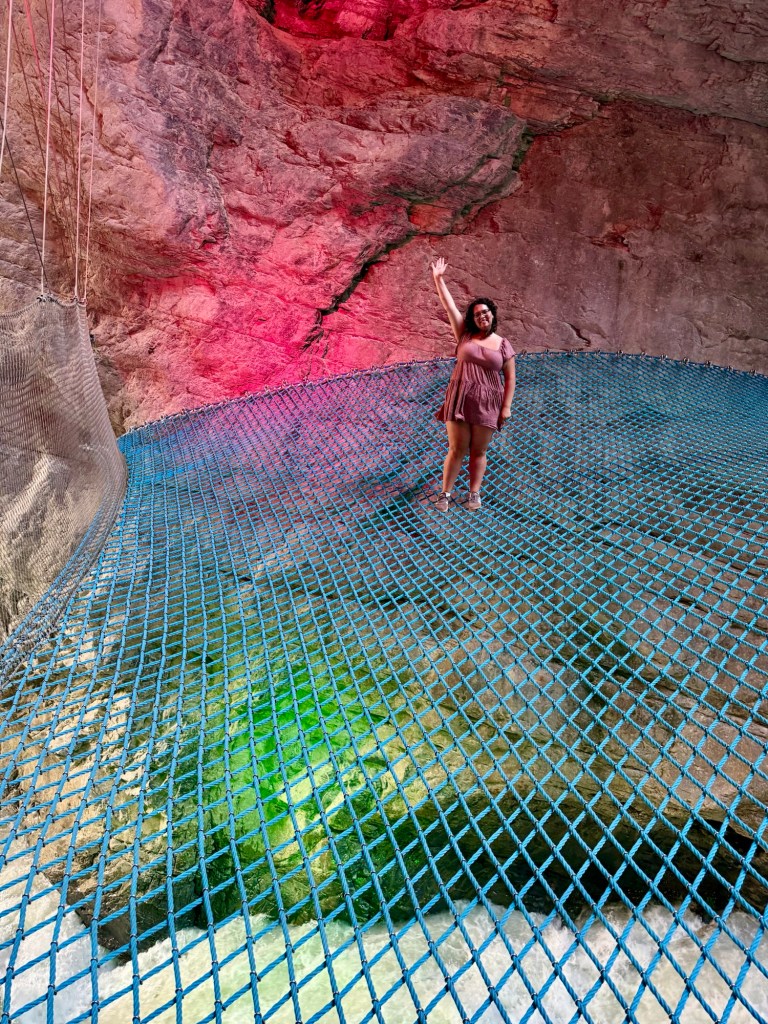
There’s also the famous Spiderweb net — a suspended platform above the water, designed as a place to relax and observe the gorge. You can lie down on it and feel the canyon vibrate beneath you: the water roars below, the air is icy, and you float in a space where modern engineering meets the raw force of nature.
I admired it respectfully from a distance — the idea of balancing between rock and river instantly reactivated all my survival instincts. Anna, on the other hand, climbed onto it with the enthusiasm of someone about to win another medal.
At the end of the canyon there’s a panel telling the local legend: the story says that long ago, in the mountains around Grindelwald, lived a friendly giant named Lütschi (after the Lütschine River — see the photos above). He was said to be the protector of the valley, living quietly among the rocks and drinking water straight from the glacier, like from a giant fountain. One day, upset that people had begun cutting down too much of the forest, he struck the rock with his fist. His blow supposedly opened a massive crack, and water rushed through it — the beginning of what people would later call the Glacier Gorge.
In summary, Grindelwald is full of great activities, perfect for families with children of any age. It’s absolutely worth it — though your wallet might not be as enthusiastic. It’s beautiful, but expensive. A bit too expensive, honestly.
Discover more from "The world is your oyster".
Subscribe to get the latest posts sent to your email.
