Today was another full day, even though our bodies still refuse to acknowledge Parisian time. We woke up between 3 and 4 a.m., completely rested and ready to go, as if the hour were perfectly normal.
At the same time, we discovered a local habit that’s hard to understand for North Americans: terraces stay open — and loud — until 3 in the morning. I know the exact hour because one of them is right under our window, and the conversations at the tables went on uninterrupted until closing time.
As we listened to the noise from below, I couldn’t help but wonder, very pragmatically, whether these people don’t have homes, don’t feel the need to sleep, or simply don’t have anything to do the next day. Perfectly reasonable questions when you’re awake at hours when the city should be quiet. And I must admit, the more rigid part of me — the one with about 4% German genes — reacted instantly. The locals’ lack of rigor and efficiency stands in direct contrast to my preference for order and structure. But Paris runs on its own rules, and we’re trying to adapt, even if for now we’re doing it while still tired.
We started our day with La Sainte‑Chapelle, but before getting there we had already checked off a small urban adventure. We bought a few metro tickets, loaded them quickly — a simple, efficient system, without unnecessary complications — and headed toward the city center.
On the way, however, Paris diverted us in its usual style. Between buildings, almost without realizing it, we found ourselves in front of La Tour Saint‑Jacques, a Gothic tower that seems to have remained standing just to remind everyone that this city has more lives than a historical novel. Naturally, we stopped. You simply can’t walk past it without looking up.
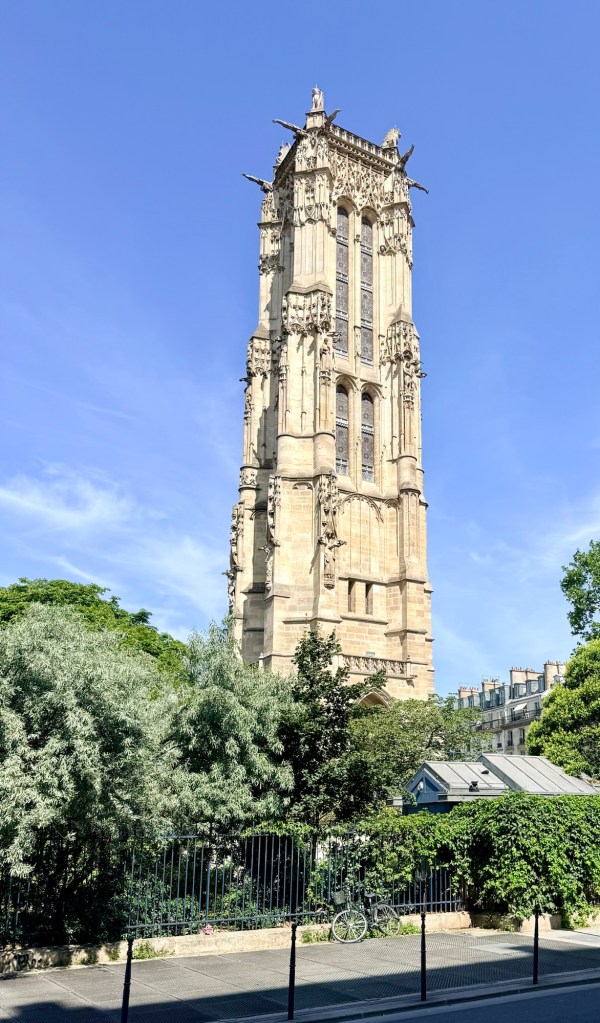
It’s story is surprising: it’s the only surviving remnant of a medieval church demolished during the French Revolution, a starting point for pilgrims heading to Santiago de Compostela, and for a century it was even used for scientific experiments. A mix of spirituality, history, and engineering, all in one tower. It is the sole vestige of the old Saint‑Jacques‑de‑la‑Boucherie church, preserved only because the law required the buyer not to demolish it. Today it marks one of the departure points for pilgrims and stands as an important historical landmark in central Paris. We spent a few minutes admiring it, then continued toward La Sainte‑Chapelle.
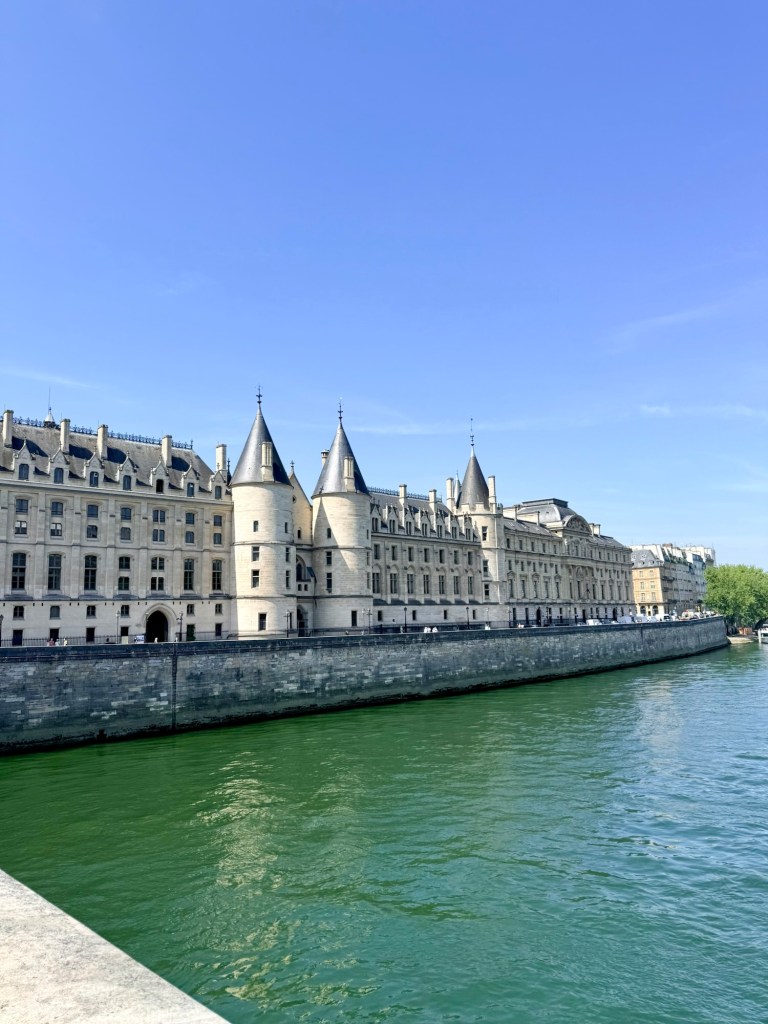
From there we crossed Pont au Change, from where we could see the exterior of the Conciergerie, but we didn’t stop and headed straight to the entrance of La Sainte‑Chapelle.
In front, there was a considerable line, and although we had booked our tickets in advance, we still had to wait about 45 minutes to get in. It was a notable delay, but the experience inside fully justified the time spent in line.
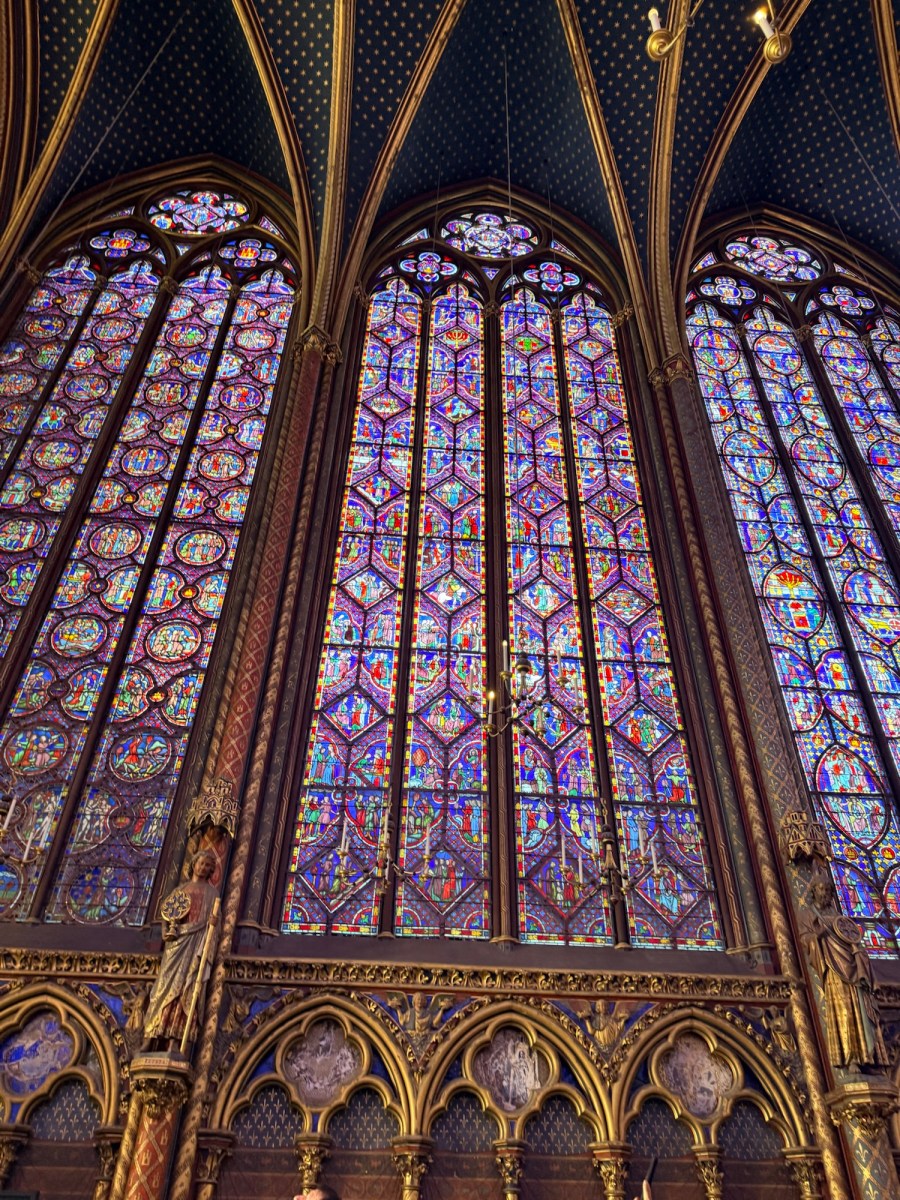
The chapel doesn’t impress through size, but through the intensity of its light and colors. It’s a space built more to lift your gaze than to rest it.
Sainte‑Chapelle was built in the 13th century, in just seven years, by order of King Louis IX. Its purpose was very specific: to house the relics of Christ’s Passion, especially the Crown of Thorns, for which the king paid far more than the cost of the entire chapel. Essentially, the building was conceived as a monumental reliquary, a kind of Gothic jewelry box meant to showcase what was inside.
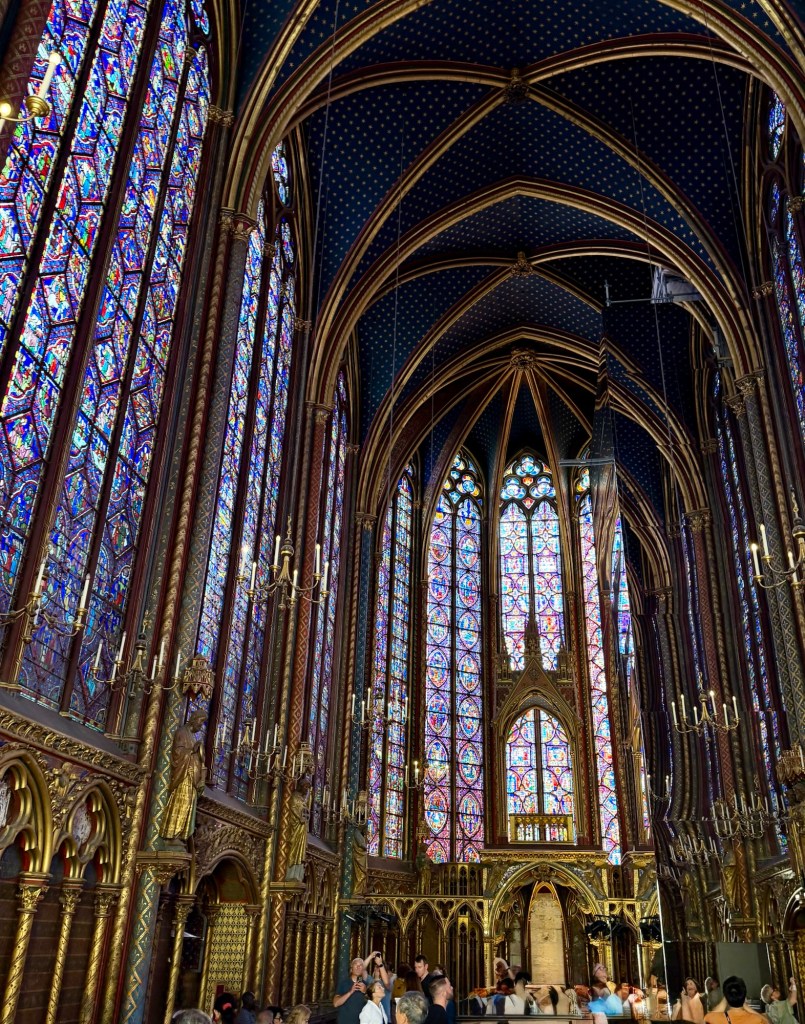
Today, the relics are no longer here — they were moved to other institutions after the French Revolution — but the chapel remains a unique example of “tall and slender” Gothic architecture, built for light.
The upper level of the chapel is surrounded by 15 huge windows, each over 15 meters high. In total, there are 1,113 stained‑glass panels, each depicting episodes from the Bible, from Genesis to the Passion of Christ. The walls are almost entirely made of glass, with the stone structure acting only as a discreet frame.
What we see today is the result of massive restorations. The stained glass was damaged by fires, by the Revolution, by pollution, and even by visitors’ breath — over a million per year. Starting in 2008, they underwent a meticulous cleaning and restoration process, panel by panel, like a giant puzzle of colored glass.
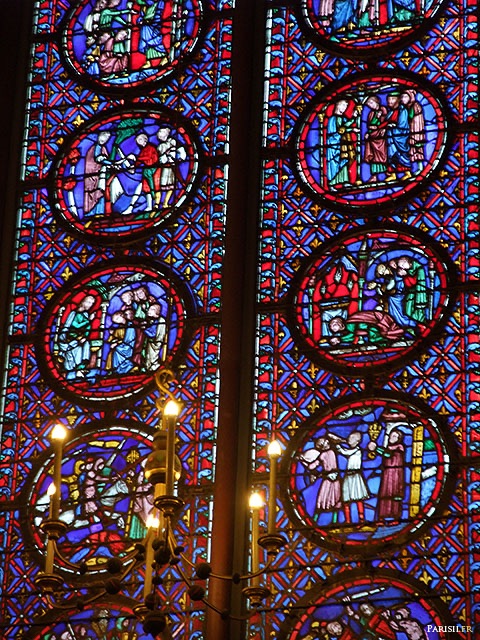
The chapel survived fires, neglect, and was almost demolished in the 19th century. It was saved at the last moment and restored to regain its original appearance. Today, it is one of the most visited monuments in Paris — and rightfully so.
The upper interior is so bright that it feels as if the walls disappear. Everything becomes a bath of colors — red, blue, violet, gold — shifting with the time of day. It’s not a place you simply visit; it’s a place you experience.
After finishing our visit to this major Paris landmark, we went looking for a place to have lunch, since we had skipped breakfast — not that we missed much. At least not by my standards. Here, just like in Italy, mornings are a sugar festival: croissants, pains au chocolat, and other delights that raise your blood sugar just by looking at them. Obviously, the concept of a Balkan breakfast — eggs, tomatoes, cheese, bread, ham — seems to be an urban myth for the French. So, for our own good and for the sake of our pancreas, I think we’ll keep skipping the “local breakfast” and wait for lunch. At least then there’s a real chance of finding something that isn’t 90% butter and 10% sugar.
At lunchtime, the food options become much more varied. I chose a French salad with chicken breast, hard‑boiled eggs, croutons, and Parmesan — absolutely delicious. It resembles a Caesar salad, but in a much improved version. Anna ordered a Croque‑madame, toasted bread with a fried egg, a few salad leaves, and an excellent béchamel sauce. And George watched us longingly, because he fasts until 2 p.m. Not for religious reasons — he wants to lose weight. Which is very possible here, considering he walks about 20 km a day.
After wrapping up the lunch chapter, we headed to La Conciergerie. This is one of those places that take you by surprise: it begins as a shining royal palace and ends as a grim prison full of stories. Here, in the heart of Île de la Cité, the kings of France had their residence in the Middle Ages, and later, during the Revolution, the building became the “antechamber of death,” where thousands of people — including Marie‑Antoinette — awaited their sentence. Today, it remains a fascinating blend of royal Gothic and harsh history, a place where every stone seems to hold a testimony.
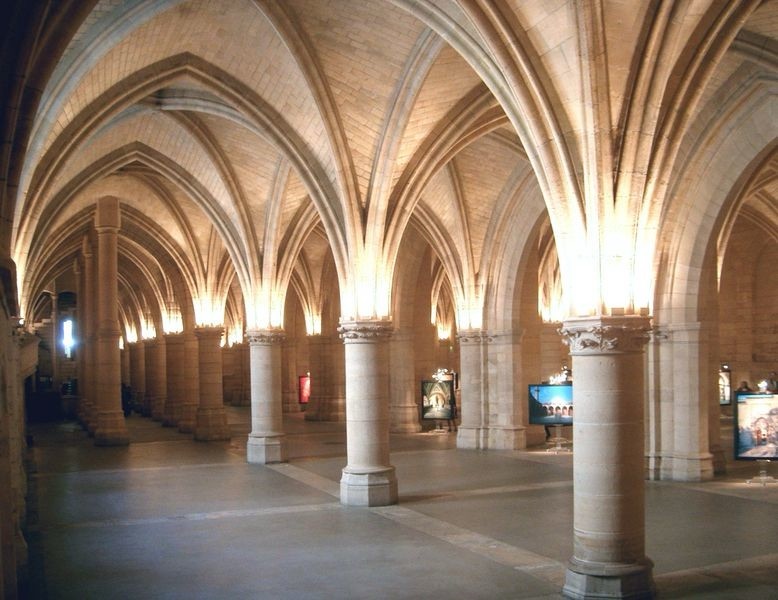
When you arrive at the Conciergerie, it’s impossible not to feel the weight of history. The Gothic walls, the cold light, the heavy silence — everything makes you think that the tombs of those who passed through this place might be here. But the truth is different: the Conciergerie is not a burial place, but the final chapter of suffering.
Marie‑Antoinette was never buried here. After her execution in 1793, her body was thrown into a mass grave at the Madeleine cemetery. Only after the Restoration, in 1815, were her remains recovered and moved to the Basilica of Saint‑Denis, the traditional necropolis of French kings.
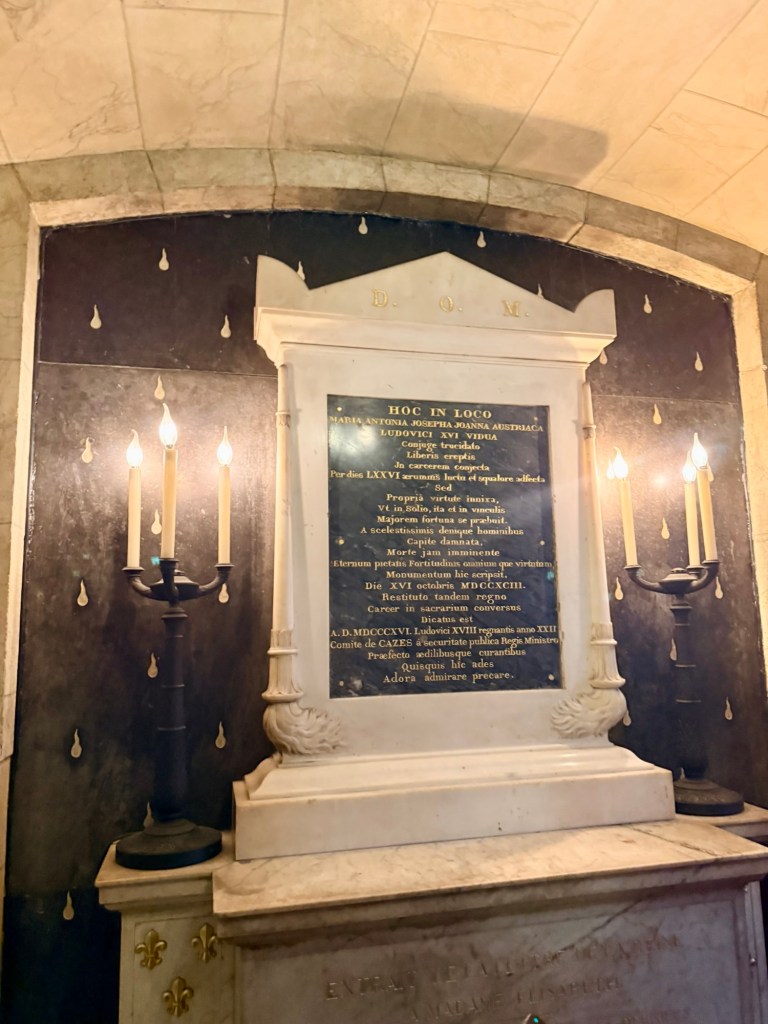
Louis XVI suffered the same fate: a mass grave, then transfer to Saint‑Denis, where he rests today beside his wife.
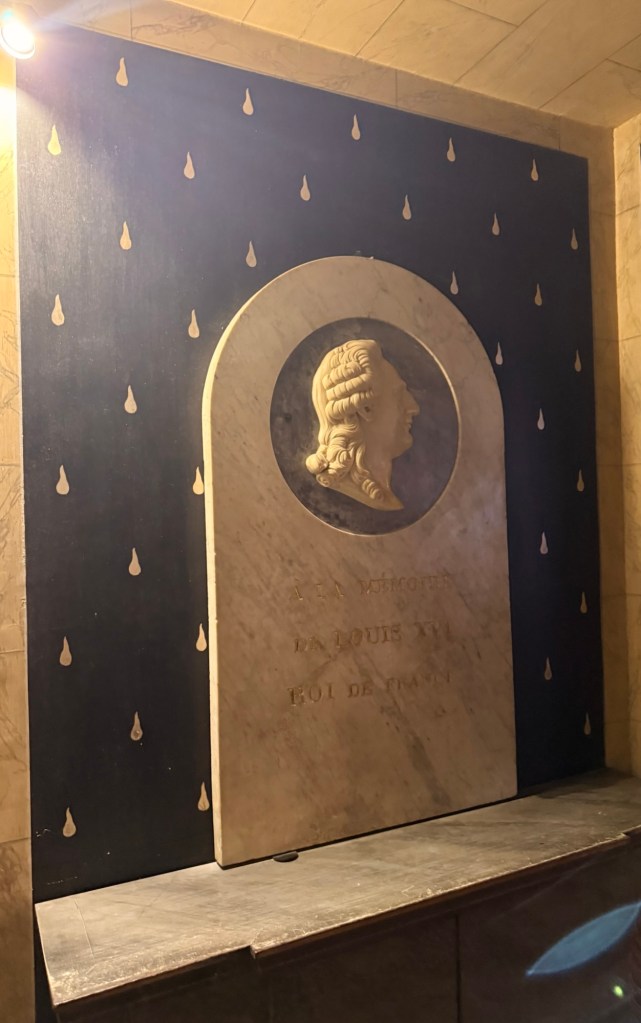
Louis‑Charles, the “little king” Louis XVII, has the most tragic story. He died at just 10 years old in the Temple prison and was also buried in a mass grave. His remains were never identified with certainty. The only thing preserved is his heart, recovered by the doctor who performed the autopsy. After a history worthy of a novel — stolen, lost, found again — the heart now rests in a crystal urn at Saint‑Denis, next to his parents.
After leaving the expiatory chapel at the Conciergerie — a place that inevitably weighs on you — we returned to our little “nest” in the ghetto. Surprise: Booking.com is giving us our money back! At least that. Now comes the truly exciting part: finding decent accommodation in Paris, in peak season, when the city is bursting with tourists. Let the “hunt” begin.
Discover more from "The world is your oyster".
Subscribe to get the latest posts sent to your email.
