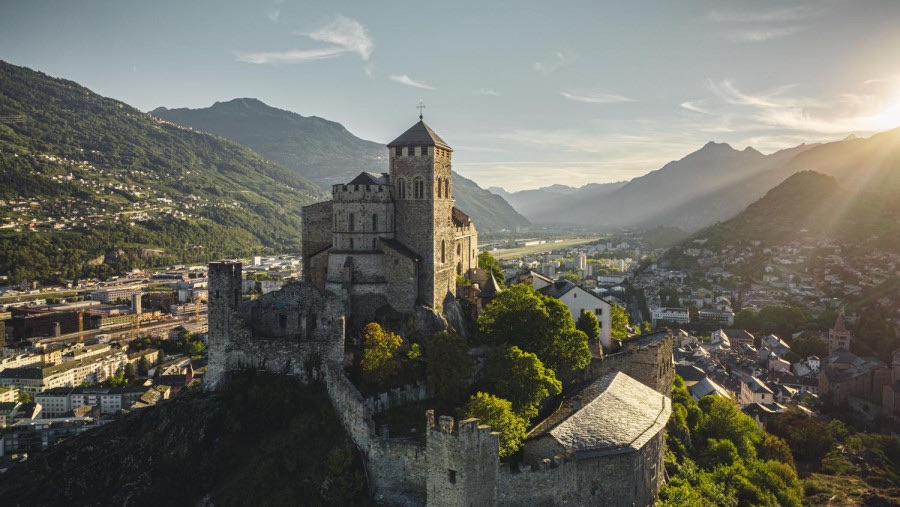
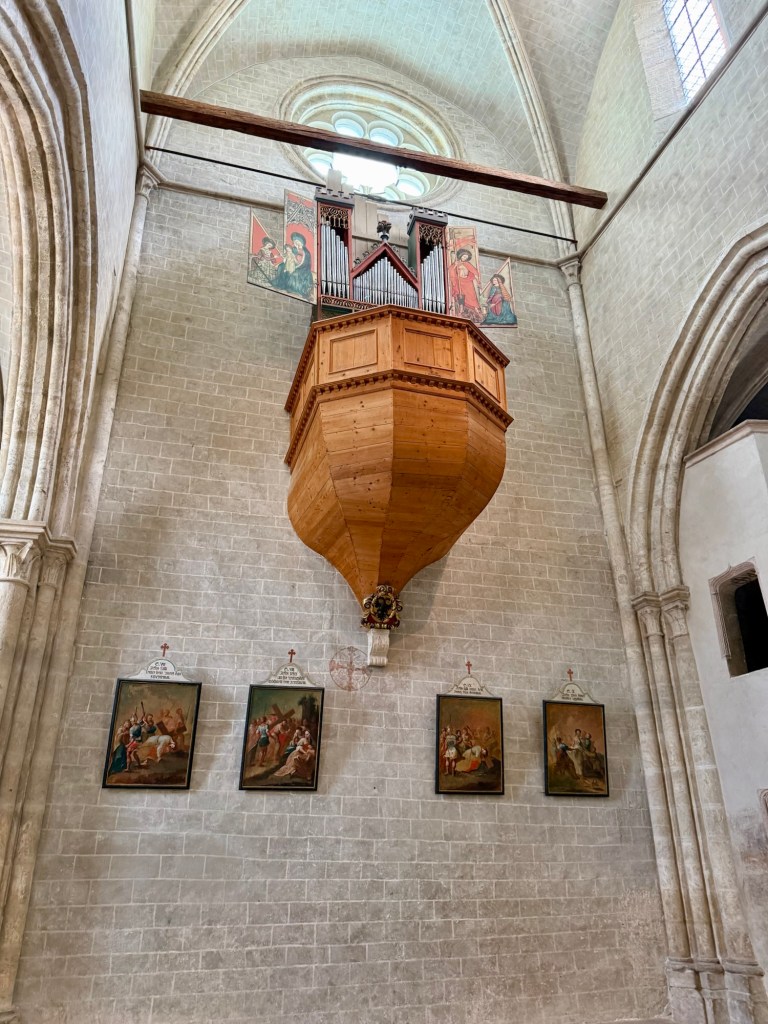
During our wanderings through this region of Switzerland, we also reached the Basilica of Valère in Sion, a fortified Romanesque‑Gothic church famous both for its spectacular position on Valère Hill and for housing the oldest functioning organ in the world, dating back to the 1430s.
Built almost nine centuries ago by the city’s canons, the basilica was conceived from the start as a place where faith and the need for protection met naturally — which is why it was placed on a rock, between sky and earth, both sanctuary and fortress. Over the centuries, the building grew along with history: first the Romanesque walls, then the Gothic windows, then the 15th‑century organ, which still works and seems to have more energy than we did after climbing the slope. Today, the basilica no longer protects the city from invaders, only from oblivion — and it does so with the same quiet dignity with which it has watched over Sion for nearly 800 years.
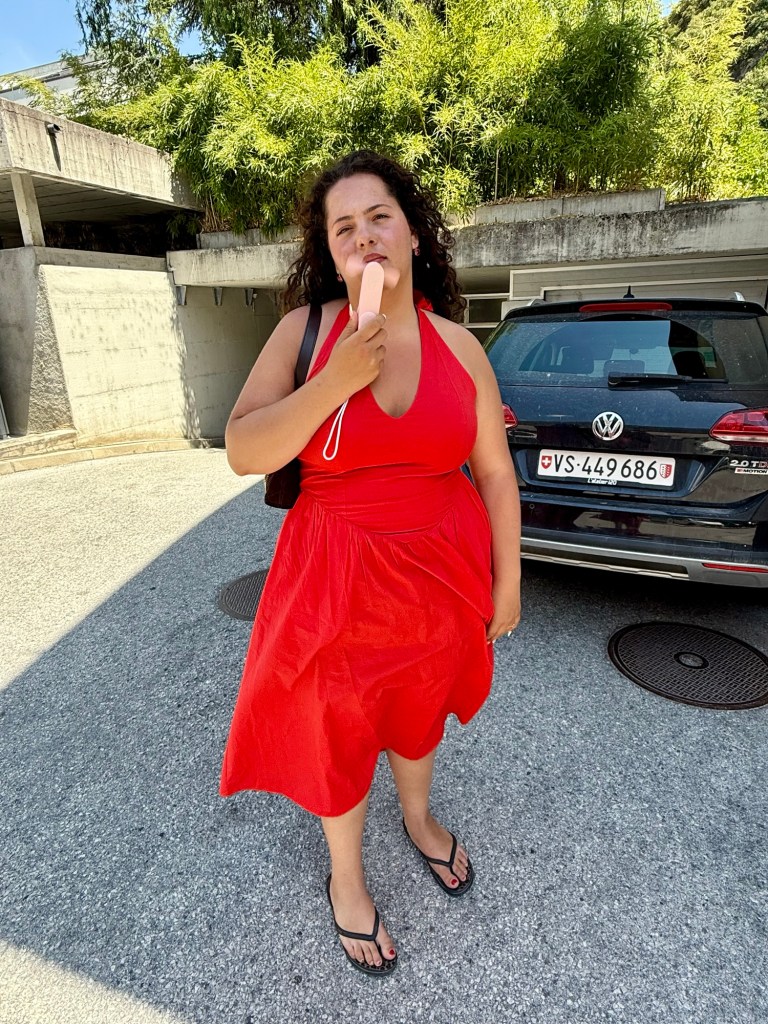
But let me start at the beginning: we found a parking spot about ten minutes from the foot of the hill on which the basilica stands, and from there the real adventure began — the climb through a city melted by heat. At this time of year, the asphalt is so hot it feels like it softens under your feet, and the streets are empty, the locals hiding in their cool homes while only tourists — meaning us, with more enthusiasm than self‑preservation — venture out in the sun in search of things to visit. Every step toward Valère was a small act of courage, but also proof that sometimes the desire to see beautiful places beats any heatwave.
And so the climb to the hill in question begins. 😁🤦🏻♀️
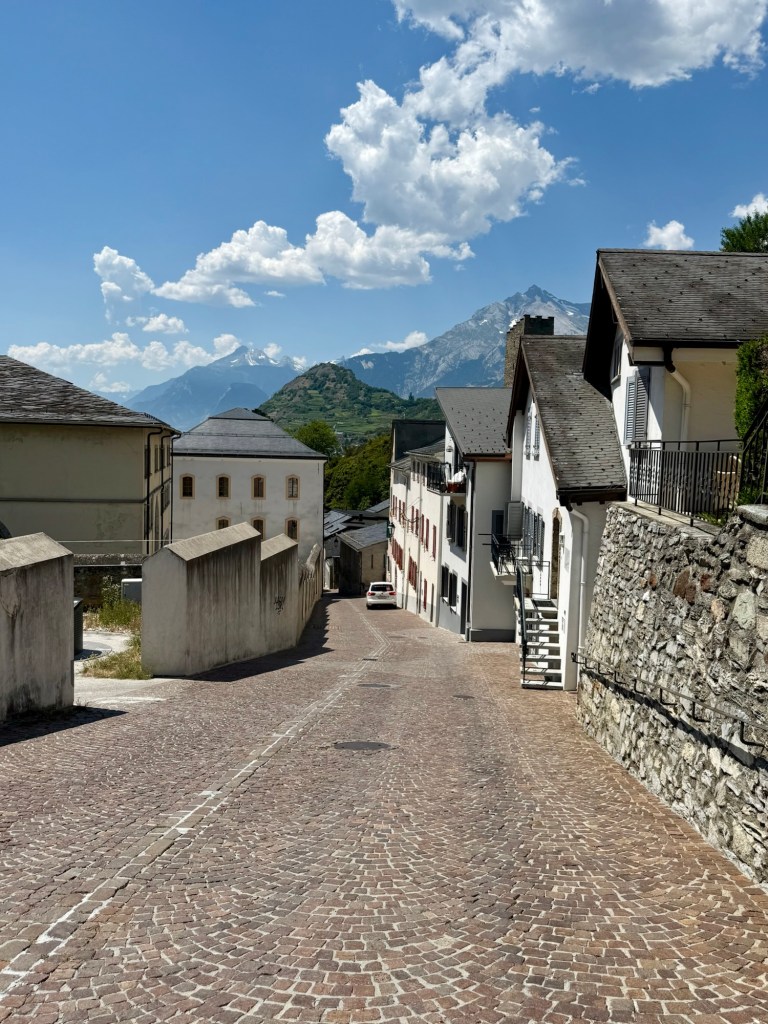
Yes, I have to admit you need to be a bit “out of your mind” to explore all these sights in over 40°C. 😆
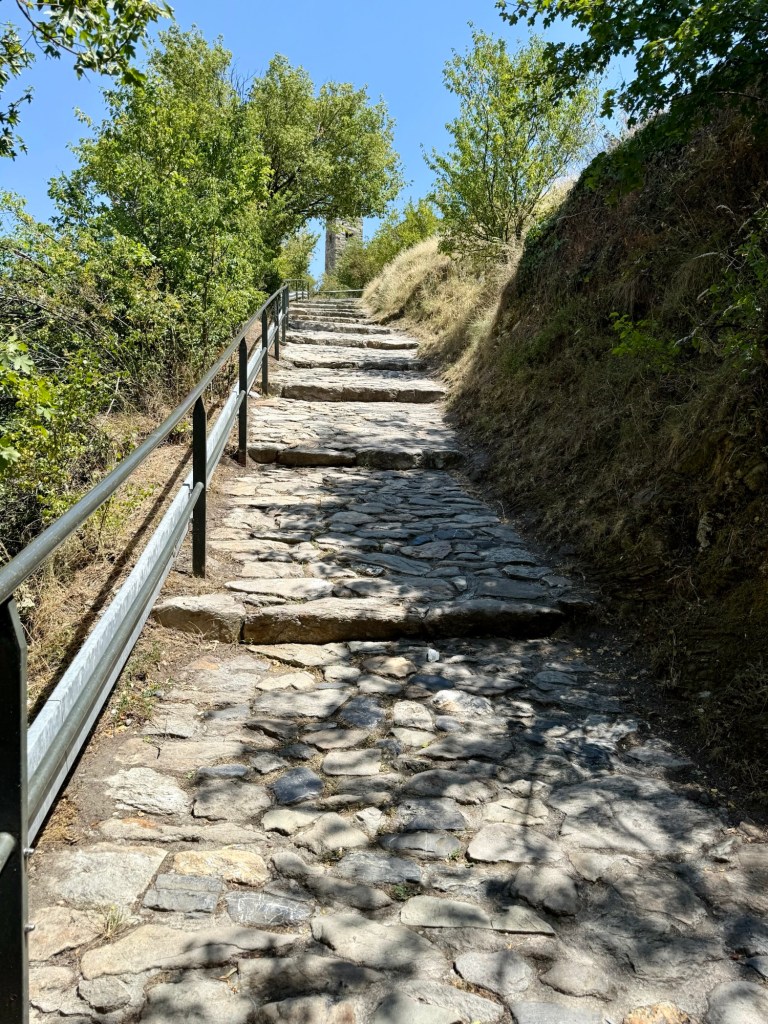
Et là tu t’dis que c’est fini car pire que ça ce serait la mort.
Quand tu crois enfin que tu t’en sors quand y en a plus et ben y en a encore !
(And just when you think it’s over — because anything worse would be unbearable — you realize you’re not done at all. The moment you believe you’ve made it out, there’s more… and then even more). 🤭🤦🏻♀️
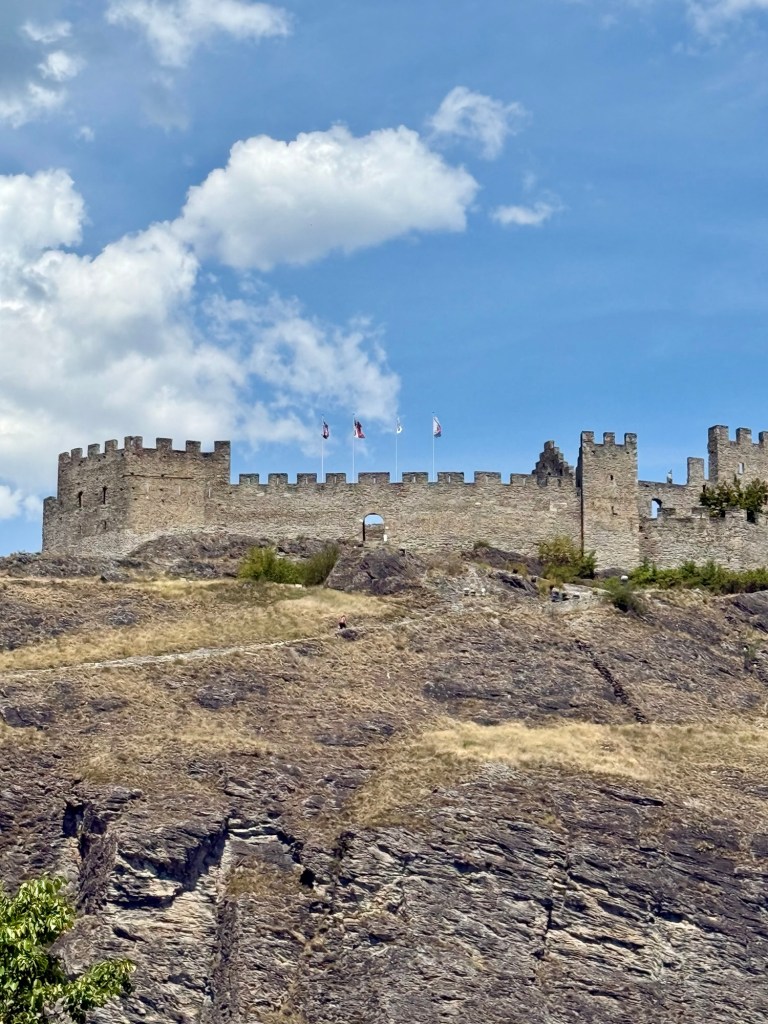
But back to the story: on the opposite hill from Valère, the one Anna and I were climbing toward the basilica, stands the fortress of Tourbillon (Château de Tourbillon).
Tourbillon Castle was built at the end of the 13th century, between 1297 and 1308, by Bishop Boniface de Challant, one of the most influential leaders of medieval Valais. The bishops of Sion were not only religious figures but also political rulers, and for that they needed a residence that inspired respect and offered protection. That’s how Tourbillon came to be: an episcopal fortress perched on a steep hill, directly facing Valère, like the basilica’s more warlike brother.
It lasted as long as it could, until history burned it down twice: once in 1417, during a local uprising, and again in 1788, in a fire that devastated much of Sion. Today, Tourbillon stands in ruins — but in a dignified way, I’d say.
George, of course, wasn’t satisfied with the view from Valère and climbed the opposite hill as well, determined to see the ruins of Tourbillon up close. Anna and I had had enough fortifications for the day and settled for admiring them from the basilica’s hill, from a vantage point far more compatible with our energy levels. While George disappeared up the steep path, the two of us sat in the shade, commenting with a mix of respect and relief: “thank goodness we don’t have to climb that one too.”
Sweaty, dehydrated and silently cursing the absurd temperatures, we crossed paths with several groups of schoolchildren brought by their teachers to visit the basilica. Paradoxically, that encounter gave us a bit of energy — probably out of embarrassment, because those kids were climbing quietly, without complaining about heat or thirst, while we were dragging ourselves like characters in a summer comedy, battling the scorching sun. Brave, disciplined and inexplicably resilient, the children seemed to defy the heat, while we wondered where we had lost our stamina.
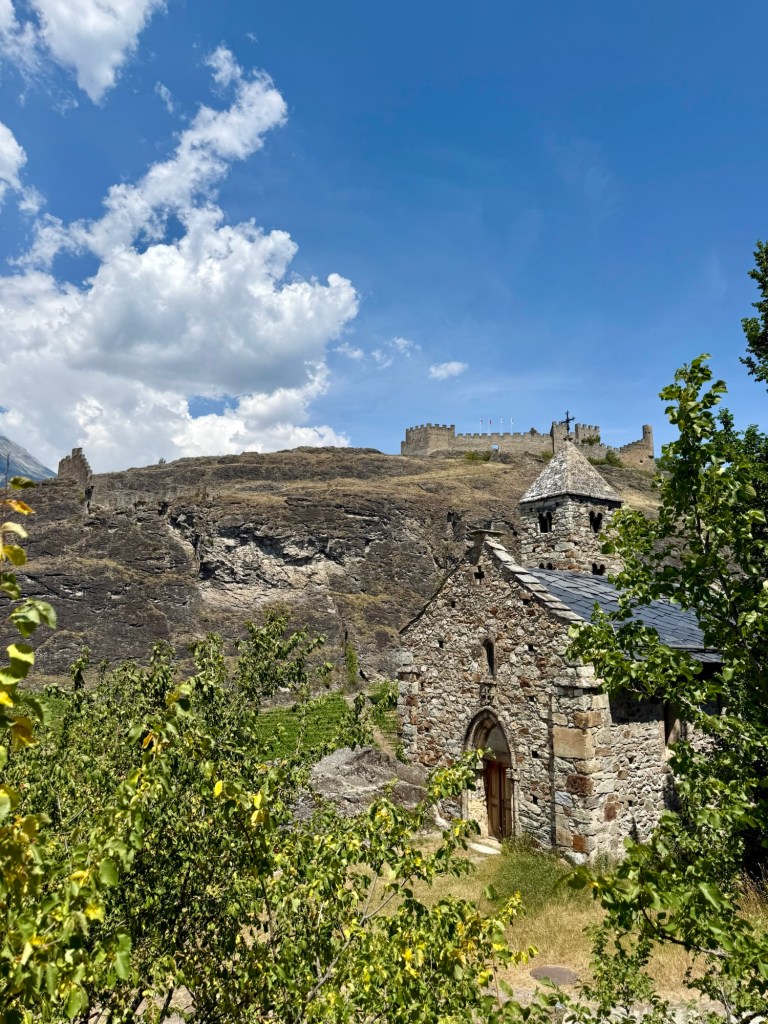
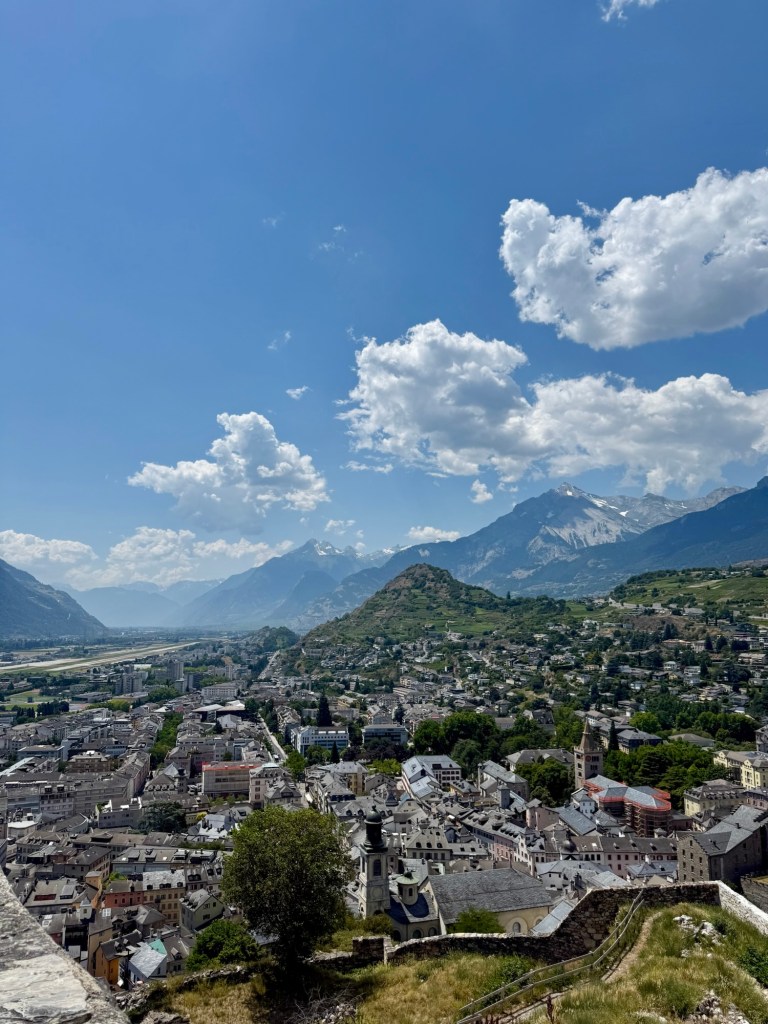
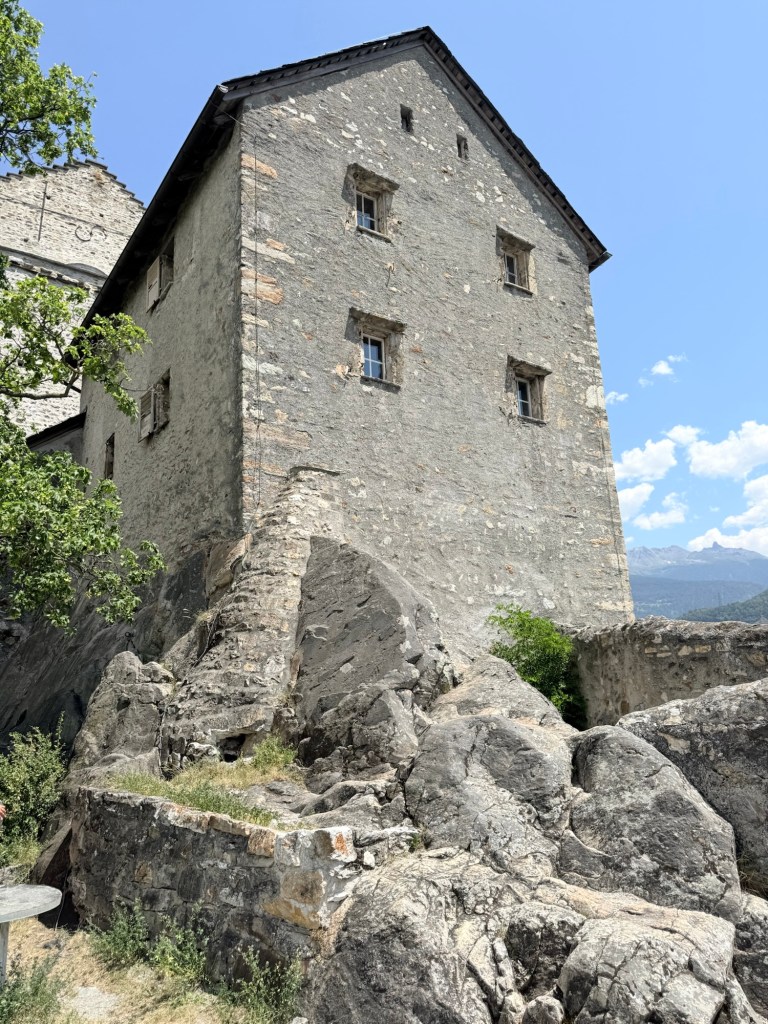
Valère Hill, on whose summit the basilica stands, was designed to be difficult to access. The steep terrain and massive walls turned the place into a true refuge in troubled times, and the fact that it could only be climbed from the northeast made its defensive character even stronger.
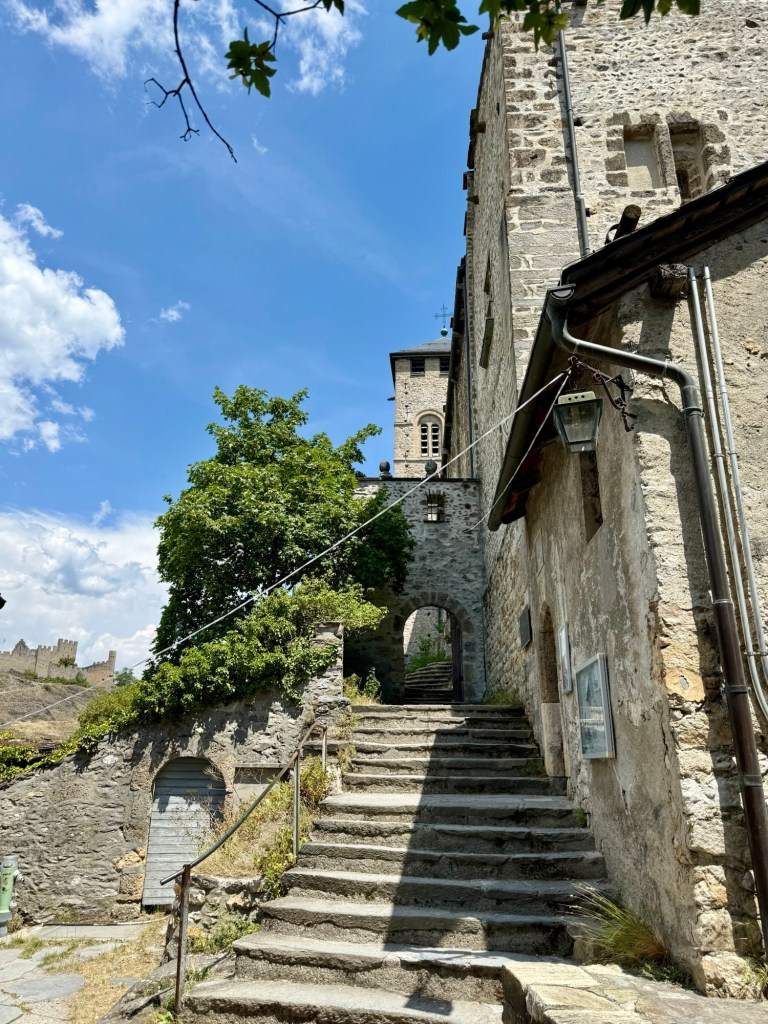
As for me, after a few minutes of climbing, I felt like I had burned not only calories but also half the mistakes of my life.
Once inside the basilica, our souls finally returned to our bodies. The thermometer showed 21°C and, honestly, I think I had a small spiritual moment purely because of the temperature difference.
I have to admit the interior of the basilica didn’t impress me much. After so many steps and such a brutal climb, I expected something grand, and instead found a rather simple, rigid, and honestly a bit modest space. It didn’t quite match the dramatic effort required to reach it.
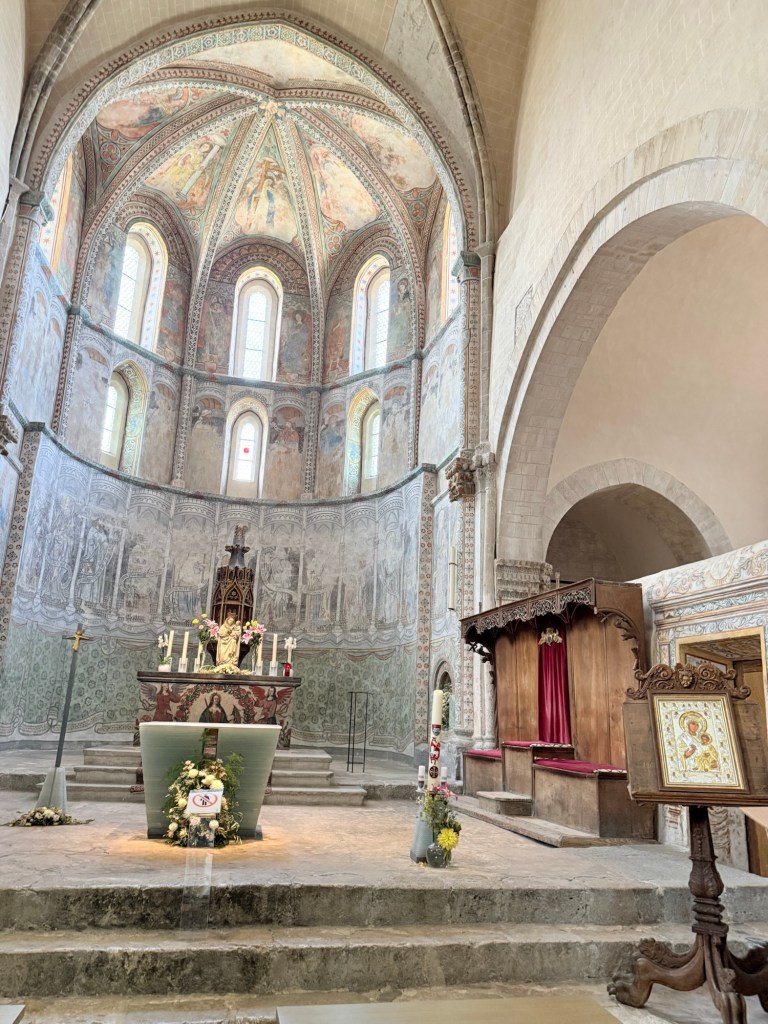
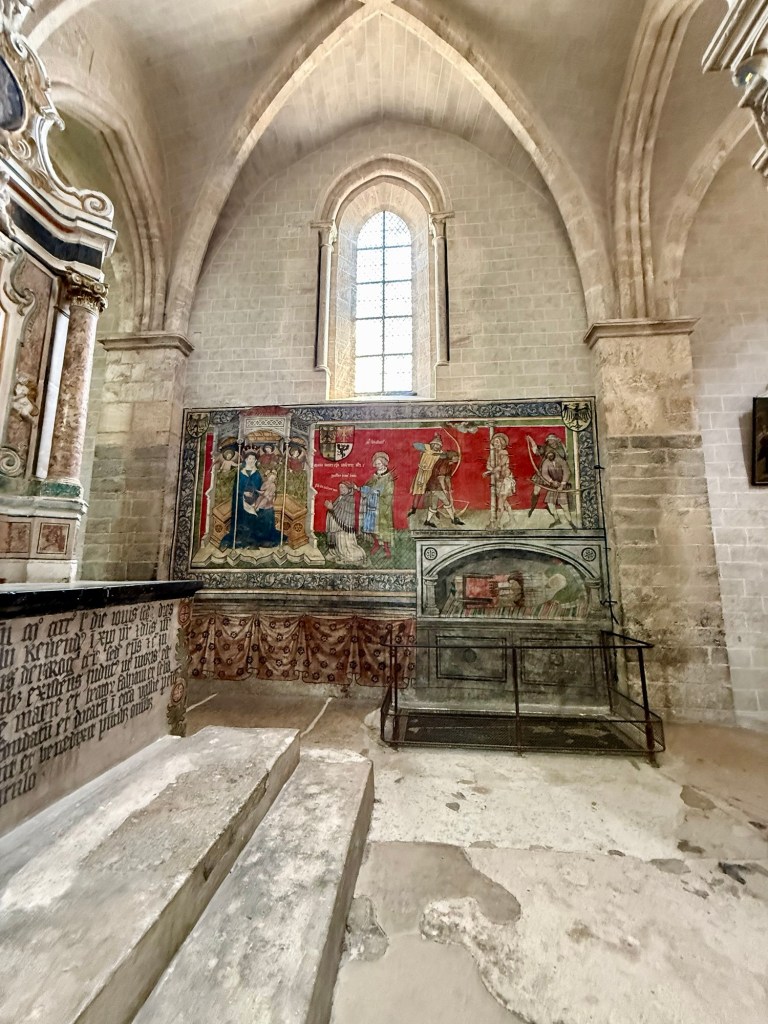
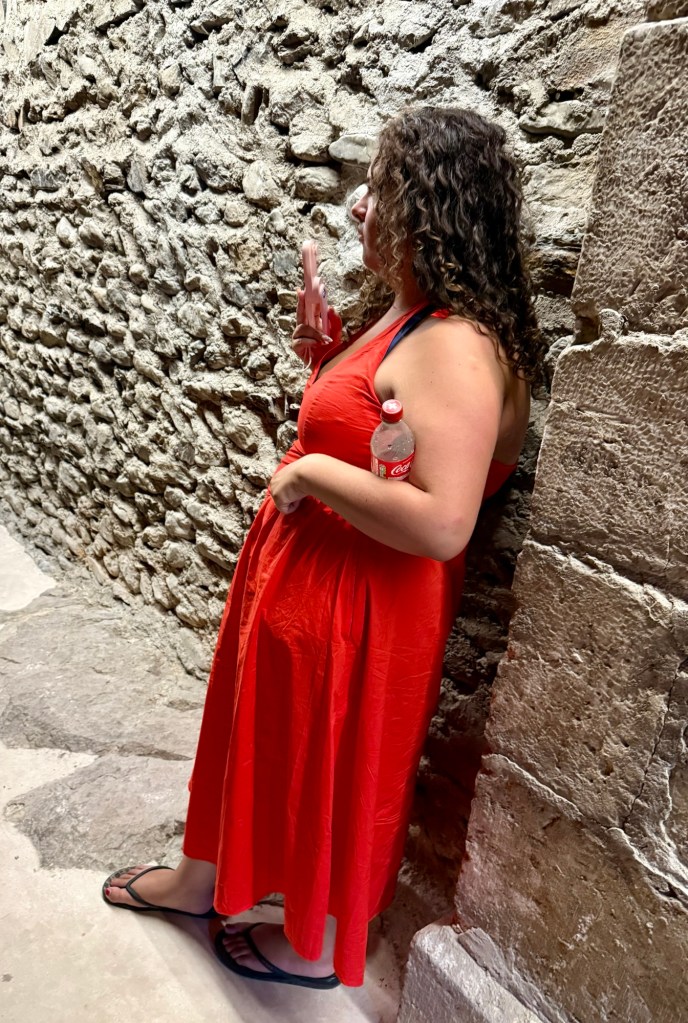
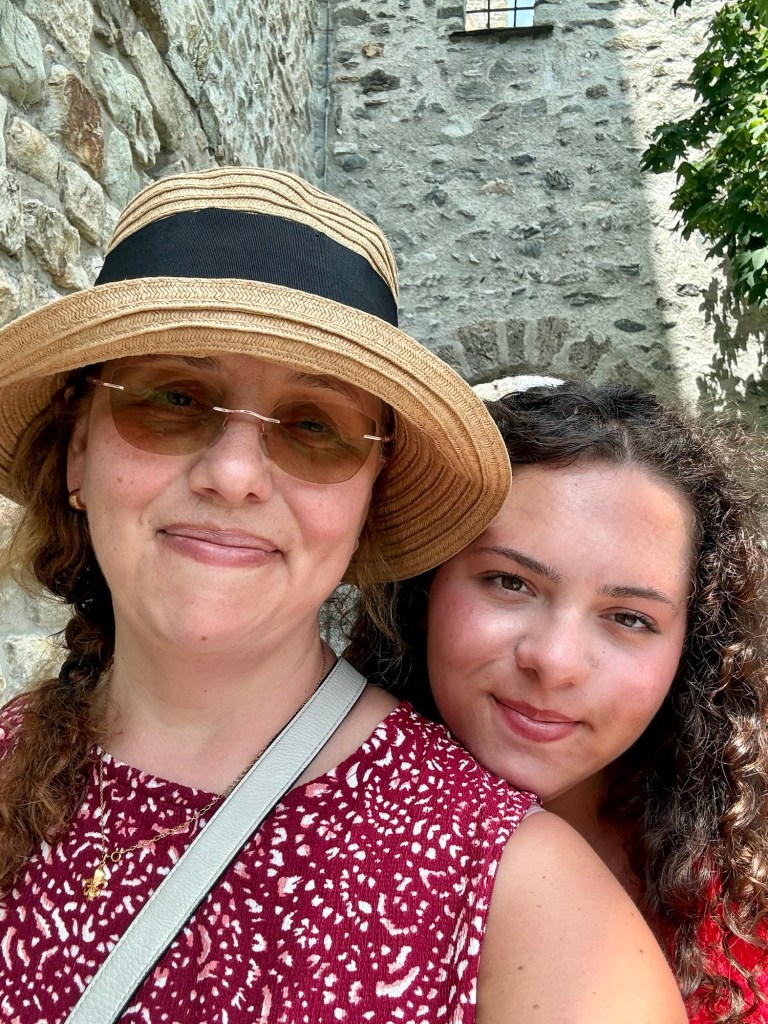
And from here begins the downhill path, over these stones that test both your knees and your patience.
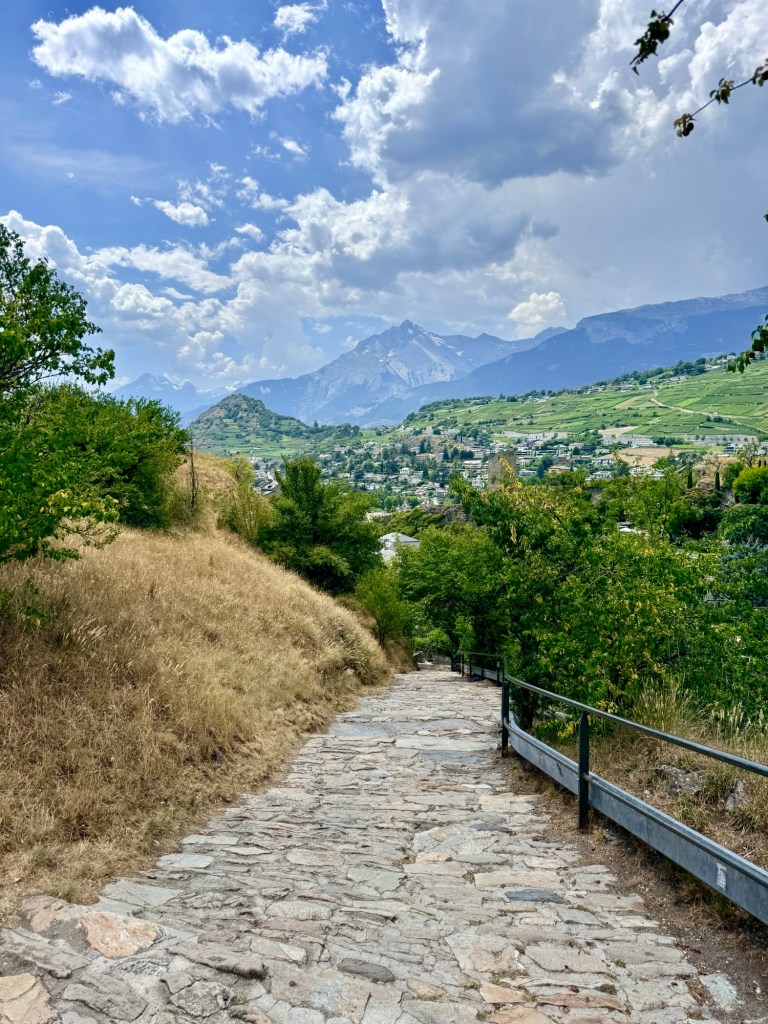
What can I say… it was an unforgettable experience and, theoretically, one to repeat at the next opportunity. 🤣🤦🏻♀️
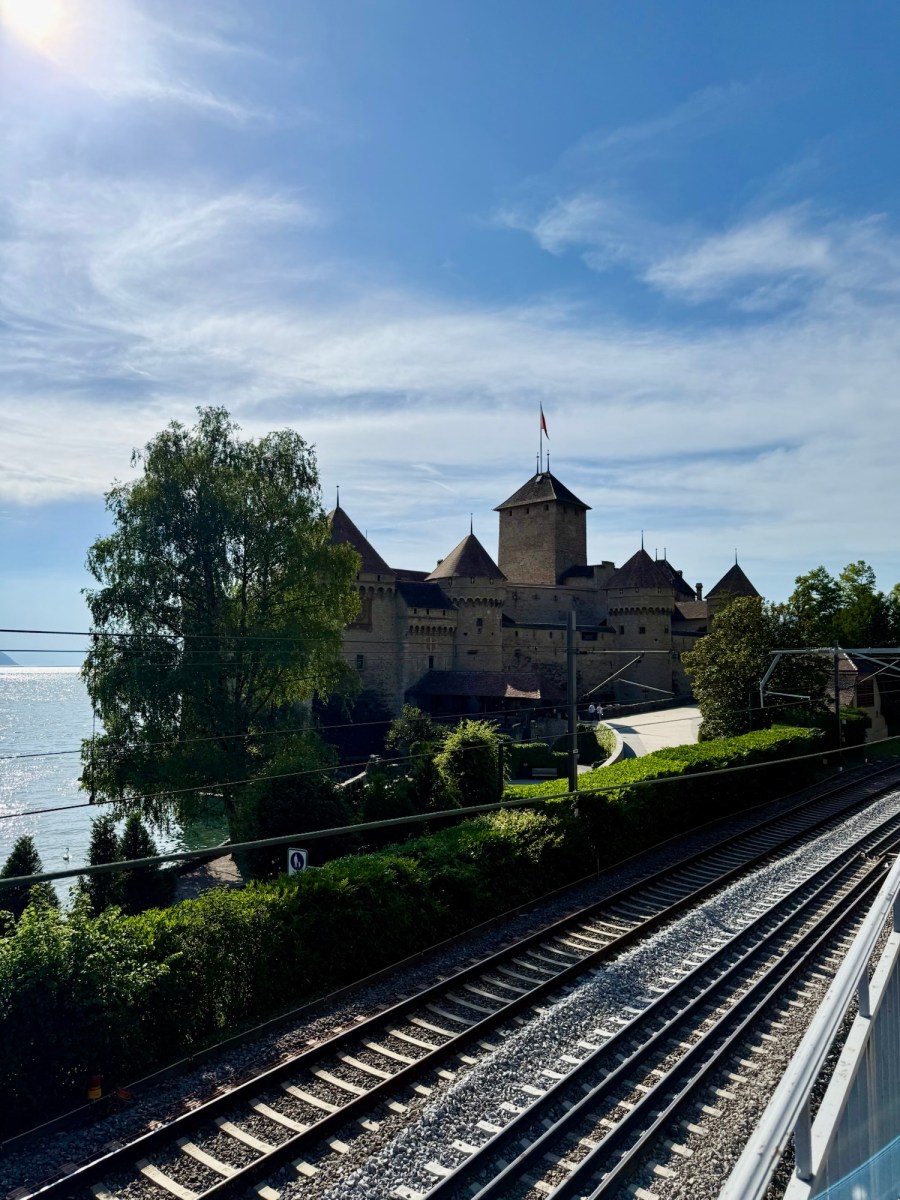
Château de Chillon
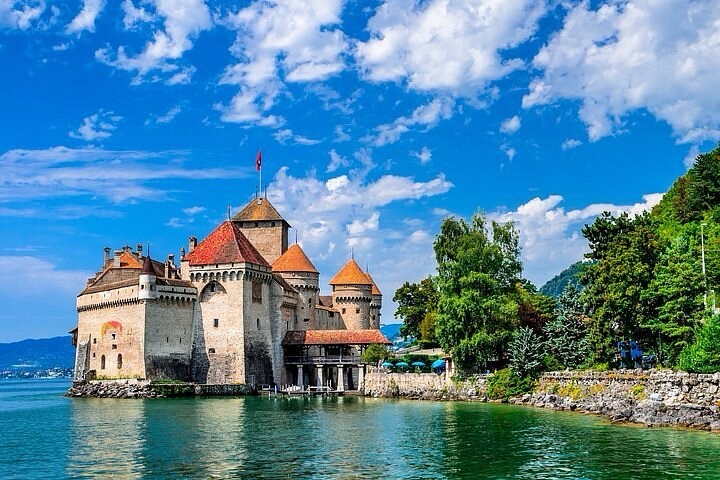
After gathering ourselves from every corner of the hills — each of us emerging from a different direction — we made our way toward Château de Chillon, a place everyone had praised for its spectacular views.
We reached it just before closing time, and Anna and I didn’t push our luck. George, however, with his trademark charm 🤭, managed to sweet‑talk the staff at the entrance and slipped inside at the very last minute.
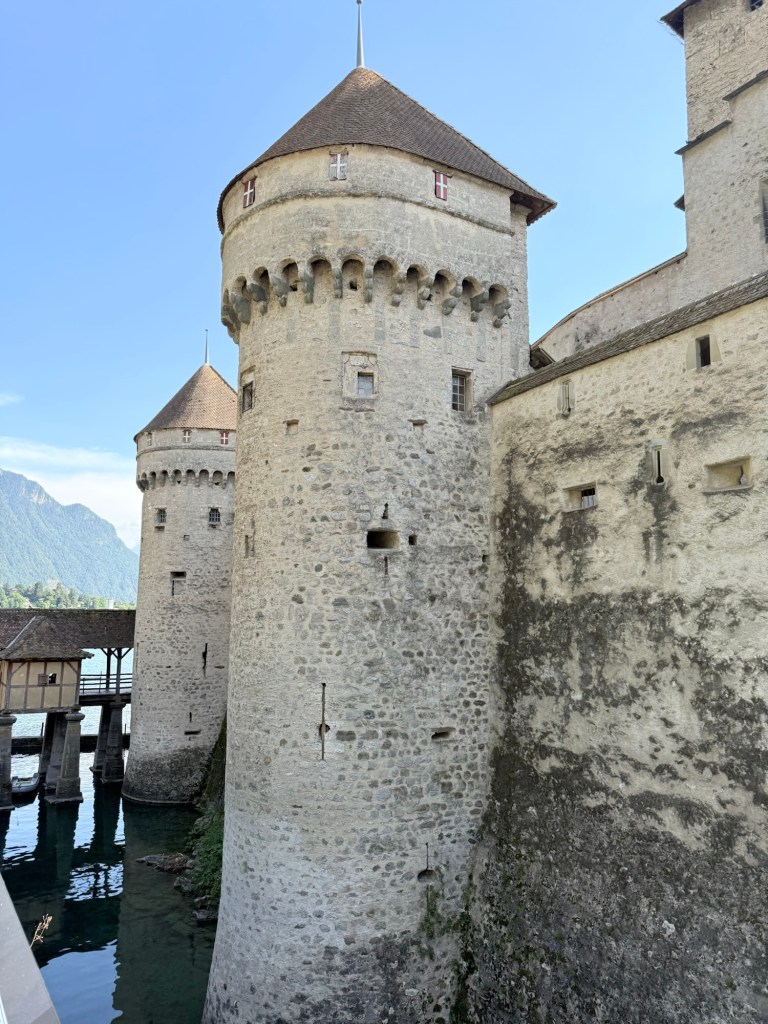
Château de Chillon is one of the best‑preserved medieval castles in Europe, built on a rocky outcrop in Lake Geneva and used for centuries as a strategic fortress, noble residence and prison. Its position controlled access between the Vaud Riviera and the Rhône Valley — a crucial point on the trade route to Italy. Under the Counts of Savoy (12th–16th centuries), Chillon became a genuine economic hub: it oversaw the Via Francigena, the route used by merchants and pilgrims traveling to Rome, collected tolls to ensure the safety of the road, and monitored lake traffic along with the commercial activity of Villeneuve, a town created specifically for the exchange of goods transported by boat across Lake Geneva.
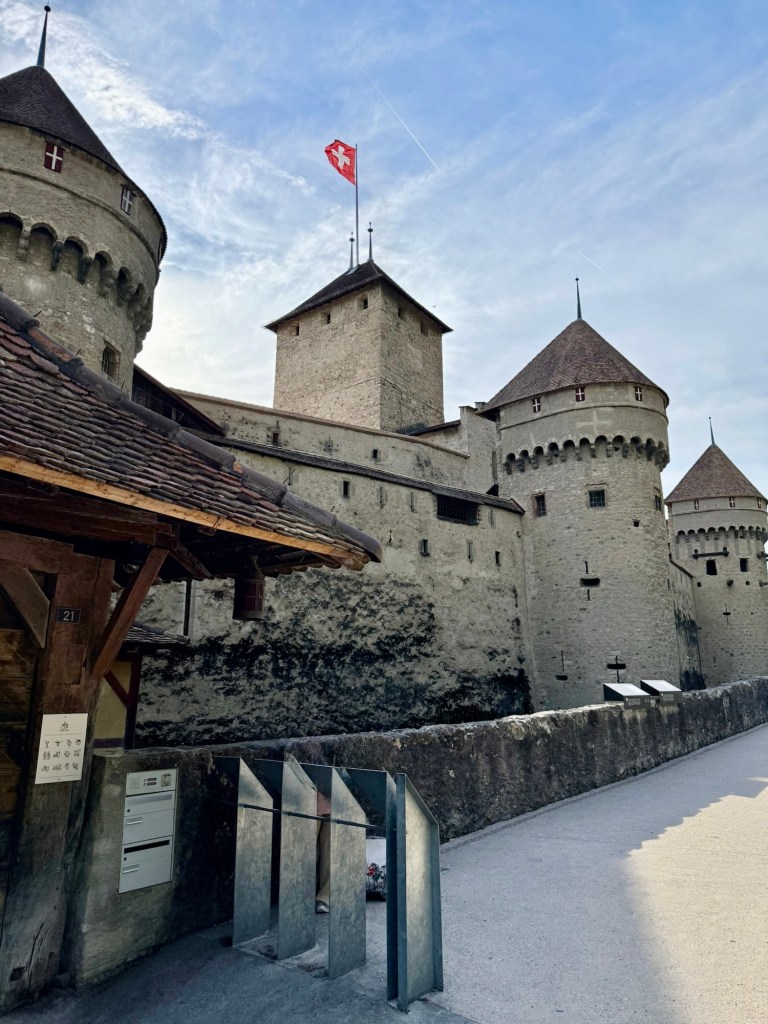
Over time, the castle served as a strategic stronghold, the residence of the Counts of Savoy, and a prison — most famously for Bonivard, whose story inspired Byron’s The Prisoner of Chillon. The castle is so well preserved that stepping inside feels like walking straight into a medieval film, with Gothic halls, vaulted dungeons and princely chambers still bearing traces of original frescoes.
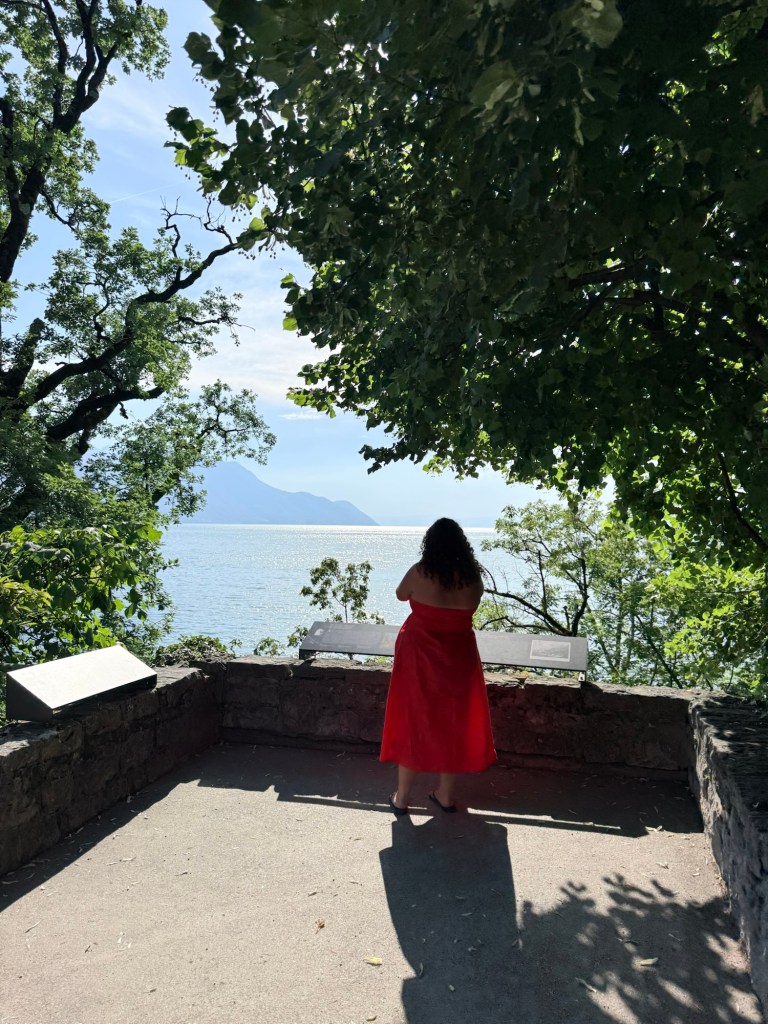
Today, it is the most visited historical monument in Switzerland, drawing more than 400,000 visitors each year.
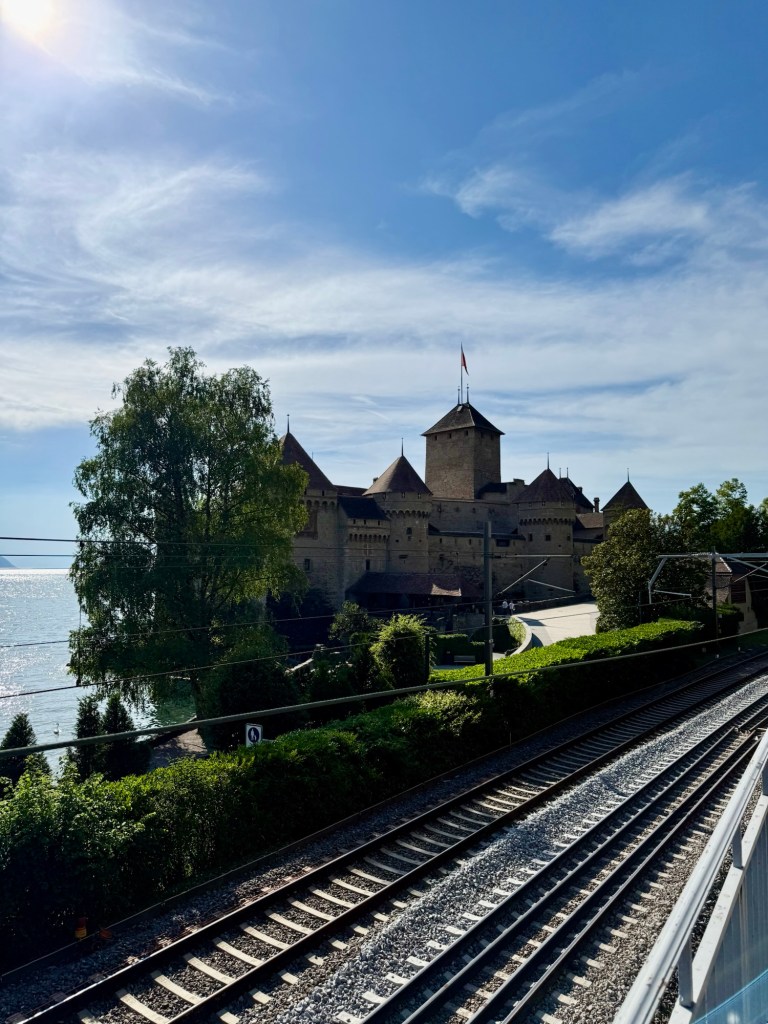
I’m a little sorry we didn’t see the interior as well, but after visiting so many castles in the past month, I think I’ve earned a small break.
Discover more from "The world is your oyster".
Subscribe to get the latest posts sent to your email.
