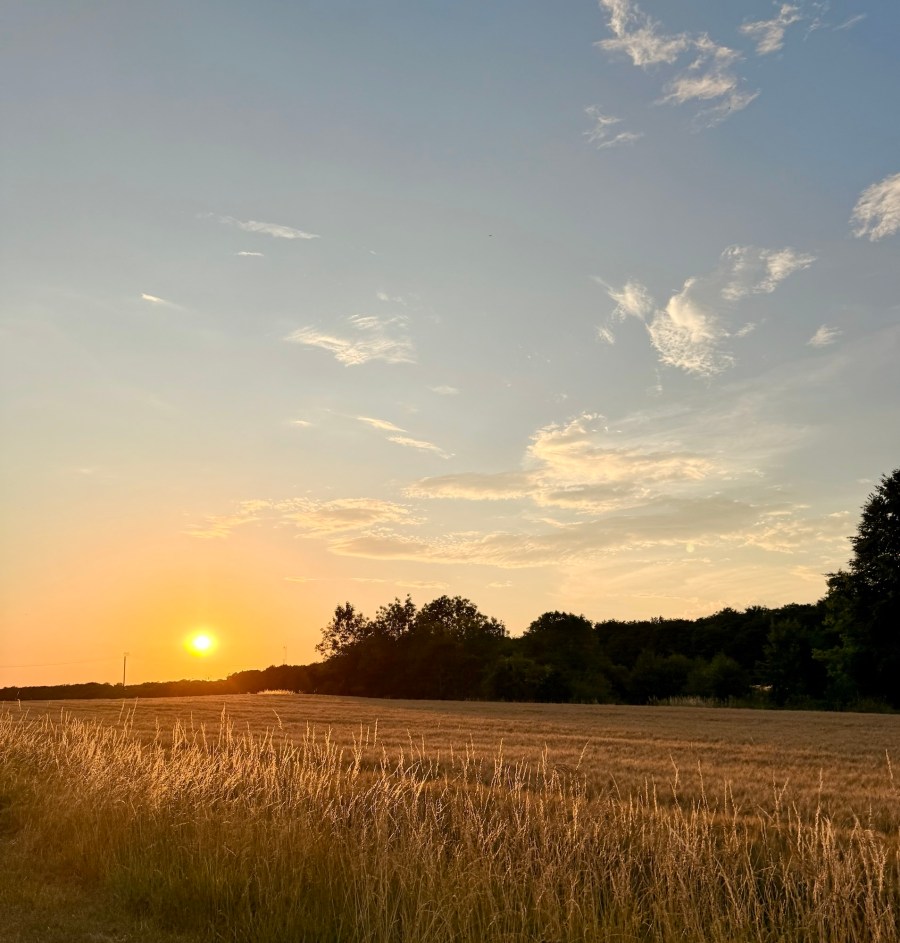
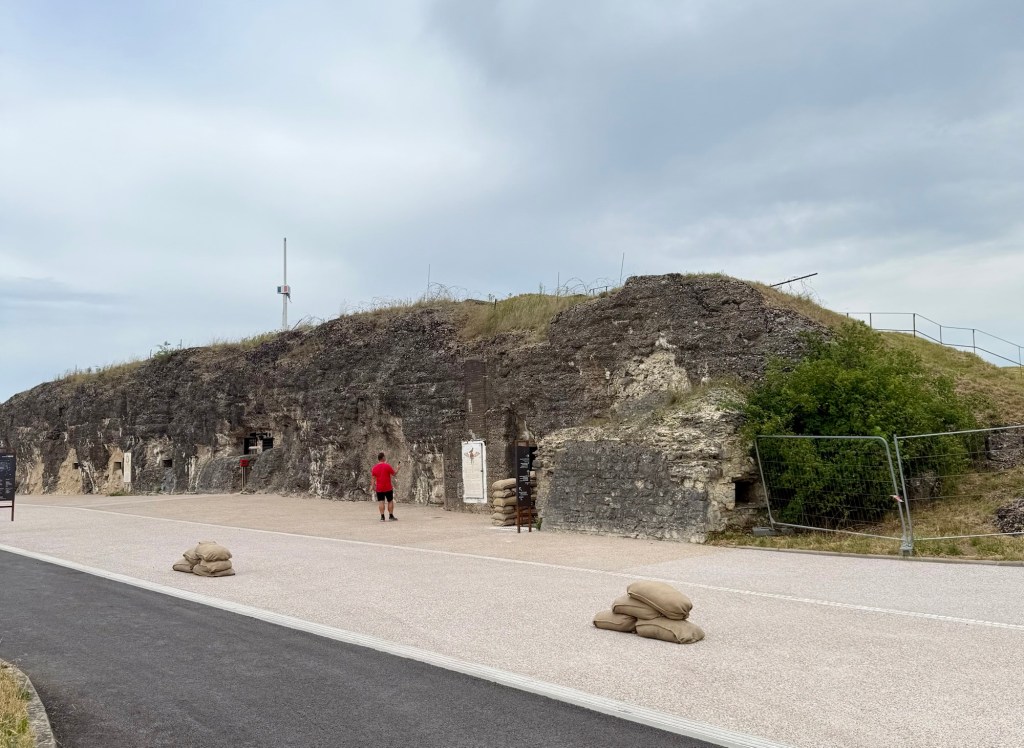
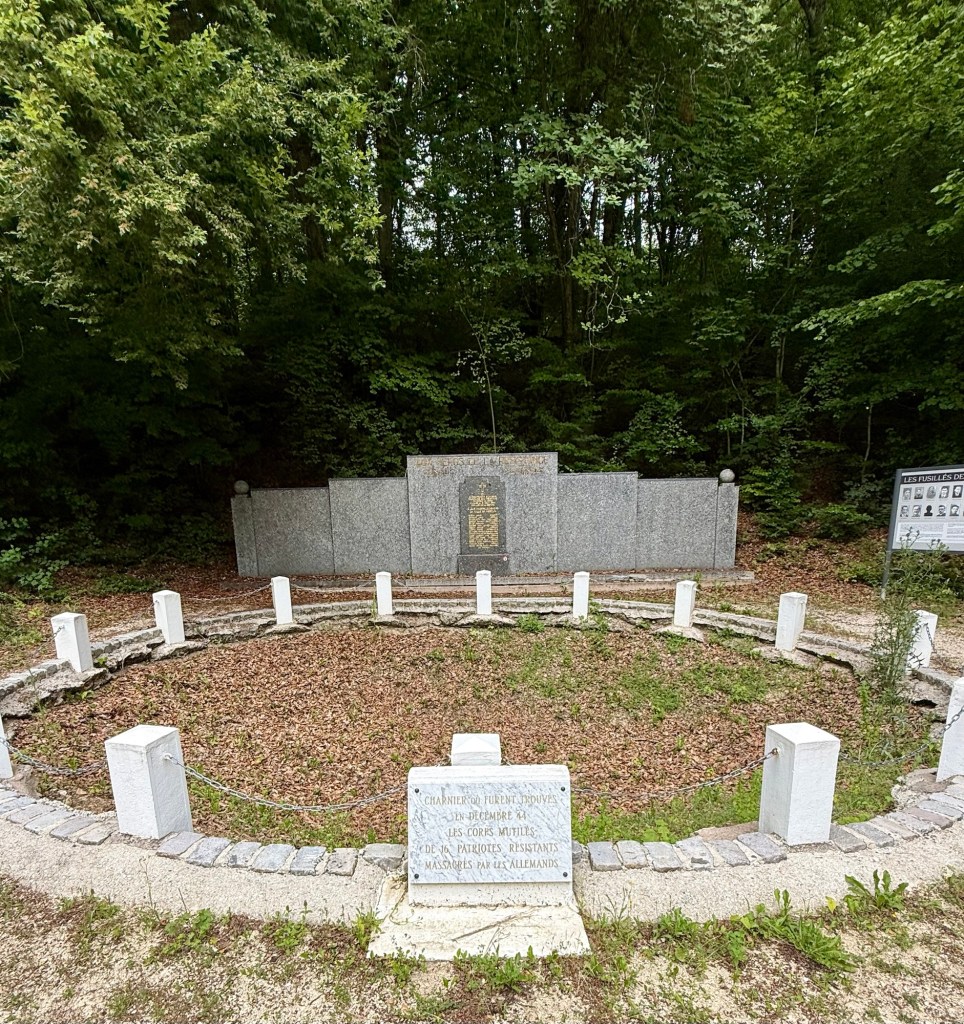
For the past two days we’ve been in Verdun, the place where the battles of Verdun unfolded — perhaps the most brutal confrontations of the First World War. The road leading there winds through forests still marked by shell craters, trenches, monuments, and cemeteries. Every kilometer carries the traces of a conflict that reshaped the history of an entire continent.
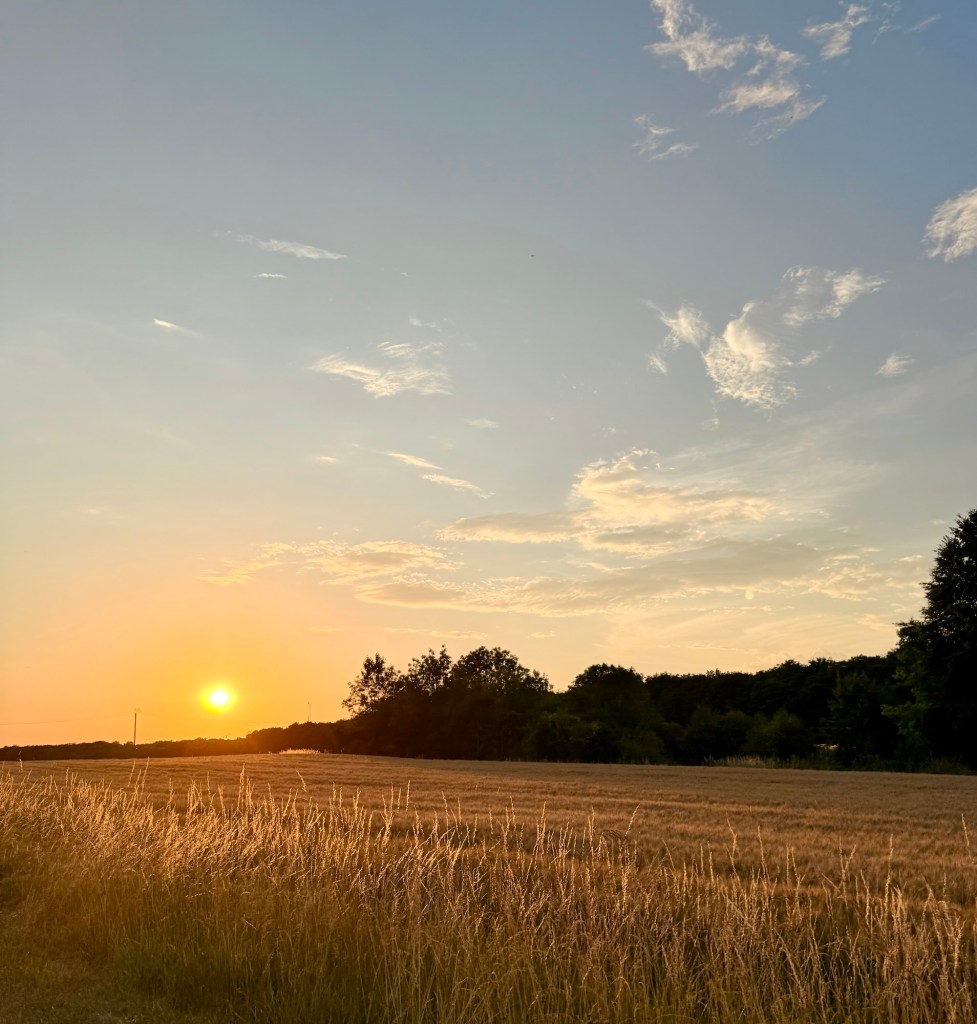
Verdun, located in eastern France, is a fortress‑city on the Meuse River, in a strategic area that in 1916 represented a critical point in the French defense. The Germans chose to attack here because the fortifications around Verdun threatened their lines of communication and because the city held immense symbolic value for the French. Losing it would have been a moral and strategic disaster.
The Battles of Verdun were among the most horrific of the First World War: ten months of relentless bombardment, hundreds of thousands of soldiers killed, and a landscape turned into an open wound. Verdun became the symbol of French sacrifice, a place where resistance was pushed to the very limits of human endurance. Today, the silence that envelops the forests and military cemeteries is not only beautiful but profound — a silence that forces you to reflect on the fragility of peace.
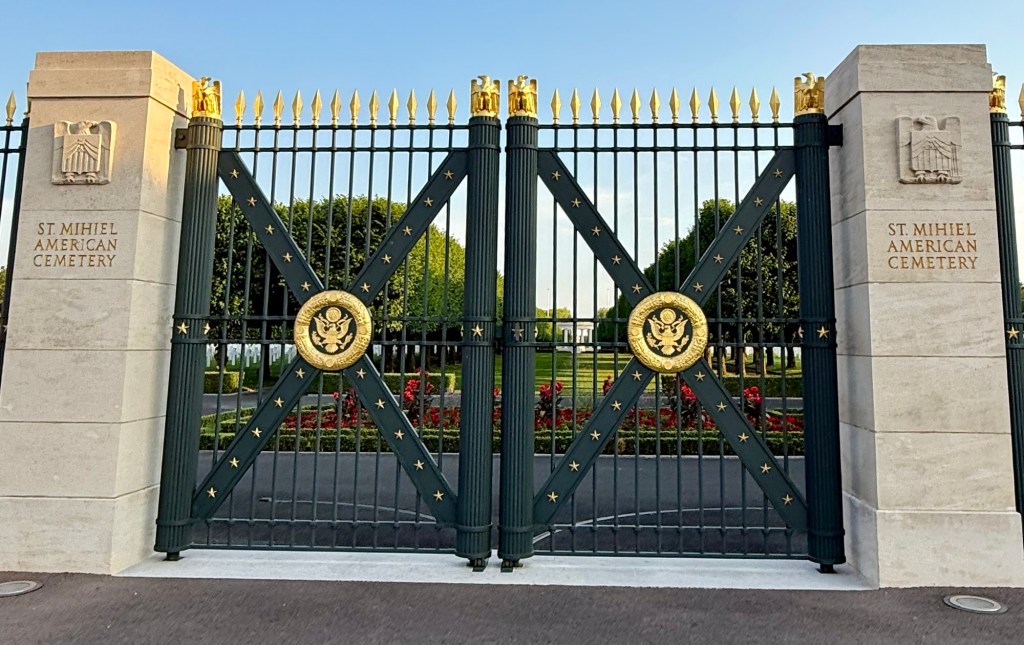
The cemetery lies on the outskirts of Thiaucourt, not far from Verdun, in a quiet rural landscape that contrasts sharply with the violence of the battle it commemorates. When you enter, everything is perfectly ordered: straight alleys, lime trees planted in alignment, and rows of white crosses stretching across four symmetrical plots. At the center stands a large sundial with an American eagle, symbol of vigilance and sacrifice.
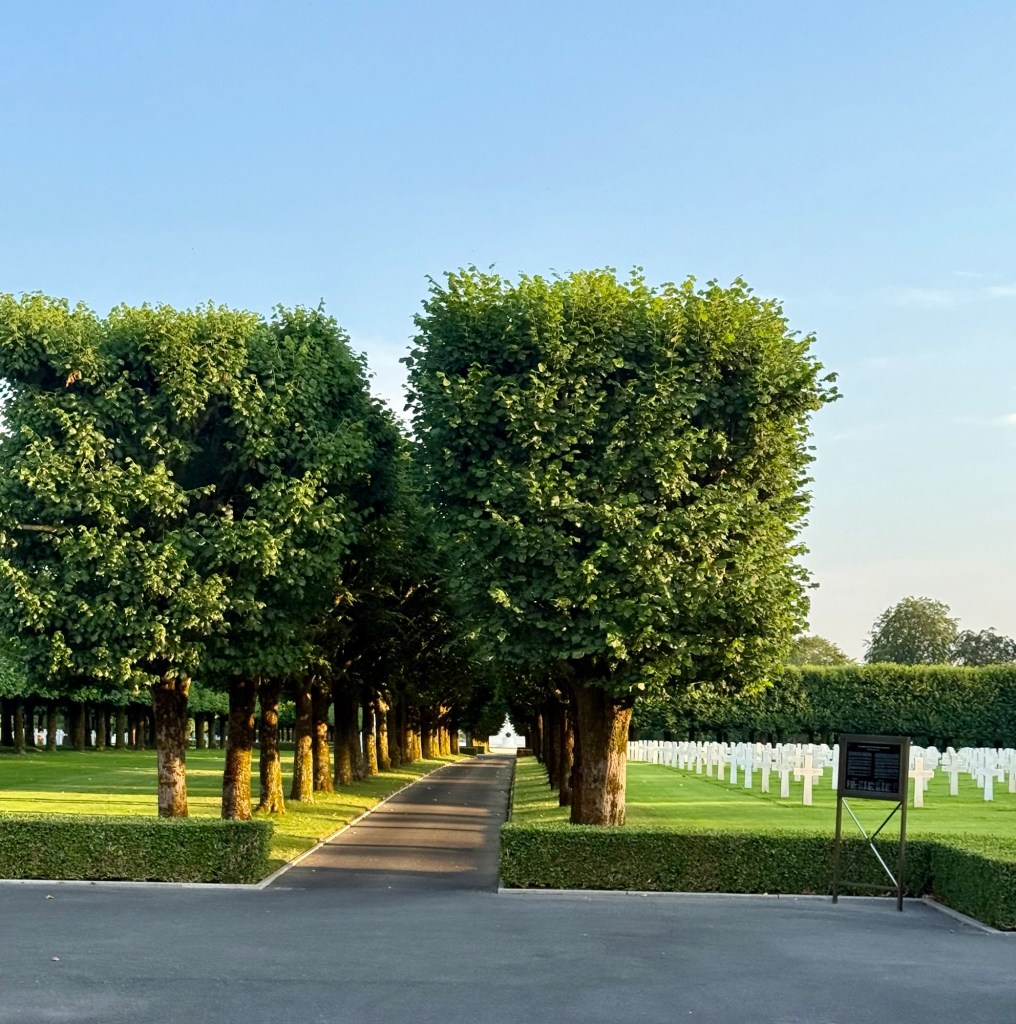
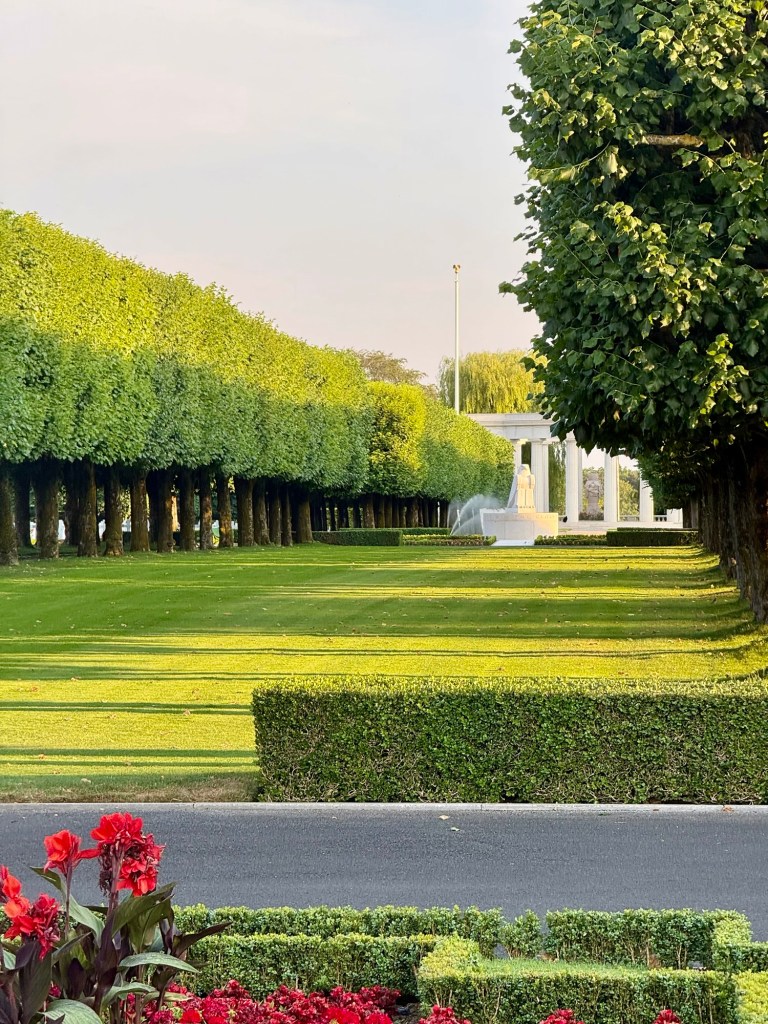
The cemetery was built directly on the ground where the fighting took place, on land devastated by battle. About one third of the American soldiers who died in the offensive are buried here, making it an especially representative site of American sacrifice in the First World War.
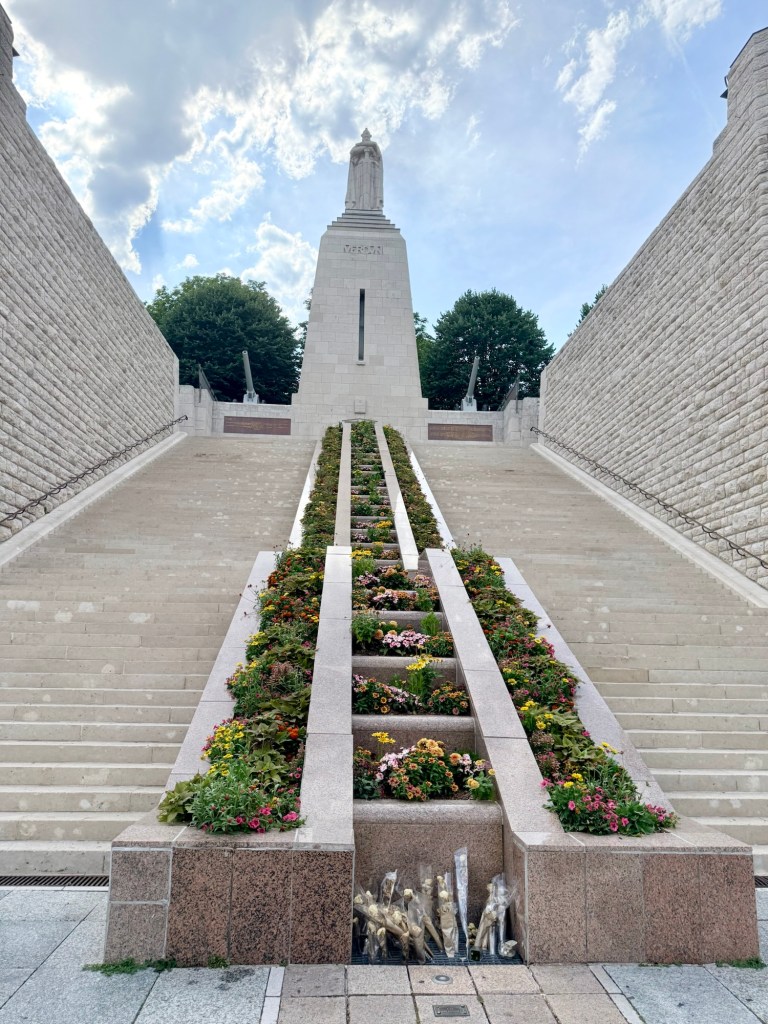
Inaugurated in 1929, ten years after the war, it is dedicated to the French soldiers who fought at Verdun. Its construction was funded through public donations, making it a monument of collective gratitude.
The structure is built as a monumental staircase of more than 70 steps leading up to a high terrace. The steps symbolize the ascent from the inferno of war toward light, peace, and victory.
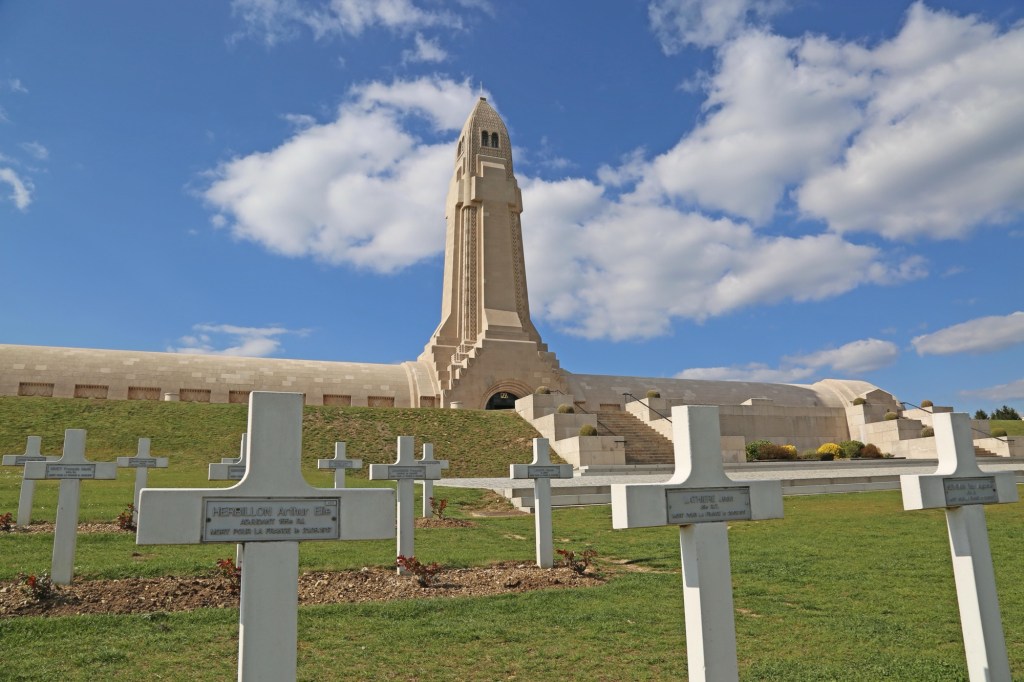
The lantern tower, the French cemetery in front, the silence — everything is overwhelming.
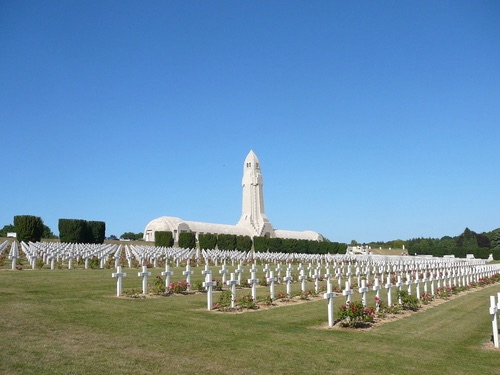
16,142 perfectly aligned white crosses.
It is the largest French cemetery in the Verdun area.
Together, the two monuments form a single ensemble: the resting place of both the identified and the unidentified, side by side.
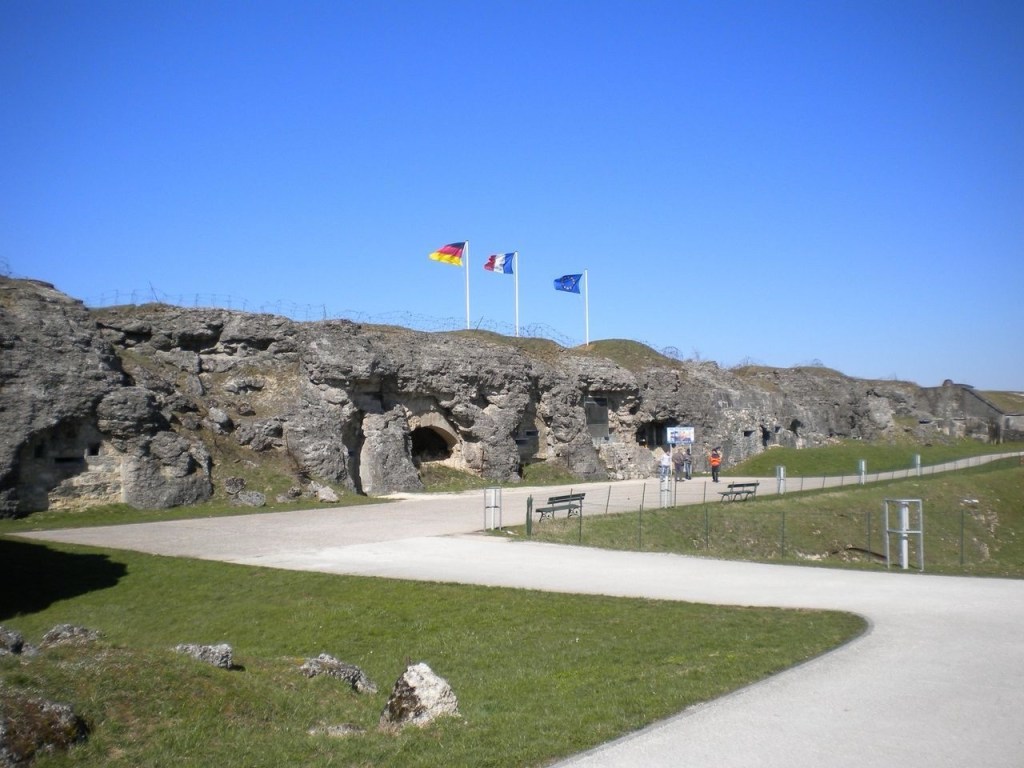
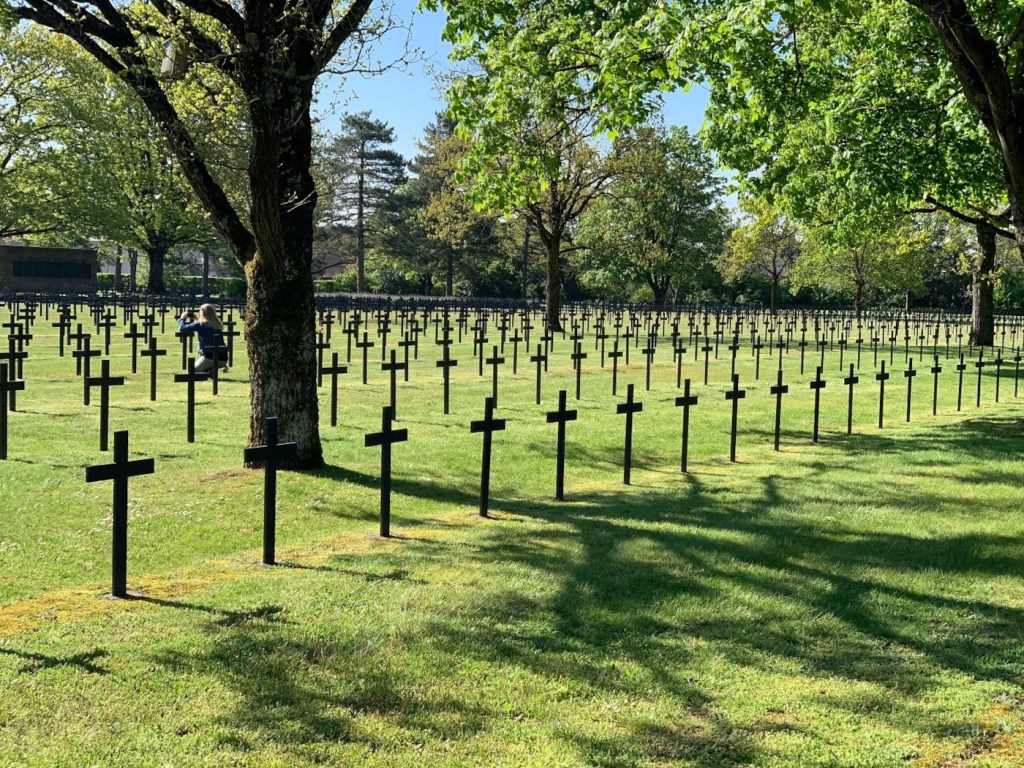
Here rest approximately 11,000 German soldiers who fell in the fighting between 1914 and 1918. Set in a quiet, wooded area. The black crosses create a striking contrast with the green forest. Everything is very orderly, but without monumental grandeur — a typical German style of First World War remembrance.
Tranchée des Baïonnettes left a deep impression on me.
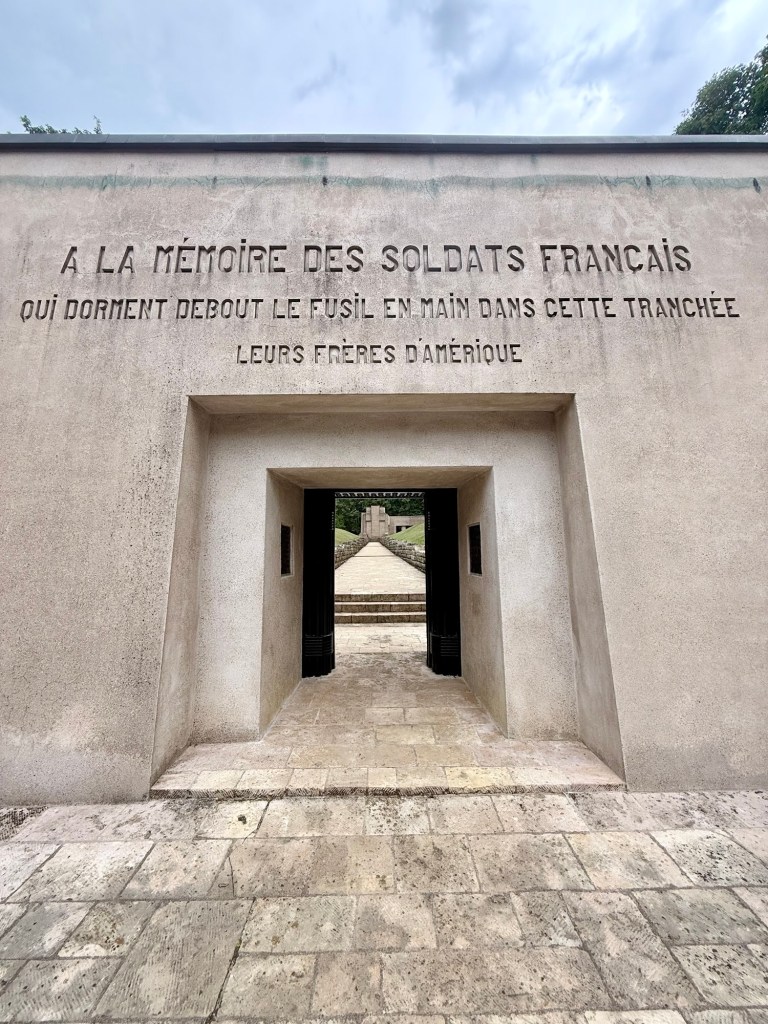
Legend says that during the fighting in June 1916, a French regiment was caught in a massive bombardment in the trenches in front of Fort Douaumont. It is believed that dozens of soldiers — perhaps 40 or 50 — were trapped there, some buried alive, leaving only their bayonets protruding from the ground like improvised crosses.
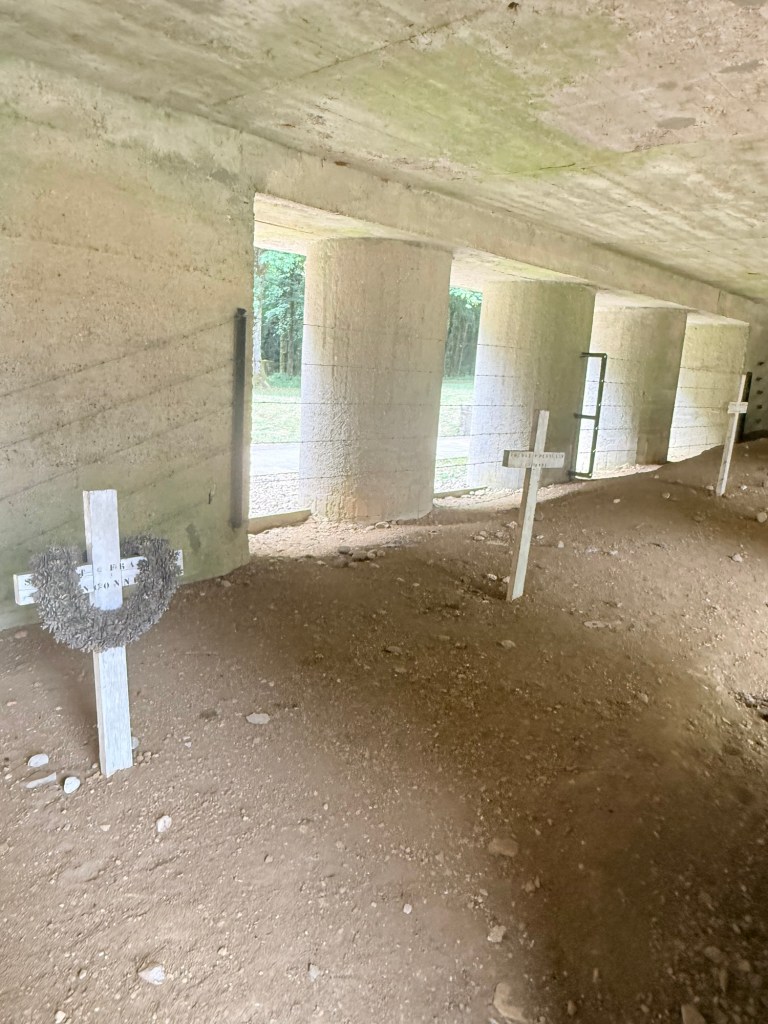
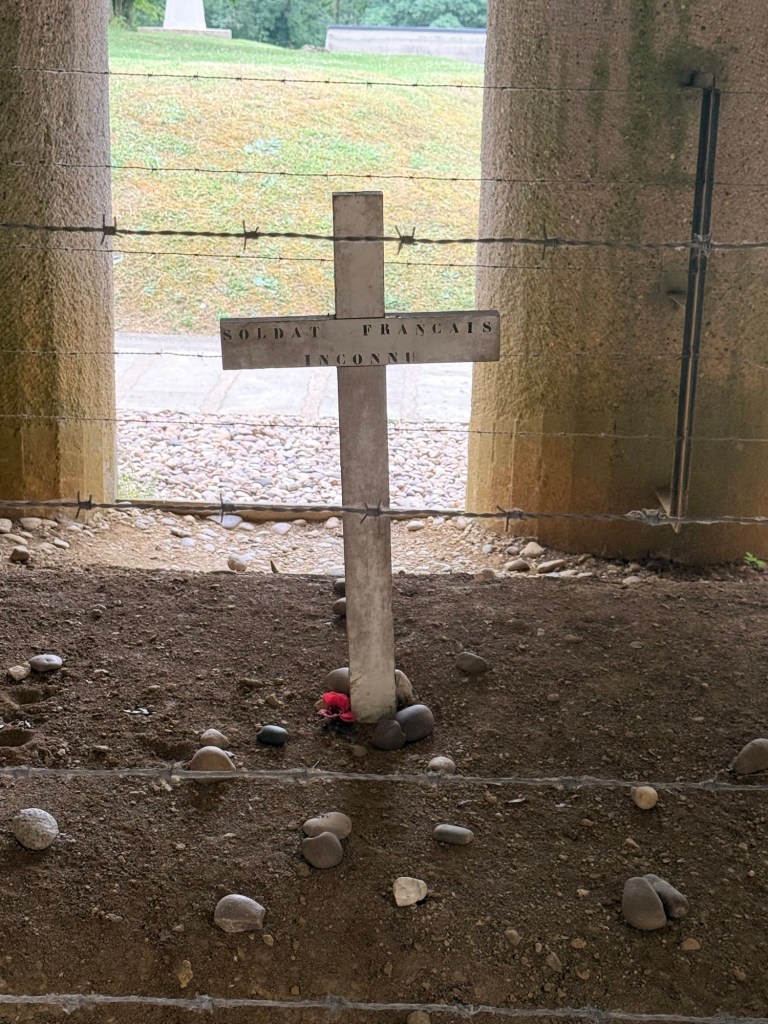
The monument built here in 1920, funded by American George Rand, protects the trench where the bayonets were found: an austere stone structure sheltering a narrow passage and a memorial plaque dedicated to the soldiers who fell in the area.
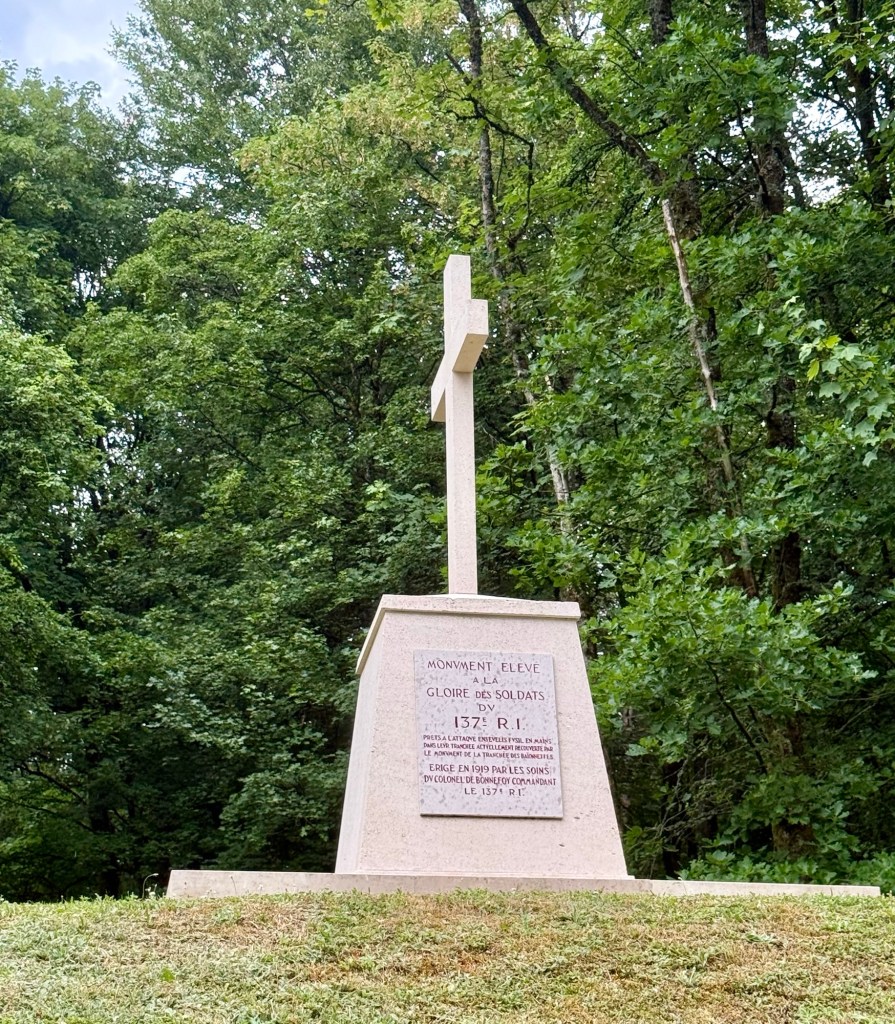
The image of those bayonets rising from the earth became a symbol of anonymous sacrifice, so powerful that the regiment’s commander erected a small monument topped with a cross to mark the place.
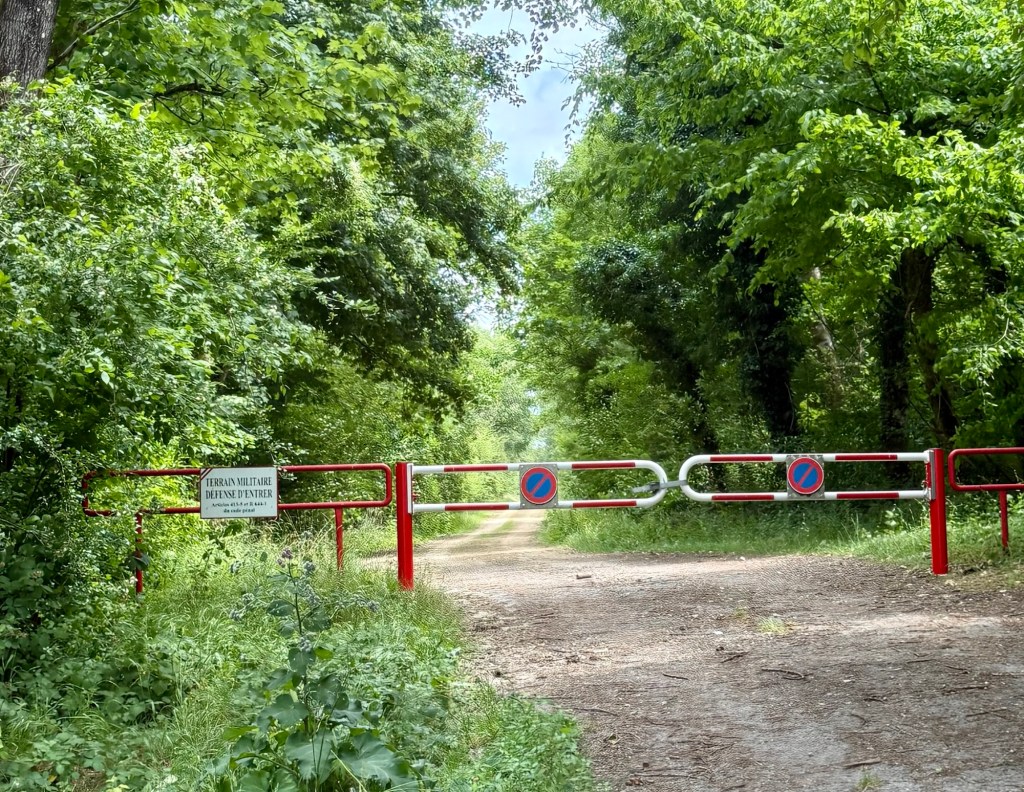
By the way, if you visit this region of France, the signs reading “Terrain militaire. Défense d’entrer” must be taken seriously: Verdun remains one of the most contaminated places in the world with First World War munitions. Authorities recover 40–50 tons of unexploded shells every year, especially from the forests near Fort Douaumont, Fort Vaux, and Cote 304.
Some areas are still classified as Zone Rouge — forbidden land, too dangerous for any activity.
This region of France has left a deep mark on me. Verdun, Douaumont, Tavannes — all these places force you to slow down and look at the land with a kind of respect you don’t feel elsewhere. And when you see the crosses and the years of birth, you realize that most of those who died here were only 20–27 years old. They were young, far too young. Walking among forts, trenches, and memorials, you suddenly understand how absurd the idea of war is and how dearly every decision made far from the front line is paid for by those who live — and die — with its consequences.
Perhaps more people should come here, to see, to feel, to understand.
Here, history is not the past — it is a wound still alive.
And peace begins when we learn to remember.
Discover more from "The world is your oyster".
Subscribe to get the latest posts sent to your email.
