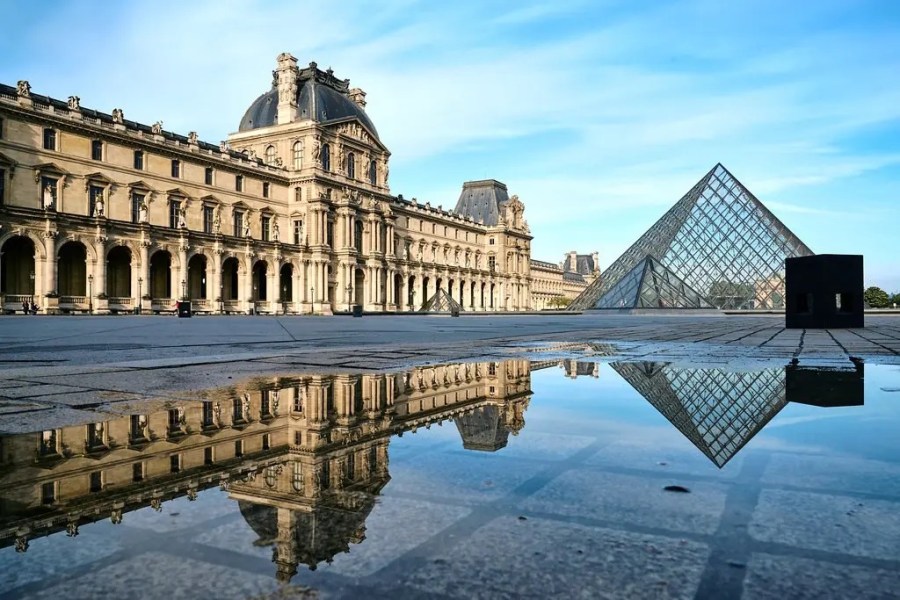
Today I revisited the Louvre. My first visit was twenty years ago, and I clearly remember the exhaustion I left with. This time was no different. The Louvre remains a major cultural landmark.
For the rest of my family, it was their first time at the Louvre, and the impact was strong. It’s a museum that simply cannot be covered in a single day; it deserves to be seen again and again. A first visit offers only an avant‑goût of its vastness. At any given moment, around 38,000 works—from prehistory to the 21st century—are displayed across 72,735 m², making it the largest museum in the world. In 2025 alone, it recorded 9 million visitors.
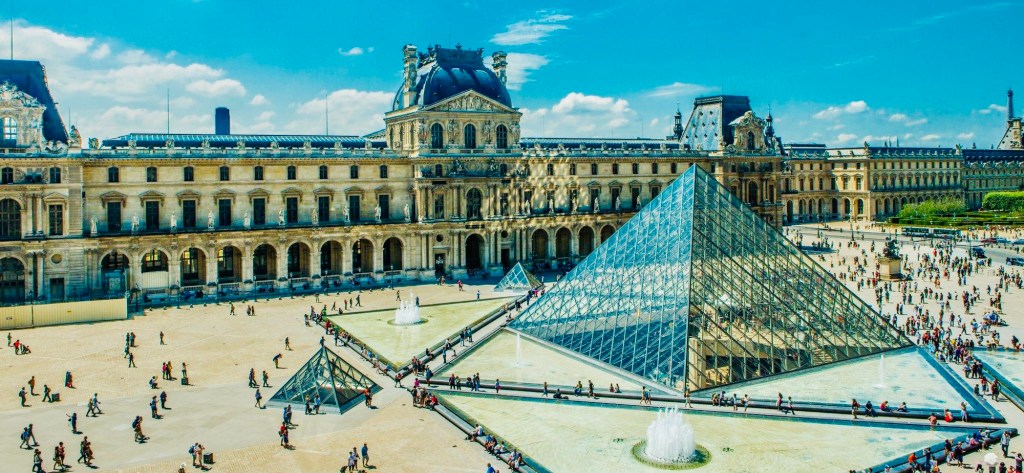
Few people know that the Louvre began its life as a military fortress. In the 12th century, Philip II built a massive stronghold here, with a tower nearly 30 meters high and a defensive moat, to protect medieval Paris. The remains of this structure are still visible in the museum’s basement.
In the 16th century, King Francis I decided to transform the fortress into a Renaissance palace, giving birth to the first royal art collection—the core of today’s museum. Since then, almost every French monarch expanded the building and its collections, including Louis XIV, who added entire galleries and purchased important works, some originating from the collection of the English king Charles I.
Another lesser‑known detail: King Henry IV was so convinced of his healing powers that he received the sick directly at the Louvre, confident that the “royal touch” would cure them. And a few centuries later, the palace was full of artists who lived and worked there daily, turning it into a lively, creative place—almost a small cultural city within Paris.
The turning point came in 1793, when, in the midst of the chaos of the French Revolution, the Louvre became a public museum for the first time. It had only 537 paintings, all confiscated from royal collections. Napoleon later reopened it under the name Musée Napoléon and enriched it with works brought from his campaigns—many of which were eventually returned to their rightful owners after the empire collapsed.
The Louvre has also seen tense moments: in 1911, the Mona Lisa was stolen; during both World Wars, artworks were evacuated for protection; and the 20th century brought major changes that reshaped it entirely. All these episodes paved the way for the great transformation of 1988: I.M. Pei’s Pyramid, which radically reinvented the museum’s entrance and brought the Louvre a fresh, modern energy.
Today, the Louvre is a global symbol of art, home to tens of thousands of works and still the most visited museum in the world—an institution that has evolved alongside France’s history and continues to fascinate millions.
Faithful to our usual habit, we had bought our tickets a month in advance—and I truly recommend doing the same, because the city is full of tourists and every museum or landmark has enormous queues.
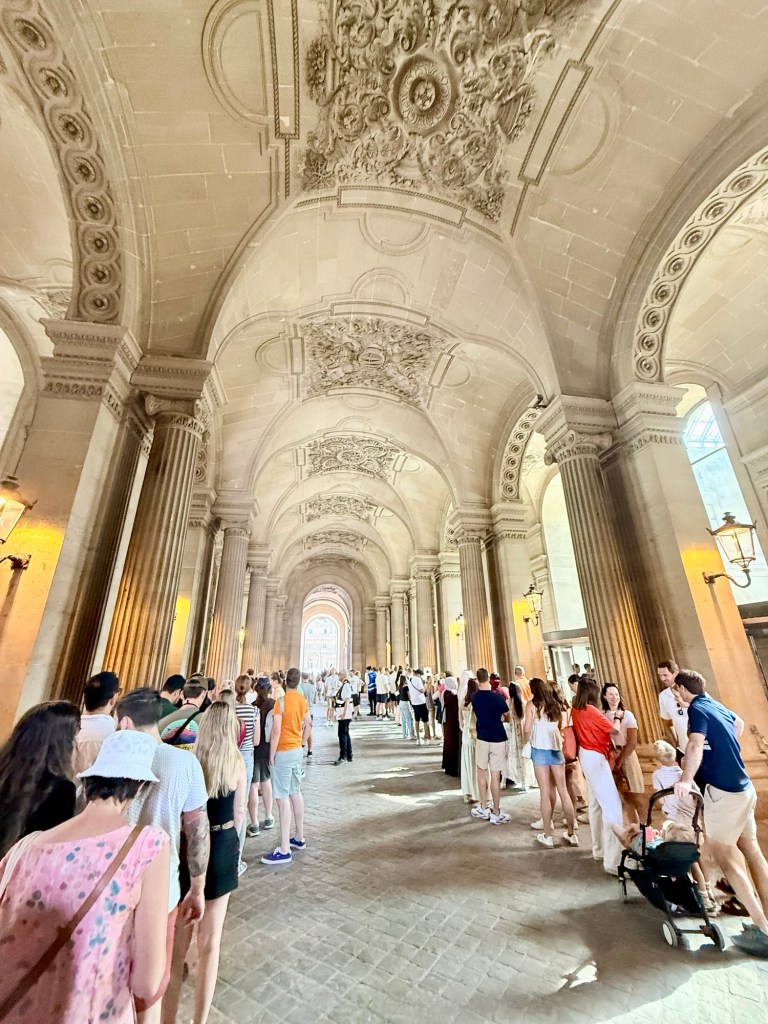
Another practical tip: bring water and comfortable shoes. You’ll be on your feet for hours. We entered at 10:20 and left after 6 p.m. Fortunately, there are benches along the way where you can sit and catch your breath, but overall it’s still tiring. Tiring, yes—but a pleasant kind of tiredness. There’s so much beauty around you that you forget you’re hungry. We didn’t eat anything until evening, because we rushed to the museum early in the morning and didn’t even manage to grab a croissant for breakfast. Water was our only “snack.”
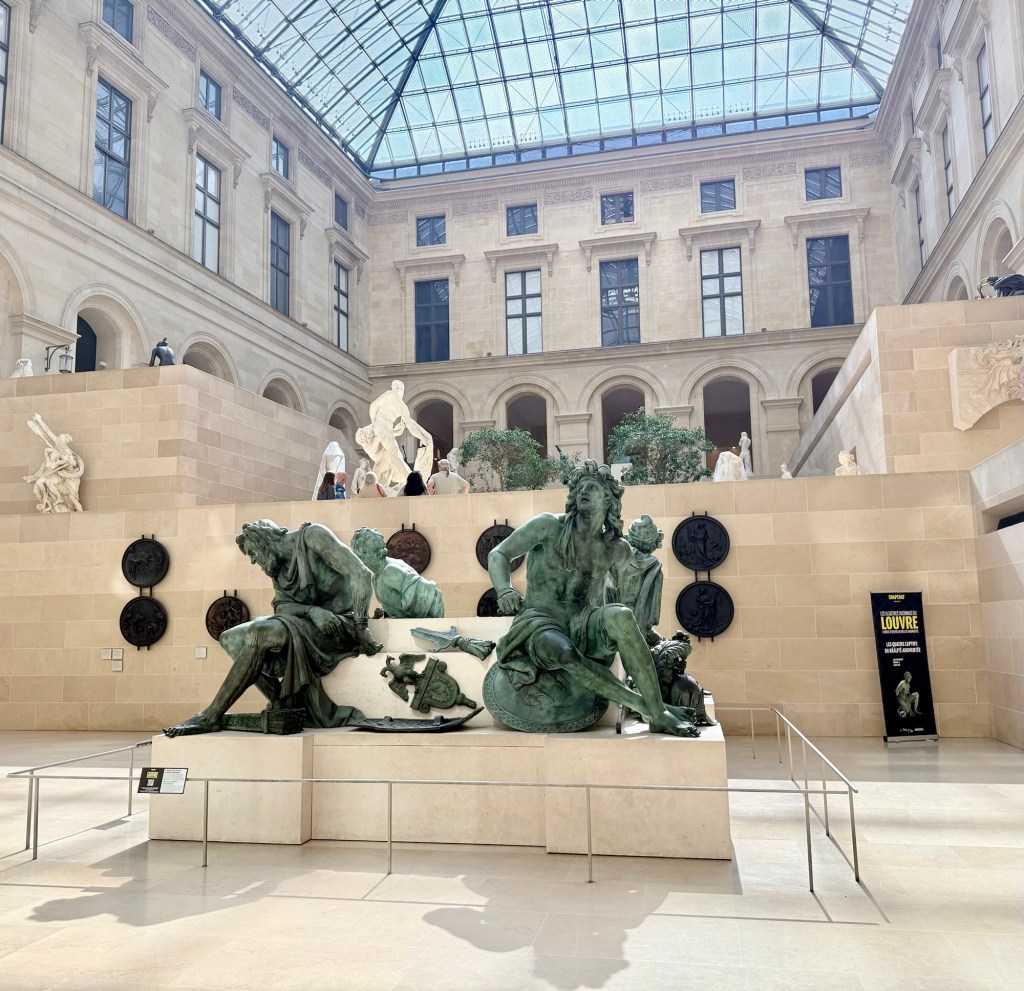
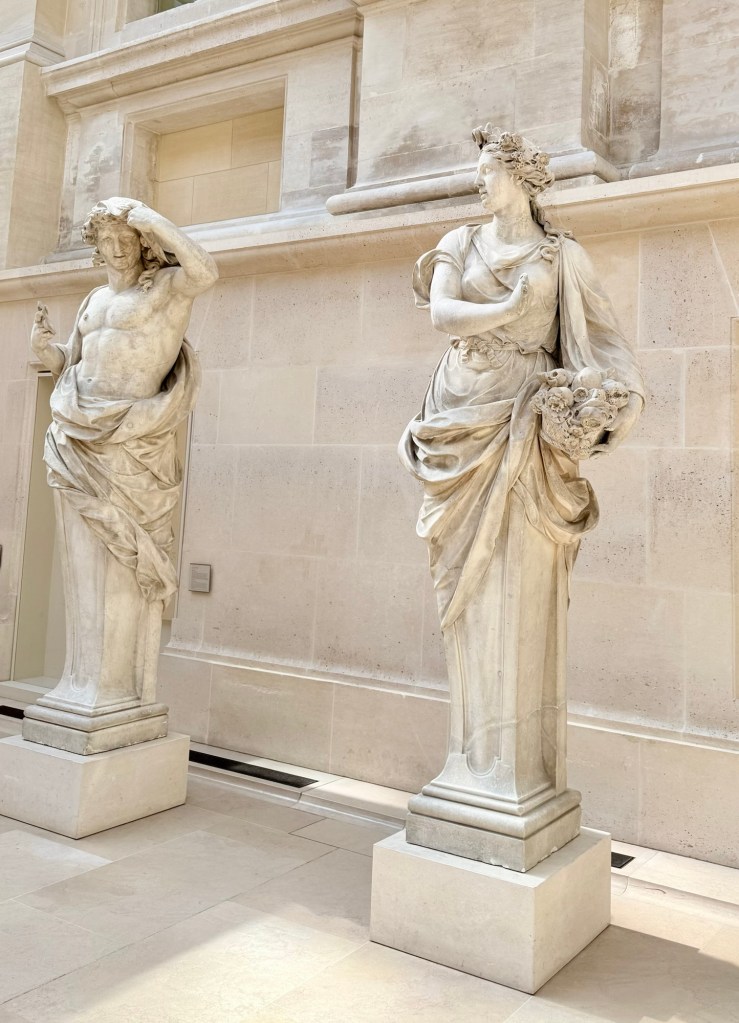
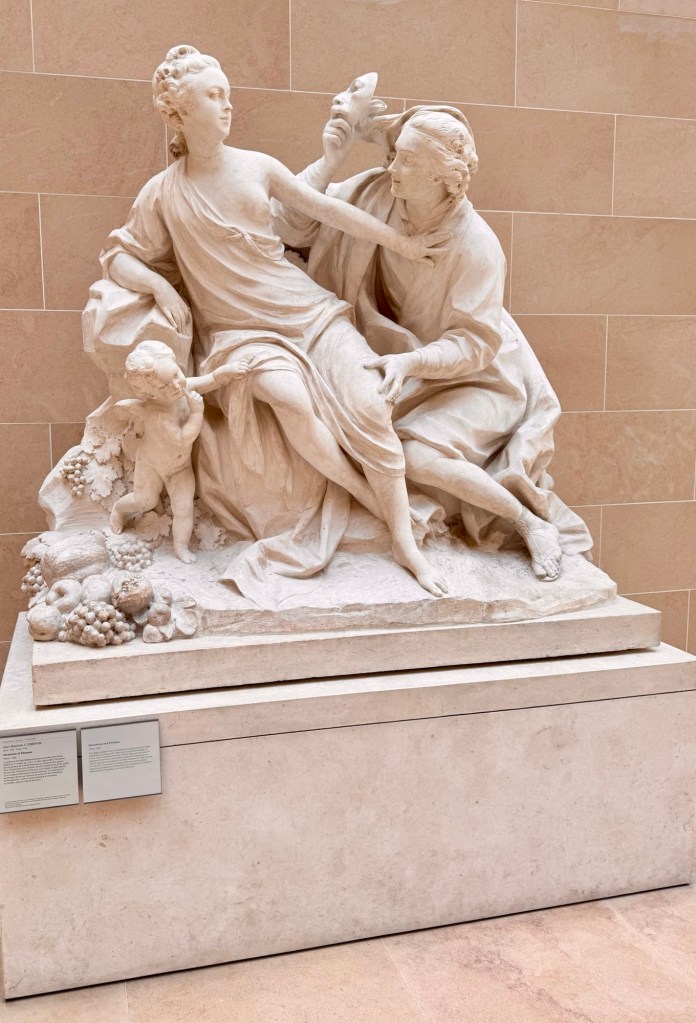
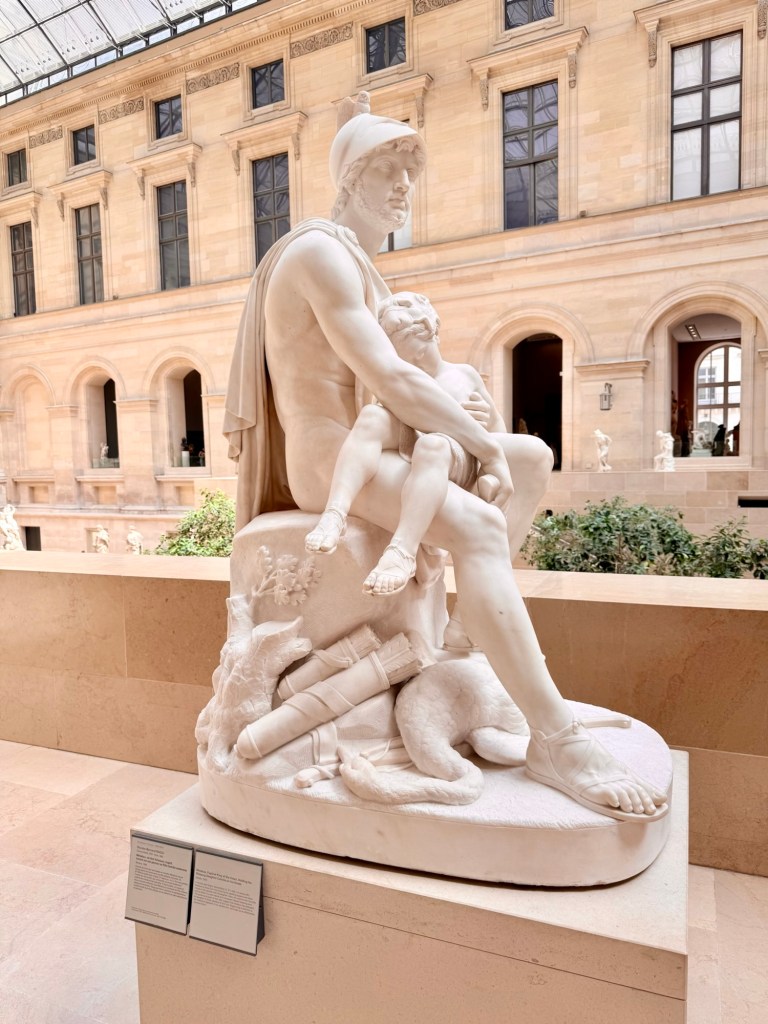
Looking back, I think what captivated me most were the sculptures on levels -1 and 0, as well as the paintings on the second floor, in the Europe du Nord (1350–1850) and France (1350–1650) galleries. We saw them when we were already exhausted, but I found them absolutely wonderful.
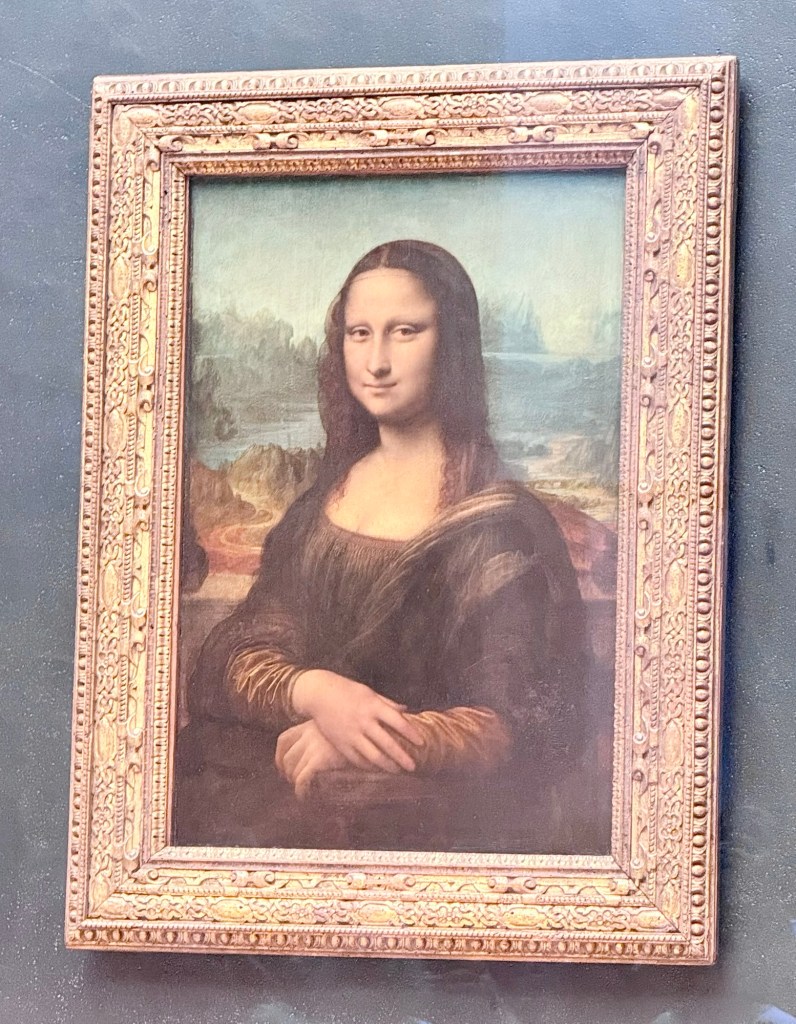
When it comes to famous paintings, the Mona Lisa is the undisputed star. But getting to her is an adventure in itself. You have to fight your way through a sea of people just as hungry, tired, and sweaty as you are, pushing and stepping on your feet. I would have skipped it, but Anna really wanted to see her. So we squeezed our way to the front—more or less—and took the obligatory photo. Honestly, I have my doubts that the original is on display. There have been too many incidents. My intuition tells me the real one is safely stored in a vault somewhere in Switzerland.
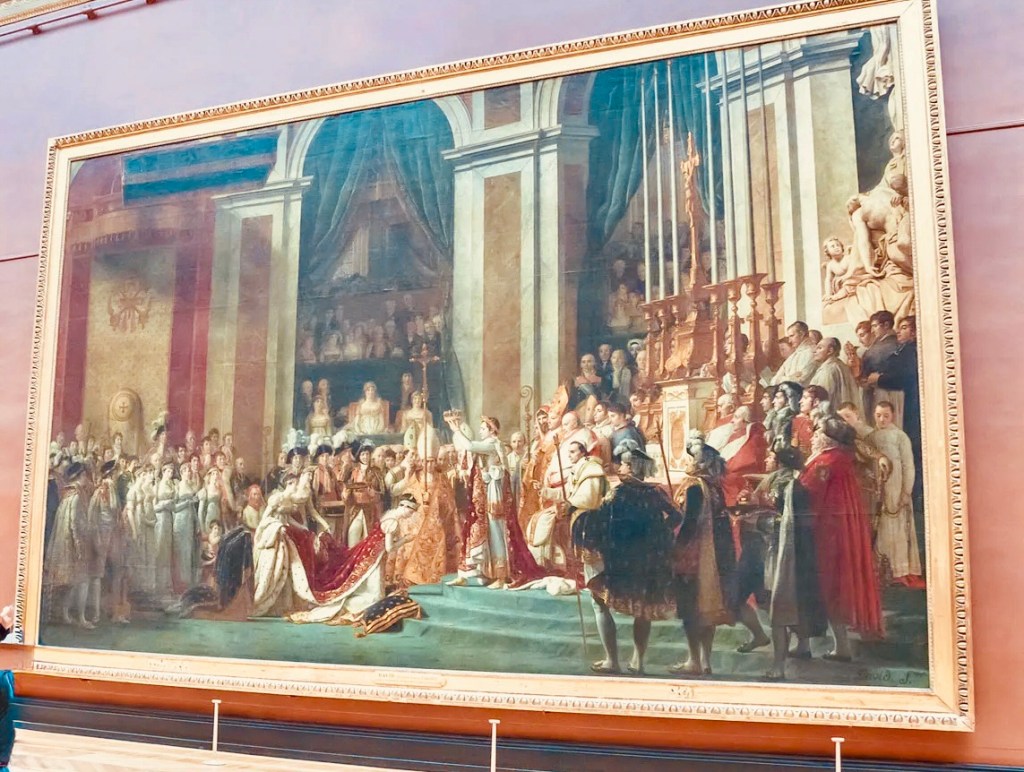
Another iconic piece is Jacques‑Louis David’s “The Coronation of Napoleon.” And here too, to get even remotely close, you have to battle the wave of tourists crowding in front of the painting. That’s the hardest part of museums: people who plant themselves in front of an artwork and stay there like the Statue of Liberty, without moving an inch. My Canadian upbringing tells me to be polite, but my Balkan instincts whisper that a strategic elbow might help. So I constantly live a small inner drama.
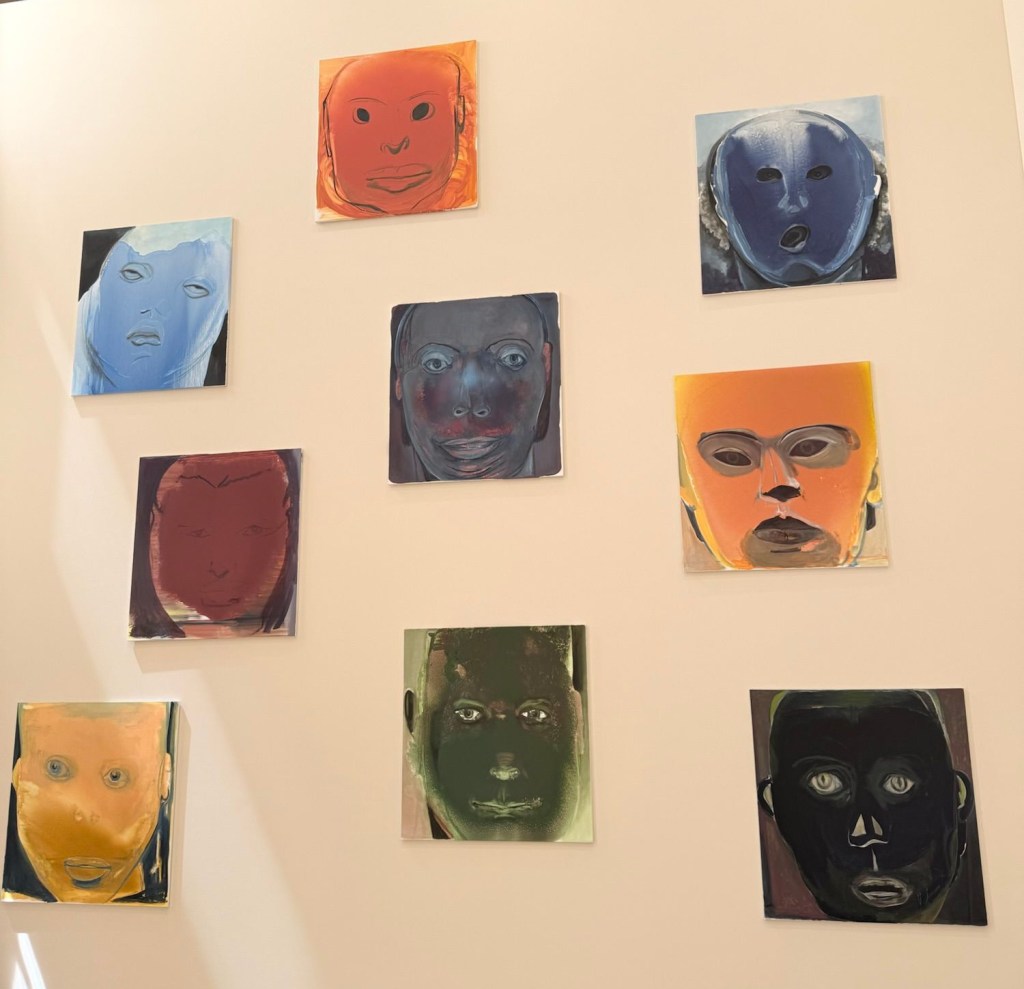
And just so we don’t forget we’re in 2026, the Louvre also treats us to some contemporary “artworks.” A little artistic reality check. 🤦🏻♀️😆
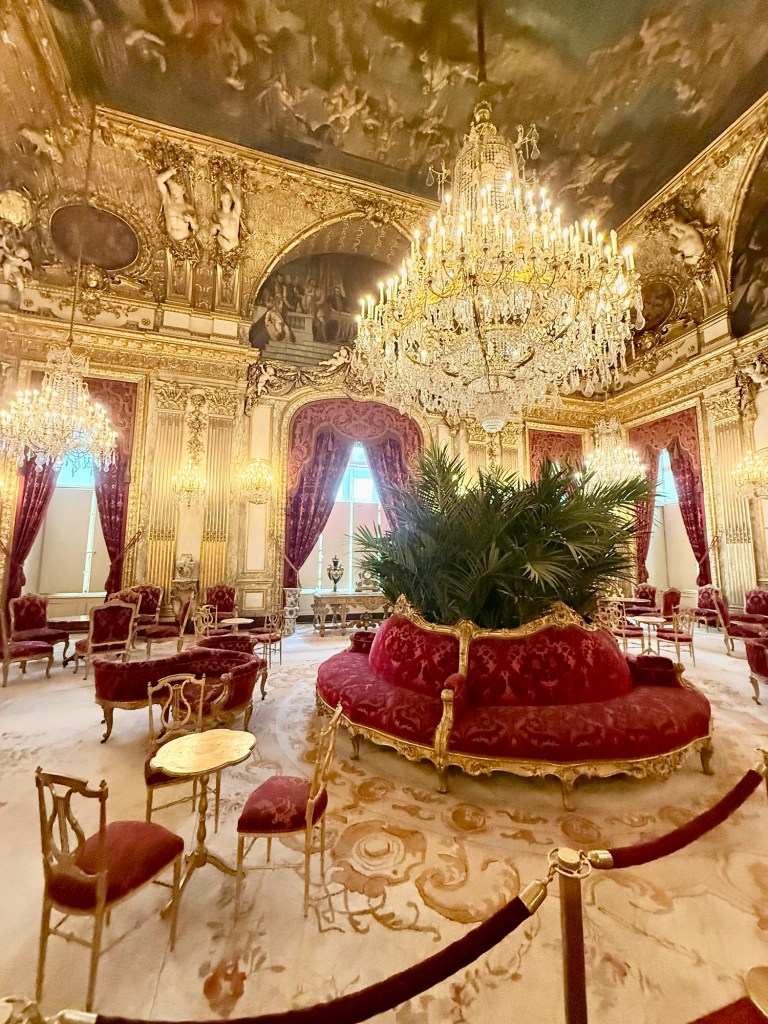
Equally impressive are the apartments of Napoleon III—a spectacular display of imperial luxury and refinement.
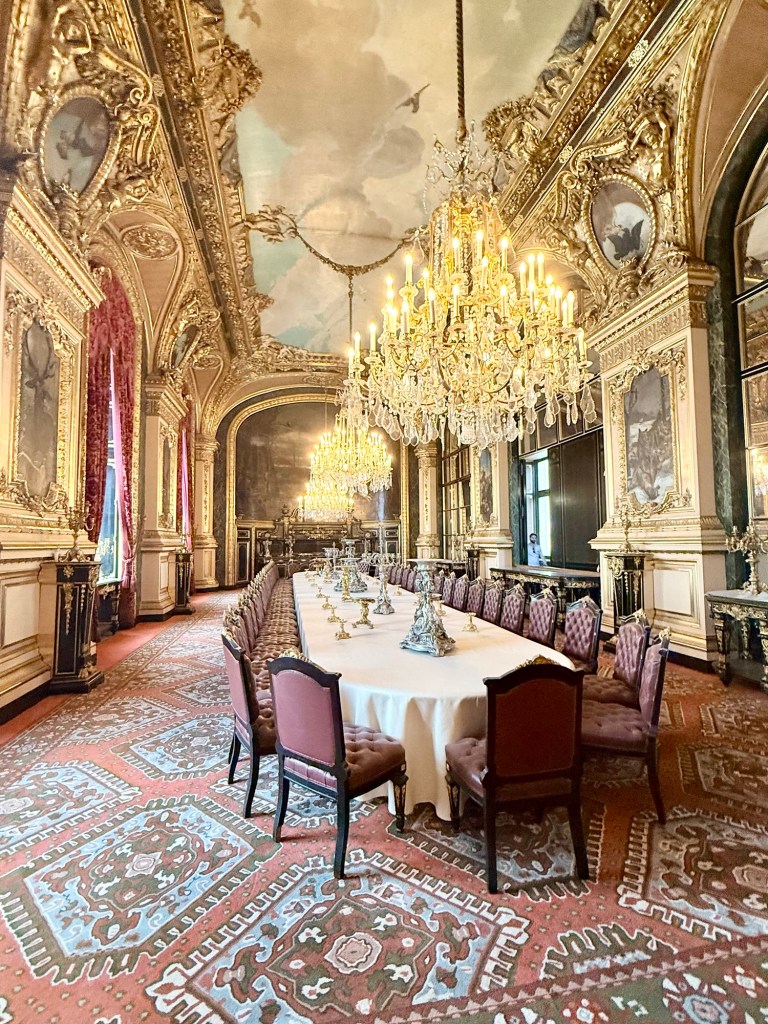
No matter how much I try to describe it here, I can’t truly convey how wonderful this museum is. It must be seen and revisited, ideally during a less crowded period. But… does such a thing even exist in Paris?
Yesterday we spoke with a few locals, and they told us the city is full of tourists all the time. Parisians are used to it. I, unfortunately, am not.
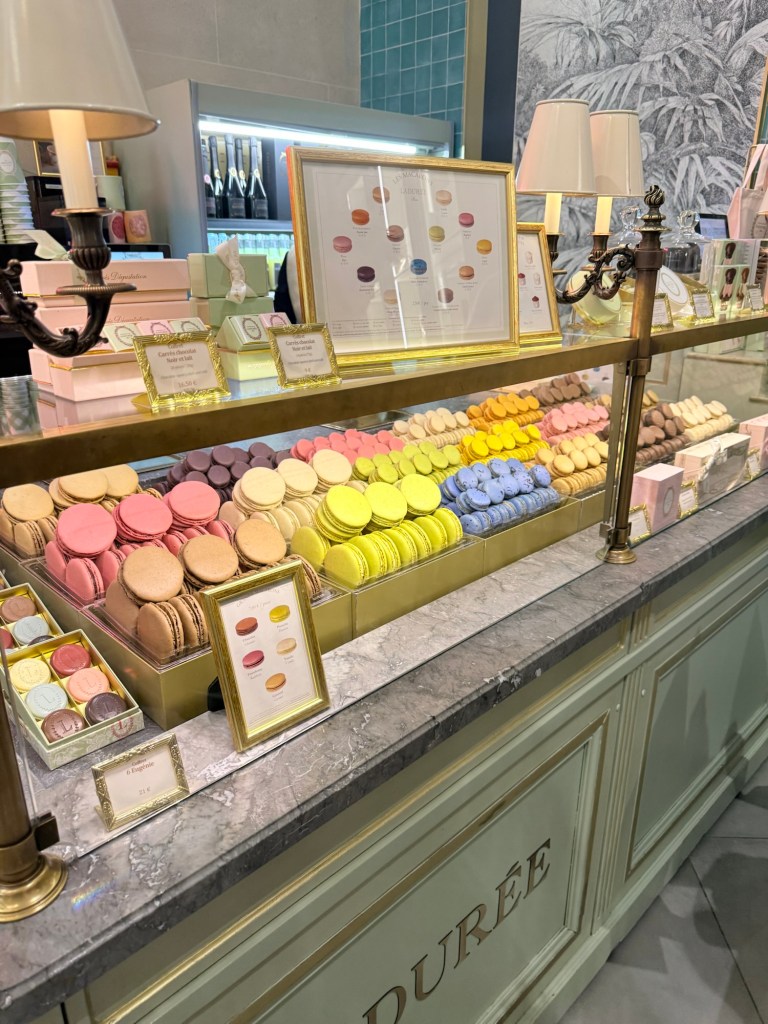
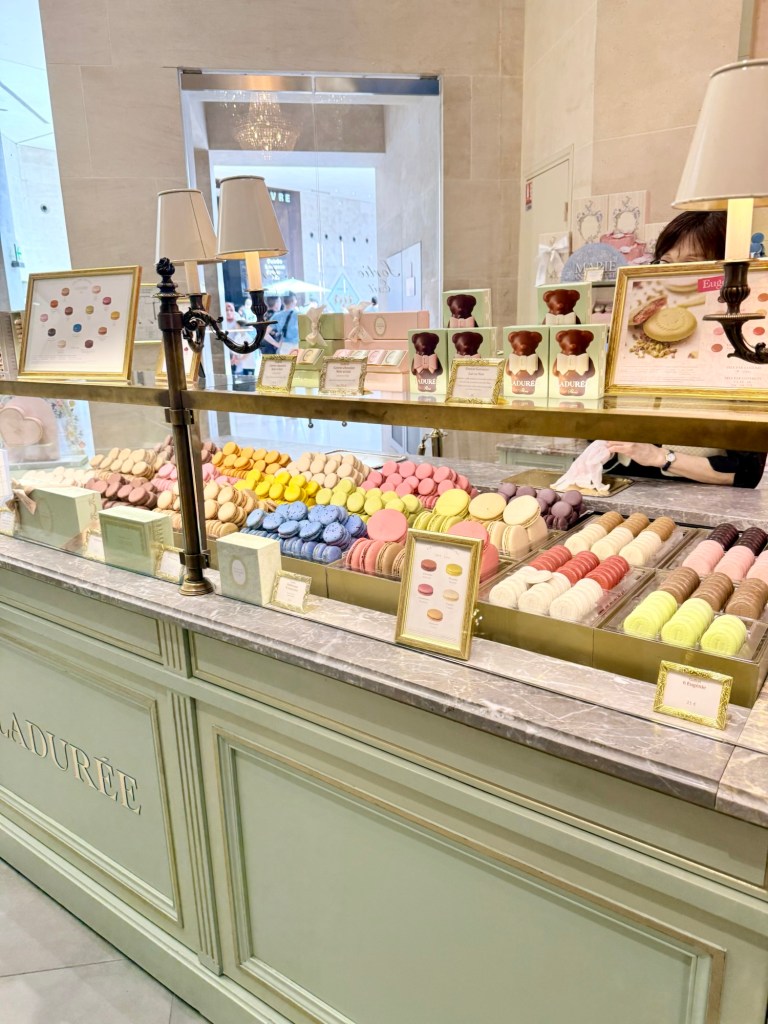
Once we finished our visit and stepped outside, we headed toward the metro to return to our temporary “ghetto”—we still haven’t moved, but I’m hoping for good news today. And surprise: we found ourselves right next to a branch of the famous macaron shop… “il paraît qu’ils sont bons,” as the locals say. Ladurée. You absolutely must try them if you come here. They are fantastically good!
Discover more from "The world is your oyster".
Subscribe to get the latest posts sent to your email.
